
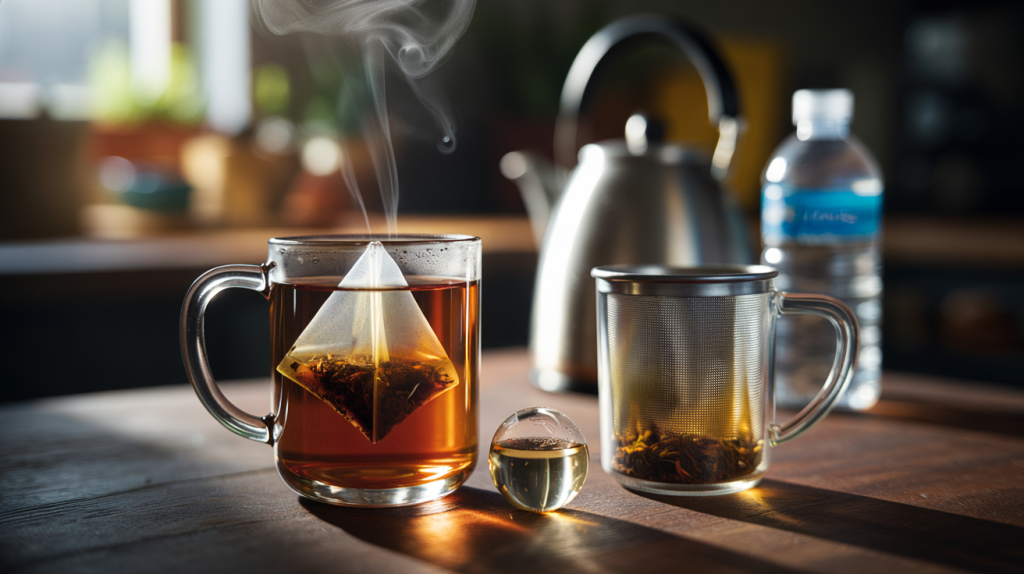
Meta description : Steeping tea in hot water can release billions of microplastics from some teabags. See the data, health context, and easy switches to cut exposure.
The kettle clicks, a teabag drops in, and the routine feels safe. Yet several studies show that hot water can pull microplastics and even nanoplastics from certain teabags into the cup, in volumes that surprise even seasoned researchers.
In laboratory tests, plastic based pyramid teabags steeped at near boiling temperatures released about 11.6 billion microplastic particles and 3.1 billion nanoplastic particles per cup (Hernandez et al., Environmental Science and Technology, 2019, McGill University). That headline number hit nerves for a reason. Tea sits in daily life. People drink it several times a day, across generations.
Microplastics in tea : what hot water does in your cup
Here is the basic mechanism. Heat softens polymers such as nylon or polyethylene terephthalate used in some premium looking mesh teabags. Agitation in hot water then sheds tiny fragments into the brew. The tea itself is not the main source in these tests, the bag is.
Tap water and bottled water can add a background level. A Columbia University team used advanced microscopy and found 110,000 to 370,000 plastic fragments per liter in popular bottled waters, with a median around 240,000 (PNAS, 2024). Those particles are far smaller than a grain of dust, which means they are not visible when a bag steeps.
Manufacturers often seal paper teabags with a thin layer of polypropylene to keep seams closed. That detail matters once water gets hot. Some brands moved away from plastic containing seals in recent years, yet many bags on shelves still use them. Labels rarely spell it out clearly.
Where the particles come from : teabag materials, hot water, the kettle
Not all bags behave the same. The 2019 McGill work tested plastic mesh styles at about 95 degrees Celsius, not paper only bags. Nylon and polyethylene terephthalate show up frequently in pyramid formats because they hold larger leaves and look premium in the cup.
Water quality also plays a role. Separate research reported that boiling hard tap water can precipitate calcium carbonate, which can trap and remove a share of microplastics before drinking. Reported reductions reached high double digits in hard water conditions after boiling and settling (Environmental Science and Technology Letters, 2023). Real kitchens vary, but the direction is encouraging.
Kettles and cups can contribute only marginally by comparison, according to available evidence. The large jumps in particle counts happen when plastic based bags meet heat, not from glass or steel contact.
What science and health agencies say about hot tea and microplastics
The World Health Organization reviewed microplastics in drinking water in 2019. The assessment stated that data at the time did not indicate a proven health risk at typical exposure levels, while calling for more research on smaller particles and additives. That ambivalence still shapes guidance today.
Since then, signals have grown. In 2022, researchers detected plastic particles in human blood in 17 of 22 healthy donors, including polyethylene terephthalate and polystyrene (Environment International, 2022). The study did not examine tea, yet it shows that some particles cross into the bloodstream.
Toxicologists focus on three questions. How many particles get in. What size ranges move through the gut wall. Which additives or adsorbed chemicals ride along. For tea, the sharpest datapoint remains the McGill experiment with plastic mesh bags at near boiling temperatures. The figure is large, but it comes from a lab setup using bags with no tea leaves inside to avoid measurement interference. That design isolates the bag, it does not mirror every home brew.
Simple switches to reduce microplastics in hot tea
The good news is practical. Small changes slash potential exposure while keeping the ritual intact. Some take seconds.
- Choose loose leaf tea with a stainless steel infuser or uncoated paper filters that specify no plastic sealant.
- If you prefer bags, look for certified plastic free tags or brands that disclose plant based, plastic free sealing.
- Let just boiled water rest for a short moment before pouring. Cooler hot water extracts flavor yet stresses polymers less.
- Use a glass or stainless steel kettle, clean limescale regularly, and avoid reheating the same water again and again.
- For hard tap water, bring to a rolling boil, let it settle, then pour off carefully, leaving mineral scale behind.
Taste still matters. Loose leaf often delivers better aroma at the same price per cup, once the tin or pouch is in the kitchen. A litle shift saves money and likely reduces plastic fragments in the mug.
What about frequency. For a daily tea drinker, swapping plastic mesh bags for loose leaf or plastic free paper bags removes the largest identified source in current studies. If bottled water is the habit, switching part of that intake to filtered tap water further reduces the baseline seen in the PNAS 2024 dataset.
One last piece in the picture is transparency. Brands that publish material specs and temperatures show confidence in their supply chain. Until labeling catches up, consumers steer with material cues. Mesh that looks like nylon probably is. Plain paper that tears naturally, without a glossy seam, is more likely to be plastic free.