
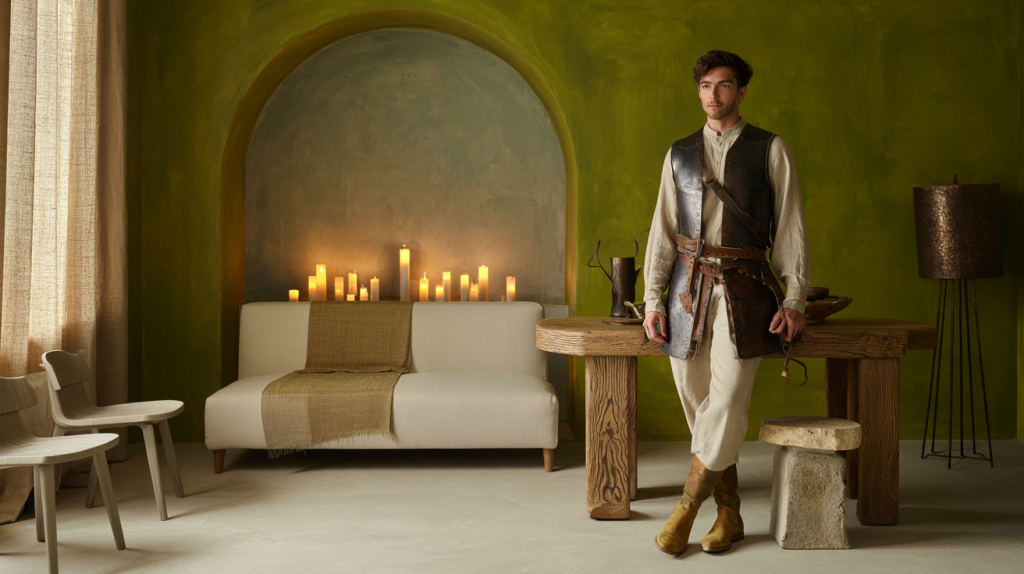
Steel meets linen. Arches meet clean lines. The modern medieval style – or “style moyenâgeux moderne” – is surging across fashion and interiors, pulling in romance plus grit without slipping into costume. Pop culture keeps feeding it: HBO said the “House of the Dragon” premiere on 21 August 2022 drew nearly 10 million U.S. viewers, a huge spark for chainmail textures, corsetry lines, and dragon-age palettes.
Games push the mood too. Bandai Namco reported “Elden Ring” passed 25 million copies by June 2024. That scale matters. When millions spend hours in ruined castles and weathered armor, we start craving rough stone, forged metal, candlelit warmth – then ask how to fold all that into daily life without living in a keep.
Modern Medieval Style: What It Means Today
The core idea is simple: borrow medieval codes – material honesty, silhouette structure, ritual lighting – and reframe them with today’s comfort. Think carved wood next to soft boucle. A breastplate line echoed by a tailored vest. Heavy drapes trimmed, not drowned, by light.
There’s a common worry: will this read cosplay? Not if the balance stays modern. Let weight meet air. One statement element, then quiet companions. A single wrought iron piece and three clean planes is stronger than a room full of props.
Color does a lot of the lifting. Deep greens, iron grey, oxblood and warm straw sit nicely with contemporary off-whites. Keep finishes tactile – limewash, brushed oak, hammered metal – so the eye feels age, while layouts stay open and practical.
Runway to Street: Fashion Takes on Medieval Codes
Designers keep revisiting armor logic: structured bodices, articulated sleeves, lacing that sculpts rather than squeezes. On the street, the translation looks softer – cropped leather vests over fluid shirts, skirts with godets that move like tabards, boots with patina not polish.
Pop-driven spikes come and go, but construction sticks. After “House of the Dragon” landed in 2022, stylists leaned into ring belts, metal hardware, and tapestry textures because they photograph richly while staying wearable with denim and knits.
A practical filter helps: if a piece works with a plain tee and black trousers, it’s modern enough. A chainmail-inspired knit? Yes. A full hauberk? Save it for the fair. Layer textures, not tropes, and the look feels lived-in, not theatrical.
Interiors: Stone, Wood, and Light Without the Draft
Homes crave atmosphere, not damp castles. Start with mass: a chunky wood table, a stone side table, or a plaster pedestal. Then add contrast – slimlined chairs, a simple sofa, airy sheers. The silhouette reads medieval, the comfort reads now.
Lighting makes the spell. Pools of warm light beat bright, flat ceilings every time. The U.S. Department of Energy notes LED bulbs use at least 75% less energy and last up to 25 times longer than incandescent bulbs, so clusters of candle-like LEDs create mood without guilt.
Arches are iconic, yet remodelling isn’t required. Paint a soft arch behind a bed, choose a curved mirror, or hang a draped canopy with linen ties. One curve can reframe a room faster than any pile of accessories.
How to Get the Modern Medieval Look: Simple Moves
Quick wins keep things real. Try these, then pause before adding more – restraint is the secret weapon.
- Swap one sleek lamp for a wrought iron or aged brass piece with a warm bulb.
- Add a limewash or mineral paint wall in moss, ochre, or bone white for soft shadowplay.
- Choose a structured vest or corset-style top to echo armor lines over everyday shirts.
- Layer a tapestry-textured throw across a plain sofa, then stop – let it breathe.
- Bring in a single stone object – pedestal, bowl, or side table – to ground the space.
- Pick boots and belts with visible grain and rivets; skip glossy finishes.
- Use linen et wool blends in curtains or bedding for weight without heaviness.
Common misstep: buying full themed sets. Rooms and outfits look staged when everything matches. Better to anchor with one storied piece – a carved chair, a metal belt – and orbit it with simple companions that keep function front and center.
Another snag is light temperature. Cool white kills the mood. Warm 2700K bulbs, dimmers, and layered lamps revive shadow and texture, so grain and plaster actually show. A small detail, big payoff.
Why this works now comes down to emotion and use. Screens flooded culture with fortresses and quests, then daily life asked for spaces that feel protective and tactile. Modern medieval answers both: structure that holds you, softness that welcomes. Start small, test, edit. If a move accidently tips into kitsch, roll it back one step, and the story comes through clear.