
Why a morning anti inflammatory drink changes the day
Waking with stiff joints or a puffy face is not random. Low grade inflammation tends to peak after short overnight fasting, and the first sips of the day can shift that curve quickly. A warm drink built with ginger, turmeric, tea or berries brings polyphenols and spices that target the same cellular messengers behind soreness and swelling.
There is data behind the ritual. In The Journal of Pain in 2010, Christopher Black and colleagues reported that 11 days of daily ginger reduced exercise induced muscle pain by 25 percent in adults. A classic human study in Planta Medica in 1998 found that adding piperine from black pepper increased curcumin bioavailability by 2 000 percent. That pairing matters in a cup. And hydration still counts. The European Food Safety Authority set adequate daily water intakes at 2.0 liters for women and 2.5 liters for men in 2010, so starting the morning with fluid already helps.
Benefits at sunrise : what the science supports
Diet patterns rich in produce and spices are linked with calmer inflammation. Harvard T. H. Chan School of Public Health highlights foods that fight inflammation, pointing to berries, leafy greens, tea, whole grains, olive oil, and spices like ginger and turmeric. In practice, a drink concentrates several of these in an easy form the gut handles well after a night’s rest.
Curcumin, the bright compound in turmeric, has been examined in randomized trials and meta analyses for its effect on C reactive protein and other markers. Reviews published between 2016 and 2019 report statistically significant reductions in inflammatory biomarkers compared with placebo when curcumin is taken consistently, especially when combined with piperine for absorption. That is why a pinch of black pepper in a morning golden drink is not garnish.
Tea brings polyphenols that work on similar pathways. Human trials indexed by the National Institutes of Health have shown that green tea catechins, especially EGCG, can reduce oxidative stress and downregulate inflammatory signaling in the short term. Coffee contributes chlorogenic acids too, with observational cohorts suggesting lower levels of inflammation related markers among regular drinkers. The morning window simply makes these compounds easier to integrate, day after day.
Common mistakes that blunt the benefits
Many add sugar. That slows the effect. High added sugar intake is associated with higher inflammatory markers in large cohorts, so a sweetened latte or a syrupy smoothie works against the goal before 9 a.m.
Heat can be another trap. Curcumin and catechins are sensitive. Boiling for long periods diminishes potency, while steeping green tea around 70 to 80 degrees Celsius for 2 to 3 minutes preserves more EGCG, a guideline echoed by research from tea chemistry labs in the 2010s. Warm is good. Rolling boil, not so much.
Skipping protein or healthy fat alongside the drink leads to a blood sugar dip an hour later. A few nuts or a spoon of yogurt helps stabilize the morning and supports adherence, which is where results actually come from.
How to build the habit and what to put in the cup
Start with one consistent base. Water, unsweetened green tea, or lightly brewed coffee each carry polyphenols and hydration. Then layer one anti inflammatory hero ingredient and one absorption or flavor booster. Keep it simple enough to repeat. Consistency outperforms intensity.
Two practical details turn the dial. First, include black pepper when using turmeric because of the 2 000 percent bioavailability lift shown by Shoba and colleagues in 1998. Second, keep ginger in the 2 to 4 grams fresh equivalent range on most days. The Journal of Pain trial used daily ginger and saw that 25 percent pain reduction signal after 11 days, hinting that steady intake matters more than sporadic spikes.
Harvard’s nutrition guidance frames the bigger picture. Drinks are a complement to a diet rich in vegetables, fruits, legumes, whole grains, nuts, olive oil, and fish. That pattern, observed across multiple cohorts and randomized trials since the 2000s, is associated with lower rates of heart disease and type 2 diabetes, conditions where chronic inflammation plays a role. The cup starts the tone for the plate.
Here are four easy morning combinations that respect the evidence and taste good enough to stick. Pick one and run with it for two weeks. Real changes tend to appear quietly, then suddently feel obvious.
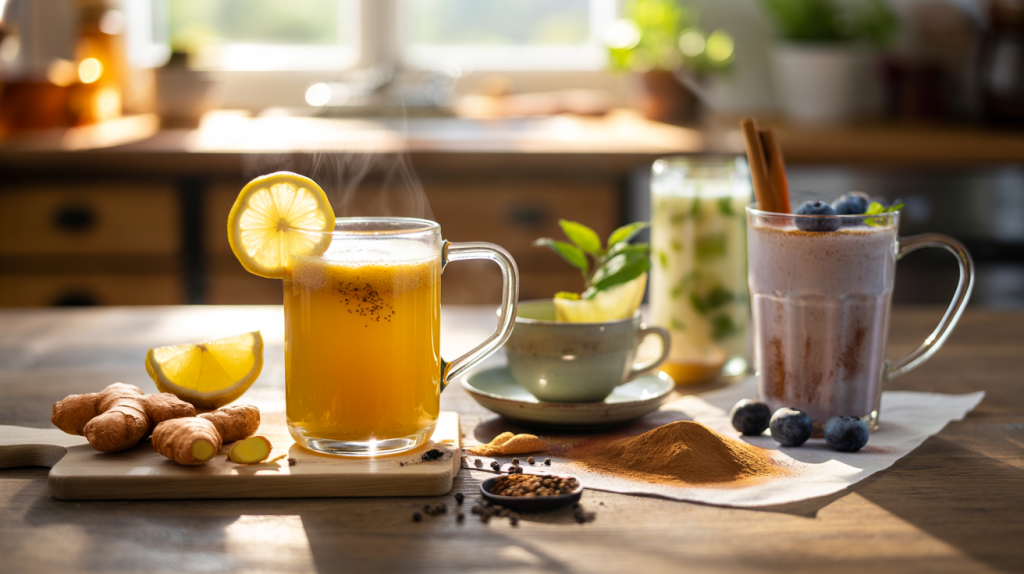
- Golden ginger sip : 250 ml warm water, 1 teaspoon turmeric powder, 1 teaspoon grated fresh ginger, a pinch of black pepper, lemon slice. Stir and drink slowly.
- Green tea citrus cooler : 250 ml brewed green tea cooled to warm, juice of half a lemon, 1 teaspoon honey if needed, ice optional.
- Berry kefir shake : 200 ml plain kefir, 80 g frozen blueberries, 1 tablespoon ground flaxseed. Blend 10 seconds.
- Coffee cacao twist : 200 ml brewed coffee, 1 teaspoon pure cacao powder, 50 ml milk or soy drink, cinnamon dust. No sugar.
One last piece that often gets missed is timing with food. Drinking your anti inflammatory cup 15 to 30 minutes before breakfast helps absorption for polyphenols and curcumin, then pairing breakfast with fiber and protein extends the benefit through the morning. The EFSA hydration targets from 2010 still apply, so this first drink also contributes to the daily total without effort.
If aches or swelling are frequent or if medications are involved, check interactions. Curcumin and green tea can affect how certain drugs are processed. Clinical pharmacists and physicians routinely review these details and can calibrate the routine safely.
References for the key data points include The Journal of Pain 2010 trial on ginger by Christopher Black and colleagues, the 1998 Planta Medica human study on piperine and curcumin by Shoba and team, and Harvard T. H. Chan School of Public Health’s guidance on foods that fight inflammation. Together they sketch a simple route from first sip to calmer mornings.