
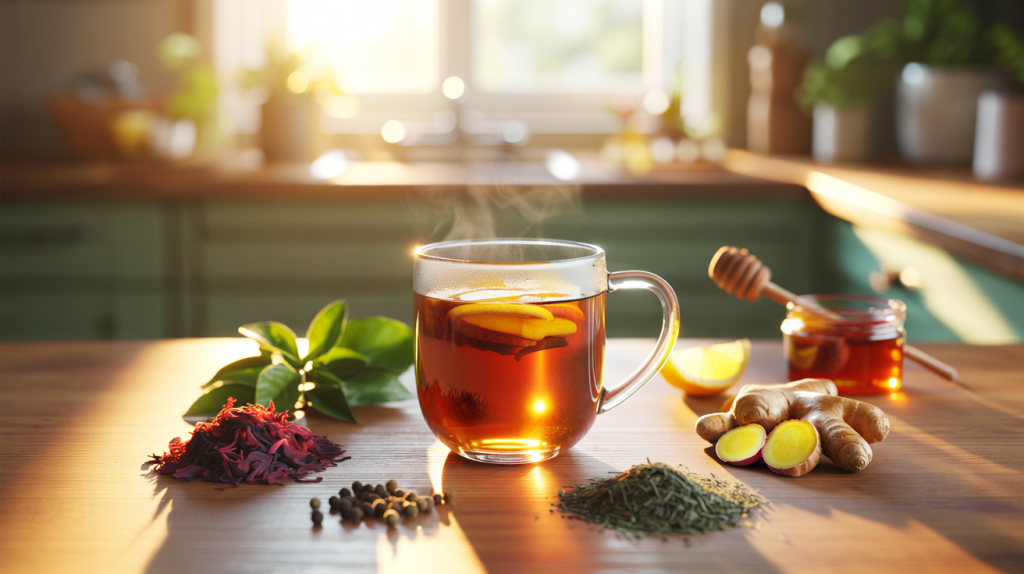
Stiff joints at wake up, face a bit puffy, mind not quite there. A warm anti-inflammatory infusion in the morning targets that low grade inflammation that makes everything feel harder, and the effect can build within weeks when ingredients are chosen with science in mind.
Here is the simple idea that people keep coming back to : steep one or two proven plants while the kettle cools, sip slowly, and let polyphenols and spices do their job. Curcumin from turmeric, gingerols from ginger, anthocyanins from hibiscus, and catechins from green tea are the usual suspects. The goal is not magic, it is consistency.
Why a morning anti-inflammatory infusion works
The evidence is not anecdotal. A meta analysis of randomized trials reported a mean reduction in C reactive protein of 3.5 mg L with curcumin supplementation, suggesting a measurable anti inflammatory effect in the blood stream over several weeks, especially in metabolic risk profiles, with the paper published by Amirhossein Sahebkar in 2015 in Clinical Nutrition.
Ginger brings its own numbers. A 2019 meta analysis in Complementary Therapies in Medicine found a pooled change in C reactive protein of minus 0.84 mg L with ginger supplementation in adults, an effect consistent with reductions in interleukin 6 and tumor necrosis factor alpha reported across trials.
Hibiscus adds a cardiovascular angle that many seek in the morning. In a randomized controlled trial in the Journal of Nutrition in 2010, Diane McKay and colleagues observed a systolic blood pressure drop of 7.2 mm Hg over 6 weeks compared with 1.3 mm Hg in the placebo group when participants drank three cups of hibiscus tea daily.
Green tea is the quiet workhorse. Epigallocatechin gallate, its key catechin, has been shown to downregulate NF kappa B signaling in human and cell studies, a pathway central to inflammation. That is the mechanistic reason it earns a spot in a morning cup when a gentle lift is welcome.
Best anti-inflammatory morning infusions to brew right now
People want choices that taste good and fit into real mornings. These are the blends that pull weight without fuss.
- Ginger infusion : 2 to 3 cm of fresh sliced ginger, steeped 8 minutes in hot water just off the boil. Warming, stomach friendly, and tied to CRP reductions in meta analyses.
- Turmeric infusion : 1 teaspoon ground turmeric or 1.5 teaspoons grated fresh root in hot water, with a pinch of black pepper to aid absorption, 10 minutes steeping. The curcumin data on CRP is strong.
- Green tea : 2 grams leaves at 70 to 80 °C for 2 to 3 minutes. Provides catechins for a light anti inflammatory nudge and about 20 to 45 mg caffeine per cup, according to USDA datasets.
- Hibiscus tea : 1.5 teaspoons dried calyces in hot water for 5 to 10 minutes. Naturally tart, caffeine free, and supportive for morning blood pressure readings in trials.
Short on time. Combine ginger with turmeric for a spiced cup that feels breakfast ready, or brew green tea alone and keep hibiscus for a second mug later in the morning.
How to brew an effective morning infusion without overdoing it
Start with fresh water that has just boiled, then wait 60 to 90 seconds before pouring on delicate leaves like green tea. This preserves catechins and avoids bitterness, which keeps the habit alive.
For a practical routine that takes less than 8 minutes, slice ginger first, add turmeric and a pinch of black pepper, pour hot water, cover the mug, and let it sit while getting dressed. If caffeine is desired, brew a small green tea separately and sip it after the spice cup. Yes, the kettle can wait one more minute.
A quick flavor anchor works on busy days. Add half a teaspoon of honey or a squeeze of lemon to ginger turmeric. Keep sweeteners light if blood sugar is a concern. The anti inflammatory target is polyphenols and spice compounds, not calories.
Safety, timing, and what science still misses
Timing sets the tone. Many tolerate ginger or hibiscus on an empty stomach, while green tea may feel better after a bite due to tannins. If iron absorption is a priority, avoid green tea within 1 to 2 hours of an iron rich breakfast, a practical detail echoed by dietetic guidance that tracks tea polyphenols interaction with non heme iron.
Interactions matter. Turmeric and ginger can increase bleeding risk with anticoagulants such as warfarin. People with gallstones should be cautious with turmeric. Hibiscus is generally avoided during pregnancy due to potential uterine effects. Green tea brings caffeine; most cups deliver roughly 20 to 45 mg, per USDA FoodData Central entries updated in recent years. When in doubt, discuss with a clinician, especially if taking antidiabetic or antihypertensive drugs.
The science is evolving. Trials showing CRP changes used capsules with standardized extracts, not only kitchen infusions. That is why a daily cup is framed as support, not a replacement for care. The upside is real consistency and low barrier. The gap is dosage standardization. A sensible compromise looks like this : one spice based infusion upon waking, optionally followed by one green tea mid morning, repeated for 4 weeks, then reassess stiffness, energy, and home blood pressure if relevant. It is definitly a small experiment worth running with attention to how the body responds.