
Dive into Mous Lamrabat’s vibrant photography where Moroccan heritage meets pop iconography. See why a 2022 museum show turned his bold visuals into a global talking point.
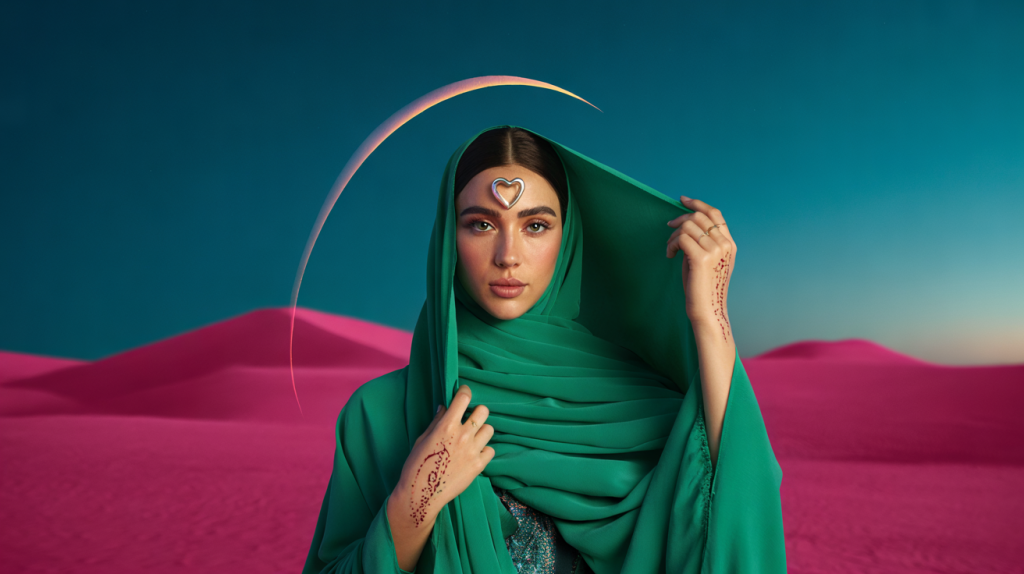
Hot pink dunes, a crescent moon that looks like a swoosh, faces veiled in silk and wit. Mous Lamrabat’s images strike first, explain later. The Moroccan-Belgian photographer builds a world where tradition and pop culture flirt, then hug, wrapping the eye in colorfull joy and gentle provocation.
That energy is not just internet buzz. In 2022, Foam Amsterdam presented the solo show “Blessings from Mousganistan” and audiences met a visual language that flips symbols without mocking them. The idea lands fast : beauty and identity can be serious and fun in the same frame, and the camera can celebrate both.
Mous Lamrabat: the Moroccan-Belgian gaze behind the vibrant images
Born in Morocco and raised in Belgium, Mous Lamrabat brings two worlds to the same table. Early on, he studied design before turning to photography, which explains the meticulous shapes and textures. Fabrics become architecture. Logos turn into punctuation marks.
He shoots portraits that glow like posters, yet feel intimate. Subjects often look straight at the lens, unbothered, regal. The styling borrows from North African garments while inserting a familiar sign – a heart, a smiley, a brand curve. It reads like pop poetry rather than a billboard.
The inversion is deliberate. Viewers can sense the play, but also the tenderness. Beauty leads, humor follows, and identity quietly anchors the whole scene.
Inside the vibrant photographs : color, symbols, and joyful tension
First thing you notice is the color – saturated, candy-bright, precise. Backgrounds sit in blocks so the subject floats cleanly. The light is soft, then unexpectedly sharp on edges, creating a sculpted feel.
Next, the symbols. Mous Lamrabat often repositions global emblems next to motifs rooted in Maghreb life – henna patterns, djellaba lines, the desert’s horizon. Not a clash, more a duet. Familiar icons change meaning when set against a different rhythm, like a chorus sung in a new key.
There is also silence in these pictures. Little noise, no clutter. It lets the body language speak – a tilt of the head, a hand wrapped in cloth, an eye smiling. Viewers get permission to look twice, then smile back.
How to read Mous Lamrabat’s visuals : a quick guide for viewers and photographers
Curiosity helps. So does a slower scroll. These cues unlock what sits under the gloss :
- Start with color : name the dominant hue, then see how it nudges your mood before any symbol kicks in.
- Spot the remix : identify one traditional detail and one pop sign – then ask how their pairing shifts the story.
- Watch the hands : gesture often carries the emotion that the face hides. It is where tenderness lives.
- Trace the line : note how veils, seams, or horizon lines guide your eye. That is design training at work.
- Borrow the setup : if you shoot, try one-tone backdrops and a single prop. Limitations keep the message crisp.
For aspiring image-makers, the method is simple, not easy. Control the palette, choose one idea per frame, and let symbols meet on equal footing. When the frame breathes, viewers do too.
Where to see Mous Lamrabat’s work : shows, series, and next stops
The turning point for many was 2022 at Foam Amsterdam, where “Blessings from Mousganistan” assembled portraits that felt like postcards from a parallel country – friendly, confident, surreal. After that, international magazines and galleries amplified the momentum, bringing new audiences to the same sunlit stage.
Expect recurring series that revisit core motifs rather than chasing trends. New shoots often refine the palette or shift a symbol’s role. The throughline remains steady : tenderness, pride, and a wink. If a piece resonates, that is the point – pictures that carry both memory and modernity tend to linger.
For those mapping next steps, keep an eye on museum programs and contemporary African art platforms that have highlighted North African voices in recent years. When a venue announces a Lamrabat show, tickets move quickly, because the promise is clear – bold color, cultural nuance, and pictures that meet you halfway.