
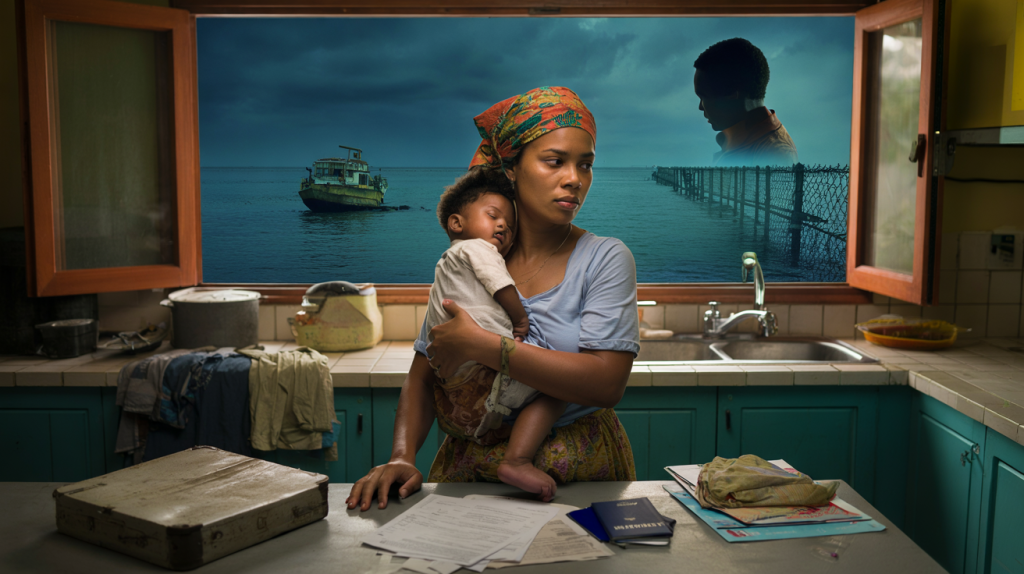
Violence, care, migration. In Nathacha Appanah’s novels, women carry these realities in their bodies and in their silences. From Mayotte in “Tropic of Violence” to the nameless war shadowing “Nothing Belongs to You”, she writes lives that feel lived, not staged. The result lands with the weight of fact, then lingers like memory.
This matters far beyond literature. UN Women notes that nearly 1 in 3 women, or 736 million, have experienced physical or sexual violence in their lifetime, most often from an intimate partner, based on 2018 data released in 2021. Appanah’s pages meet that statistic head on, giving it names, streets, and rooms. Her work, published since 2003 and crowned by prizes such as the 2016 Prix Femina des lycéens for “Tropic of Violence”, reads like a map to what many already live.
Nathacha Appanah: women’s reality, right now
The main thread is clear. Appanah keeps returning to women facing rupture and repair. The novels track scars from migration, the price of care, and how family structures bend under pressure. They do not lecture. They show.
She has done this across places and years. “The Last Brother” arrived in 2007 and set a boy’s story against the backdrop of Mauritius during World War II. “Tropic of Violence” in 2016 moved to Mayotte, a French department since 2011, and followed teenagers navigating abandonment and brutal economies. “Le ciel par-dessus le toit” came in 2019, circling a mother and her fractured family. “Rien ne t’appartient” in 2021, published in English as “Nothing Belongs to You” in 2023, explored trauma, memory and the cost of survival.
Facts that shadow her pages: numbers on women’s lives
Data frames the stakes. The International Labour Organization reported in 2018 that women perform 76.2 percent of all unpaid care work worldwide. That unseen labor often locks women into dependence and limits choices, a dynamic Appanah stages inside kitchens, day jobs, and long nights.
On money, the gap persists. According to UN Women in 2023, women globally earn about 77 cents for every dollar earned by men. The shortfall translates into vulnerability and fewer exits from violent households, a pattern her characters encounter again and again.
Migration reshapes the picture too. The United Nations Department of Economic and Social Affairs estimated in 2019 that women represent 48 percent of international migrants. Appanah has followed those journeys across oceans and borders, attentive to the thin line between protection and precarity for women on the move.
From page to place: how Appanah writes mothers, memory and migration
Take Mayotte. Appanah sets “Tropic of Violence” there in the 2010s, right after Mayotte became France’s 101st department in 2011. She tracks teens and the women around them, often single or undocumented, working in the shadows of an island where social services strain and informal networks decide futures. The book earned the 2016 Prix France Télévisions for its clarity and force.
Shift to “Nothing Belongs to You”. A woman named Tara tries to piece a past stolen by conflict. The novel treats memory like evidence. It shows how trauma is not an event but a system, one that reorganizes a life long after cameras leave. The detail work here feels unforgetable because it refuses neat arcs.
Then “The Sky Above the Roof” turns the lens to a mother whose own history tangles with her son’s crisis. Here the reality of women is interior and daily. The small choices, the bureaucratic mazes, the social judgments that arrive without warning. It mirrors what many readers already know from home.
Where to start reading Nathacha Appanah on the reality of women
Readers often ask for an entry point that matches the theme. A simple route works and keeps the facts close to the fiction.
- Tropic of Violence (2016) : Mayotte, adolescence, survival, prize winning and stark.
- Nothing Belongs to You / Rien ne t’appartient (2021 in French, 2023 in English) : trauma, memory, the long tail of war.
- The Sky Above the Roof / Le ciel par-dessus le toit (2019) : family breakdown and the quiet labor of care.
- The Last Brother (2007) : Mauritius, history intruding on a fragile household.
Two things then lift the reading from moving to practical. First, pair the novels with recent reports. UN Women’s violence brief released in 2021, the ILO’s 2018 study on care work, and UN DESA’s 2019 migration overview give scale to what the characters endure. Second, bring the conversation into real rooms. Book clubs, classrooms, community groups, even a lunch break circle. The stories hold, the data anchors, the talk changes how people see the next headline.
There is also the missing piece many hunt for. Policy and services appear offstage in much of Appanah’s fiction. That gap can be filled by checking local resources alongside the books, from shelters to legal aid directories, and by reading the footnotes of those global reports where country by country figures sit. Literature opens the door. The rest lives in the reader’s city and in the year’s newest numbers.