
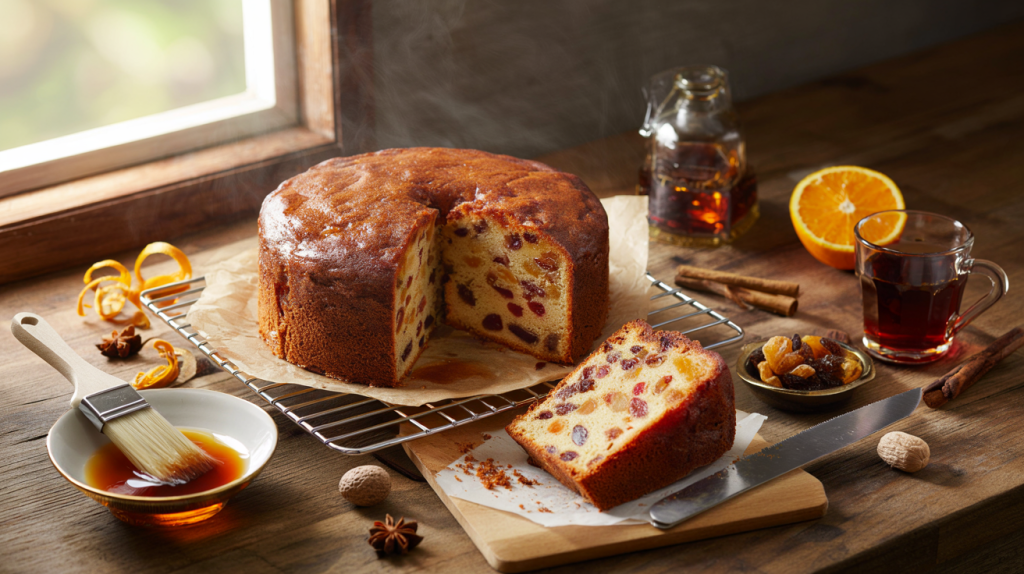
The Christmas cake that actually gets eaten. Moist, perfumed with citrus and spice, easy to slice without crumbling, and ready to make ahead or bake today. This Noël classic leans generous on fruit and gentle on sugar so the crumb stays tender, not brick‑heavy.
Here is the clear path many home bakers search for when typing “recette gâteau de Noël” in a rush: soak fruit fast, mix in one bowl, bake low and steady at 150 °C for about 2 hours, then feed with a splash of rum or tea. No month‑long aging required. The result keeps beautifully for weeks and tastes like memories warmed up.
Christmas cake recipe: ingredients, pan, temperature
This version fits a 20 cm round tin or a 900 g loaf tin. Line the base and sides with two layers of baking paper to protect the edges. Oven set to 150 °C – 300 °F, rack in the lower third. That slow bake keeps the center soft.
- 600 g mixed dried fruit : raisins, sultanas, chopped dates, candied peel
- 80 ml dark rum or 80 ml strong black tea for alcohol‑free
- 175 g unsalted butter, room temperature
- 150 g dark brown sugar
- 3 large eggs, room temperature
- 225 gramms plain flour
- 75 g ground almonds
- 2 tsp mixed spice or pumpkin spice
- 1 tsp baking powder
- 1 tsp vanilla extract
- 1 orange : zest plus 2 tbsp juice
- 100 g chopped toasted nuts, optional
- Pinch of fine salt
Method, timing and make‑ahead: from soak to slice
Start with speed‑soak fruit. Warm the rum or tea until steaming, pour over the dried fruit with orange zest, cover, and rest 30 minutes. For deeper plumpness, chill overnight.
Cream butter and sugar for 3 minutes until lighter. Eggs go in one by one, mixing just until combined. If the mix splits, fold in a spoon of the flour to bring it back together.
Whisk flour, ground almonds, baking powder, spice and salt. Fold into the bowl, then stir through fruit, all the soaking liquid, vanilla and orange juice. The batter should be thick but spoonable.
Scrape into the lined tin, smooth the top, and cover loosely with a parchment hat. Bake at 150 °C – 300 °F for 1 hour 50 minutes to 2 hours 15 minutes, until a skewer in the center comes out with a few sticky crumbs. Cool 15 minutes in the tin, then lift out and cool fully on a rack.
Avoid dry fruitcake: common mistakes and fixes
Fruit too dry. When fruit stays leathery, it steals moisture from the cake later. The warm quick‑soak solves that. If using very hard raisins, extend to 1 hour and add 1 tbsp extra orange juice to the batter.
Oven running hot. A cake that domes and cracks early often bakes too fast. Keep it at 150 °C and use a parchment cap so the top stays tender and doesn’t scorch.
Egg safety confusion. Dense cakes bake safely when the structure sets, yet many bakers still worry. The United States Department of Agriculture Food Safety and Inspection Service lists 71 °C – 160 °F as the safe minimum for egg mixtures. Source : USDA FSIS.
Alcohol questions. A boozy feed does not fully evaporate in the oven. Data compiled by the United States Department of Agriculture shows about 25 percent alcohol retention after baking for 1 hour and roughly 5 percent after 2 hours 30 minutes, depending on method. Source : USDA Retention Factors.
Too sweet for family tastes. To lighten sweetness without losing moisture, halve the candied peel and add 50 g extra ground almonds. For a health‑minded tweak, the World Health Organization advises keeping free sugars below 10 percent of daily energy intake. Source : WHO, 2015.
Storage, feeding and serving: keep it fresh for Christmas
Once cool, wrap the cake in baking paper, then foil, and slide it into a tin. Store in a cool, dark place. Classic feeding rhythm : once a week for 2 to 3 weeks, brush each side with 1 to 2 tbsp rum. Prefer zero alcohol. Mix 2 tbsp orange juice with 1 tbsp honey, warm briefly, then brush as a fragrant syrup.
Serving comes easy. Unwrap 24 hours before cutting so the crumb relaxes. A serrated knife gives clean slices. Pair with a dollop of lightly sweetened cream or sharp cheddar if tradition calls; that salty note makes the fruit sing.
Need it same day. Skip feeding and serve once cooled. The crumb stays tender thanks to the warm soak and the low‑and‑slow bake. If baking ahead, freeze well wrapped for up to 3 months and thaw overnight in the fridge, then bring to room temperature before slicing.