
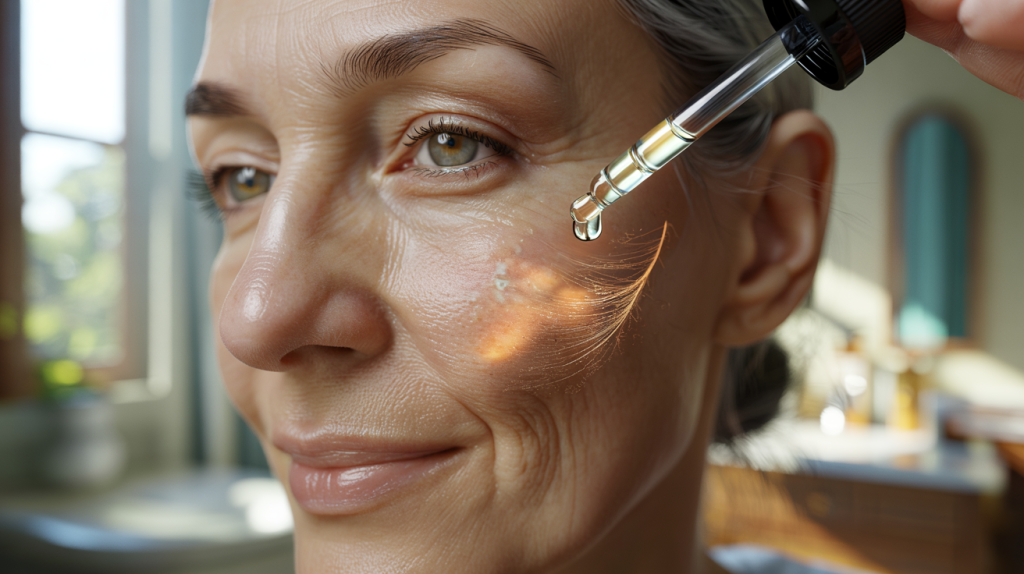
Do anti aging peptides really firm skin? See real numbers, the names that work, and a no stress routine that fits everyday life without the hype.
Wrinkles respond to messages. That is the quiet power of peptides, tiny chains of amino acids that signal skin to act younger by building collagen, easing expression lines, and strengthening the moisture barrier.
The punchline lands early. In lab work at the University of Reading in 2013, the peptide palmitoyl pentapeptide 4 known as Matrixyl nearly doubled production of collagen types I, III and IV in skin cells. Supplier data for acetyl hexapeptide 8 often called Argireline reported a 17 percent reduction in wrinkle depth around the eyes after 15 days and 27 percent after 30 days in vivo tests in 2002. Not every peptide does everything, but some do have measurable effects.
Anti aging peptides today : why they matter and what they fix
People want smoother skin without the sting of strong retinoids. Peptides aim at that gap by nudging biology rather than forcing it, so most complexions tolerate them well.
Names on labels are clues. Signal peptides such as palmitoyl pentapeptide 4 speak to fibroblasts to make new matrix proteins. Carrier peptides like copper tripeptide GHK deliver a mineral cofactor that supports repair. Neuromodulating peptides such as acetyl hexapeptide 8 relax expression related creasing at the surface.
The market keeps racing, which tells a story of demand. Grand View Research valued the global anti aging market at 67.2 billion dollars in 2022 and projected steady growth through 2030 in a 2023 report. People keep buying, and brands keep formulating, because results can show up on real faces.
How peptides work on skin : collagen signals, moisture, nerve targets
Signal peptides act like a post it note for your dermis. They attach to receptors, prompting fibroblasts to produce collagen and other matrix proteins that give skin bounce.
Carrier peptides shuttle trace elements. GHK complexed with copper supports enzymes involved in collagen crosslinking and wound repair, which can translate to firmer, more even texture over weeks.
Neuromodulating peptides take a different route. By interfering with neurotransmitter release at the neuromuscular junction, they soften the look of dynamic lines at rest. Eyes and forehead are the usual targets, not the whole face.
What studies actually show : Matrixyl, Argireline and copper data
Matrixyl first. The University of Reading team reported in 2013 that palmitoyl pentapeptide 4 nearly doubled collagen I, III and IV synthesis in cultured human fibroblasts. That points to a pathway for firmer, thicker skin when used consistently.
Argireline next. Lipotec in vivo measurements from 2002 documented a 17 percent drop in wrinkle depth after 15 days and 27 percent after 30 days on crow’s feet with acetyl hexapeptide 8. Those are supplier sponsored numbers, yet they are the data most often replicated in marketing claims.
Copper peptides round out the trio. Reviews in dermatology journals between 2018 and 2021 compiled small controlled studies where GHK copper improved skin elasticity, clarity and fine lines over 8 to 12 weeks, while noting that many trials were short and industry funded. Translation for readers at home : potential benefits exist, but patience and realistic expectations matter a lot.
How to use peptides safely : routine, combos and red flags
One product at a time wins. Layer a water based peptide serum after cleansing and before a simple moisturizer to help the actives reach their targets.
Peptides play well with sunscreen, niacinamide and ceramides. They can sit under vitamin C in the morning or retinoids at night if your skin stays calm, since the peptide families used in cosmetics often remain stable across typical pH ranges.
Big mistake seen often : hopping between five peptide serums and quitting in two weeks. Most studies measured changes at 4 to 12 weeks. Photos under the same light help you see true progress instead of guesswork.
Some labels try to confuse. Look for clear INCI names like palmitoyl tripeptide 1, palmitoyl tetrapeptide 7, acetyl hexapeptide 8, or copper tripeptide 1 near the top third of the ingredient list, not buried behind fragrance.
Here is a simple way to start that respects both skin and budget.
- Pick one goal and one peptide: collagen support with palmitoyl pentapeptide 4, expression lines with acetyl hexapeptide 8, or repair with copper tripeptide 1.
- Use twice daily if tolerated for 8 weeks, then reassess with photos taken at week 0 and week 8.
- Pair with SPF 30 or higher each morning since sun undoes collagen gains faster than any bottle can rebuild them.
- Keep the rest of the routine quiet: gentle cleanser, humectant serum, moisturizer without heavy perfume.
Why this works now. Peptides do not replace dermatologist treatments, yet they slot into daily life with low irritation and measurable upside when chosen with care. For those searching the term peptides anti age, the path is clear enough: select a proven family, commit to a window of weeks, then keep what your photos confirm. Sounds obvious, but it is definitley the missing step for most of us.
One last check before you click buy. If a product promises instant lifting without time frames or references, walk away. Real change takes weeks, and the best formulas respect that reality with plain language, named peptides and realistic claims built on dated, citable data.