
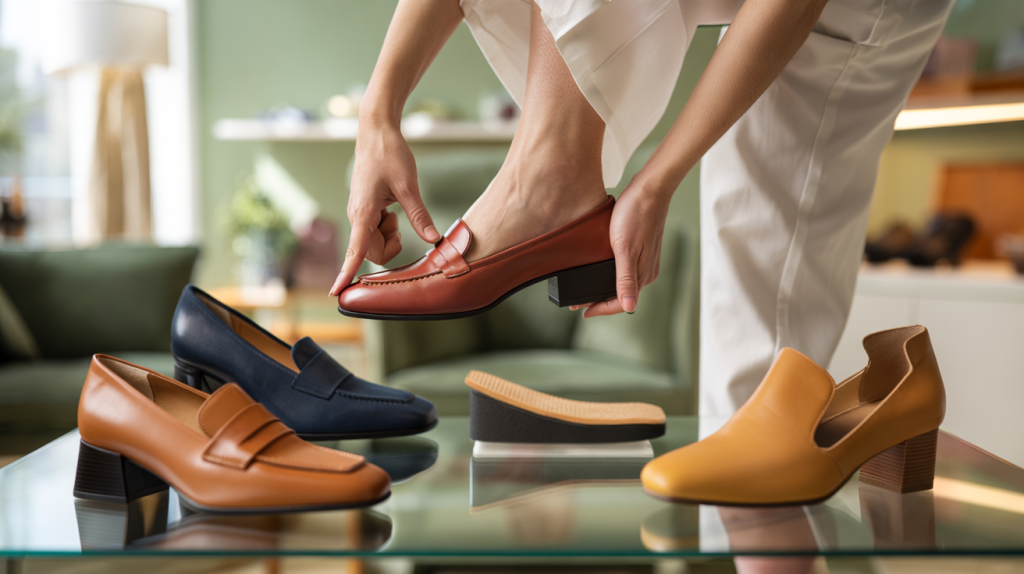
Foot pain ruins days, outfits, even plans. When a shoe is podiatrist approved for women, it means real support for the arch and heel, room for toes, and stability that keeps joints aligned. The goal is simple: shoes that feel great during a commute, a meeting, and the walk home.
This is not marketing fluff. The American Podiatric Medical Association grants a formal “Seal of Acceptance” to products that help foot health, and clinicians tend to agree on core features: a firm heel counter, a supportive midfoot, a cushioned yet stable sole, a roomy toe box, and a modest heel height. Add a removable insole if orthotics are part of the plan, and pain often eases fast.
How to spot podiatrist approved shoes for women
Start with structure. Press the heel counter. It should feel stiff, not flimsy. Bend the shoe. It should flex at the toes, not fold in the middle. Twist it. Mild resistance is good, noodle-like is not.
Fit matters more than any trend. Try shoes late in the day when feet are slightly larger. Leave a thumb width in front of the longest toe. Choose a width that lets toes spread without pressure on bunions.
Heel height stays modest. NHS guidance promotes a low heel around 1 to 3 cm for daily wear, paired with a cushioned, shock absorbing sole and good arch support. That small lift reduces strain on the Achilles while keeping weight balanced across the foot.
For everyday walking, a trainer style with a stable base works well. For the office, a leather loafer or blocked heel with a wide base and supportive insole keeps posture steady without looking orthopedic. Here is the quick way to shop in minutes.
- Look for the APMA “Seal of Acceptance” on the box or brand page.
- Check the heel counter. It should not collapse under thumb pressure.
- Bend test at the toes only. No folding at the arch.
- Toe box must be round or square, not narrow, with room to wiggle.
- Removable insole to swap in orthotics when needed.
- Heel around 1 to 3 cm. Stable, wide base beats skinny heels.
Mistakes that keep feet hurting, and how to fix them
Buying too small is common. Sizes shift with age, pregnancy, and training. Recheck both feet each year, since one foot is often larger. Choose the bigger foot, then adjust volume with the lacing or a thin forefoot insert.
Going all day in flat, floppy shoes invites arch strain. A barely there ballet flat with a thin sole can overload the plantar fascia. Swap to a model with a supportive insole, slight heel lift, and a firm midfoot. The look stays sleek while comfort jumps.
Memory foam alone is not support. Soft feels nice for five minutes, then the foot sinks and mechanics suffer. Combine cushioning with a structured shank and firm heel cup so softness does not steal stability.
One more fix that works in real life. Commute in supportive trainers with a stable sole, then change to a dressier pair at the desk. Pressure drops, energy lasts, style still shows up.
APMA Seal, NHS advice, and the numbers behind comfort
Foot pain is widespread. An APMA survey in 2014 reported that 77 percent of Americans had experienced foot pain, yet many delayed treatment. That is a lot of avoidable discomfort tied to footwear choices and fit.
Plantar fasciitis alone affects daily life at scale. The American Academy of Family Physicians in 2019 noted a lifetime incidence near 10 percent and reported it accounts for 11 to 15 percent of adult foot complaints needing professional care. Supportive shoes reduce strain on this tissue and can shorten recovery.
NHS advice remains clear on everyday pairs: low heel around 1 to 3 cm, cushioned soles, good arch support, and uppers that do not squeeze toes. Combine that with stable construction and the APMA “Seal of Acceptance” for models that actively promote foot health, not just comfort in name.
Translation for busy schedules. Choose structure first, then style. The right platform helps the ankle, knee, and hip line up, so walking feels easier and balance improves.
What to buy next: categories that pass the podiatry test
Walking sneakers with a stable base for commute and travel. Look for a rocker style only if a clinician recommends it for heel pain or big toe stiffness.
Leather loafers with a supportive insole for office days. A wide toe shape prevents pressure on bunions and lets toes splay naturally.
Ankle boots with a low, broad heel for autumn to spring. Inside, a firm heel cup and midfoot support keep the stride steady on longer days.
Dress shoes for events. Choose a block heel around 3 cm with a secure back strap and a padded, supportive footbed. Slim stilettos look sharp for photos, but they are not built for hours of standing.
Before paying, test the pair for ten minutes on a hard surface, not carpet. Bring existing orthotics and socks. If hotspots appear or the arch feels mushy, walk away and try the next candidate. Good shoes do not need a break in to feel right. If that comfort does not arrive in store, it will rarely recieve you on day three.