
Searches for posh style are surging as quiet luxury steals the spotlight and royal-core looks cycle back into feeds. The word feels old-world, yet the look reads current, discreet, almost whisper-wealth. And yes, it goes way beyond a blazer and pearls.
The term carries cultural weight in Britain, touches fashion and speech, and often signals education and class codes. Interest is no accident: global personal luxury goods hit 362 billion euros in 2023, a record year that favored timeless, logo-light pieces over hype drops (source : Bain Company, 2023). Lyst even called “quiet luxury” one of the defining trends of 2023, boosted by shows like “Succession” (source : Lyst, 2023).
Posh style explained : origins and meaning
The word “posh” first appears in print in 1918, according to the Oxford English Dictionary, and the famous cruise-ship backronym “Port Out Starboard Home” has been debunked by etymologists for decades (sources : Oxford English Dictionary, Merriam-Webster). Over time, the label got glued to upper-class codes: how someone dresses, speaks, and behaves in formal settings. Think dinner-party ease, good manners, and a bias for quality that outlasts seasons.
So, what is posh style today? A discreet, heritage-rooted aesthetic built on impeccable materials, restrained colors, and unshowy fit. It privileges tailoring over trends, leather over plastic, proper maintenance over novelty. The look aims for quiet correctness – navy and camel, crisp shirting, loafers, trench coats, polished knitwear – and avoids overt logos, neon palettes, and stunt pieces.
How posh looks : clothes, colors, and the famous accent
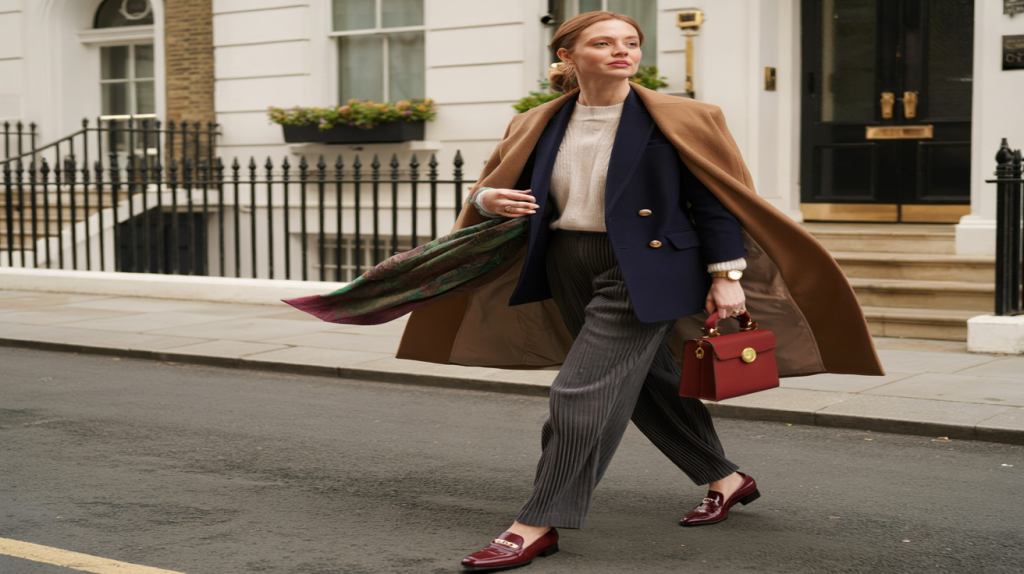
In clothes, it starts with cut and fabric. A navy blazer with horn buttons, a camel coat, a tweed jacket, sharp trousers, a silk scarf, loafers or riding boots, a Barbour waxed jacket on wet weekends. Neutral palettes lead: navy, charcoal, cream, olive, oxblood. Patterns rarely shout; they murmur in herringbone, pinstripes, and Prince of Wales check.
Grooming aligns with the same idea. Clean shoes, minimal makeup, brushed hair, subtle jewelry. If a watch appears, it tends to be slim and repairable. Bags are structured and quiet. Nothing looks brand-new; everything looks cared for.
What about the voice? Posh often evokes Received Pronunciation. Linguists have long noted that native RP speakers are a small slice of the UK – commonly cited around 2 percent – which underlines how rarefied the accent actually is (source : British Library). Clothes can nod to that world without the accent, but the cultural link persists.
Common mistakes : avoid the caricature and build the look right
Going literal can backfire. Head-to-toe tweed on a humid weekday, a brand-new blazer with shiny gold buttons, or a logo belt crossing a logo coat – it reads costume, not posh. The aim is ease. Pieces should look lived in, not precious. Etiquette matters too: thanks, pleases, and punctuality do half the work. Fashion only finishes the sentence.
For those who want a practical roadmap, the checklist below trims the noise and keeps the tone modern without falling into clichés.
- Start with fabric : wool, cashmere, cotton poplin, linen, silk, full-grain leather
- Keep colors restrained : navy, camel, grey, cream, forest, burgundy
- Choose heritage cuts : trench coat, blazer, straight jeans, pleated trousers
- Skip loud branding : let texture and drape do the talking
- Maintain everything : press shirts, repair soles, de-pill knits
- Add one accent only : a signet ring, a silk scarf, a discreet brooch
- Mind context : city tailoring for weekdays, country waxed jackets for weekends
One more trap is chasing price over quality. Posh style prizes workmanship and longevity. That can be new, vintage, or rented. A repaired blazer in hardy serge looks truer to the code than a pricey but flimsy fad piece.
From Sloane Ranger to quiet luxury : why “posh” still matters
Pop culture keeps refreshing the code. The “Sloane Ranger” scene – named for Sloane Square in London and popularized in 1982 by Ann Barr and Peter York – sketched a recognizable wardrobe of twinsets, pearls, and hunter boots linked to figures like Diana, Princess of Wales (source : The Official Sloane Ranger Handbook, 1982). Decades later, the pendulum swung to stealth wealth: camera-proof neutrals and monastic tailoring seen on screen and on runways in 2023 (source : Lyst, 2023).
Why the persistence? Posh style solves a real problem: how to look considered in uncertain times without shouting. As trends speed up, a restrained uniform lowers decision fatigue and protects budgets through cost per wear. That is part cultural instinct, part arithmetic, and part comfort.
Adopting it is simple. Start with one anchor – a navy blazer or a camel overcoat – then add solid knitwear, a white poplin shirt, dark straight jeans, and leather loafers. Vintage markets carry British heritage labels at accessible prices. Tailors can nip sleeves and hem trousers so proportions sit right. If a statement is needed, let it be texture or a single heirloom piece. The rest is posture and small courtesies: the easiest way to adress the style without saying a word.
For detail hunters, the etymology still sparks debate, and the accent landscape keeps evolving across regions and media. The wardrobe, though, stays legible: durable fabrics, muted tones, and pieces that wear in beautifully. That is the quiet core of posh – and the reason it keeps returning when trends get too loud.