
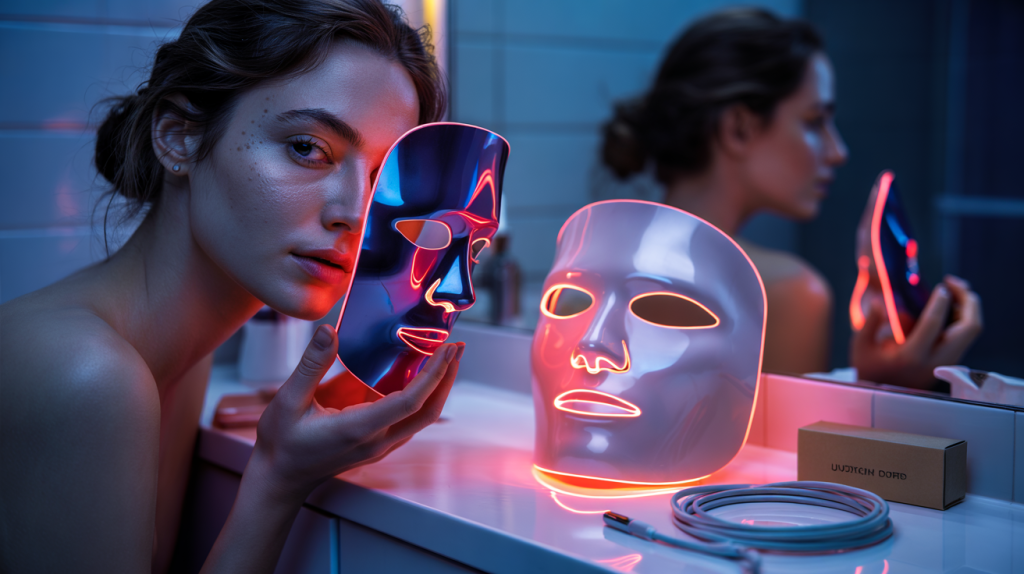
Feeds are flooded with a “Promo 85% masque LED visage” that promises spa results at a pocket price. Tempting, fast, and seemingly no effort. The catch : not every mask – or discount – is created equal, and skin is not the place for guesswork.
LED face masks can help with breakouts and early signs of aging when used correctly, but quality and safety vary a lot. Some devices are cleared by health authorities, others just look the part. A massive markdown can hide a weak light output, missing protections, or no warranty. That is where a smart check makes all the difference.
85% Off LED Face Mask Promo : what is really behind the deal
The sudden 85 percent price slash is classic flash sale playbook. Retailers use deep discounts to clear older stock, boost reviews, or gain subscribers. Good for the wallet, yes, if the device meets clear standards and the seller is transparent about specs and returns.
Look at the product page first. Does it state the light colors used for acne or rejuvenation, list safety features, and show verifiable certifications? A rock-bottom price without these signals usually means cheaper diodes, uneven coverage, and shorter lifespan.
Returns matter because results with at-home LED need consistency. If a mask irritates or fails to fit well, a 30-day return window is the line between a bargain and a drawer ornament.
LED Face Mask Results and Safety : what science and regulators say
Dermatology uses blue and red light for skin. Blue targets acne bacteria, while red is studied for inflammation and photoaging. The Cleveland Clinic describes red light as part of the visible spectrum in roughly the 620 to 750 nanometer range, used for skin and tissue applications (source : Cleveland Clinic, updated 2023).
Safety has a history. In July 2019, Johnson and Johnson voluntarily recalled the Neutrogena Light Therapy Acne Mask due to a “theoretical risk of eye injury” for certain users with underlying conditions or taking photosensitizing medication (source : Johnson and Johnson consumer safety notice, 2019). That recall pushed manufacturers to emphasize built-in eye shields, auto shut-off, and clear contraindications.
The American Academy of Dermatology Association explains that at-home LED devices are generally considered safe when used as directed, though they are less powerful than in-office treatments and need regular sessions to see change (source : AAD patient guidance). People on photosensitizing drugs or with eye disease should avoid masks unless cleared by a clinician.
How to choose a masque LED visage during a flash sale
Skincare meets tech. A quick scan keeps the promise of a big discount without the risk.
- Wavelength disclosure : for red, look for ranges described in medical sources, such as 620 to 750 nm for visible red. If acne is your goal, the page should plainly state a blue mode.
- Regulatory status : check for FDA clearance for the stated use in the United States or CE marking for Europe. Screenshots should match the brand name and model.
- Eye and skin safety : built-in eye shields, auto shut-off, and a published list of contraindications. No vague “safe for all” claims.
- Design and fit : full-face coverage, chin reach, adjustable strap. Uneven coverage often means uneven results.
- Warranty and returns : at least 1 year manufacturer warranty and a 30-day return window with clear instructions.
- Seller credibility : identifiable company address, customer support email, and a privacy policy. No anonymized marketplace listing.
One more thing : realistic session advice from the brand. Overpromising “instant glow in one use” is a red flag. LED benefits, when they appear, build over weeks.
Smart buying strategy : decode the specs, avoid traps, use it right
Start with the claim. If a promo focuses on price only, pause. A solid listing shows what colors are used, why they are used, for whom, and for how long per session, ideally supported by links to guidance from the AAD or a device manual.
Next comes the paperwork. Some LED masks are class II medical devices when cleared for a specific indication like acne in the United States, which means documented testing for safety and performance. A searchable FDA 510(k) record or CE certificate attached to the model name beats generic badges.
Then usage. Dermatology sources describe consistent, repeated sessions to see benefits, not a single blast. That is why the comfort of the fit, heat management, and visibility through the mask matter in daily life. If wearing it is a chore, routines fall apart fast. And yes, sunscreen in the morning stays non negotiable.
An 85 percent discount can be a gift. It can also be noise. Read the listing like a label, check the safety note from July 2019 to understand eye protection, compare the stated light range with credible medical explanations, and pick a seller who stands behind returns and warranty. Do that, and a viral deal turns into value you can definitly use.
Sources : Cleveland Clinic – “Red Light Therapy” overview (updated 2023) ; Johnson and Johnson Consumer Inc. safety notice, July 2019 recall of Neutrogena Light Therapy Acne Mask ; American Academy of Dermatology Association – patient guidance on light therapies.