
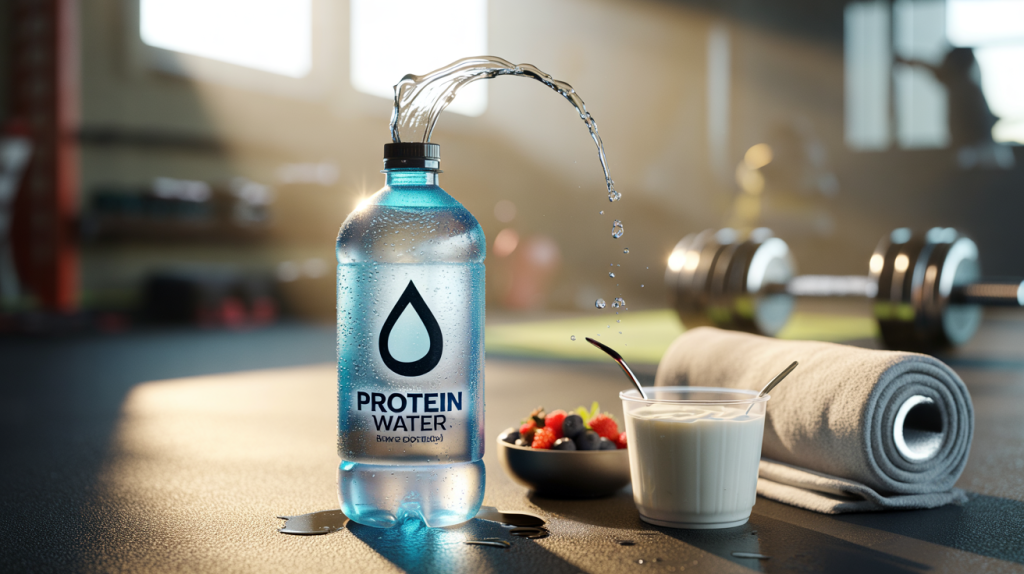
Protein water is everywhere right now, a clear drink that promises protein without the heavy shake vibe. Here is the straight answer : it can help cover daily protein needs while hydrating, and it feels lighter than milk‑based shakes. Used at the right moment, it supports satiety and post‑workout recovery with very few calories.
Numbers paint the picture. Many bottles deliver 10 to 20 g of protein for roughly 60 to 90 kcal, like products listed by Protein2o at 15 g per 500 ml serving (brand pages) : drinkprotein2o.com. The protein RDA for adults is 0.8 g per kg of body weight (National Academies, 2005) : National Academies. Active people often aim higher, around 1.4 to 2.0 g per kg per day according to the International Society of Sports Nutrition position stand published in 2017 : JISSN. On hydration, the National Academies report adequate intakes of about 3.7 liters a day for men and 2.7 liters for women, all beverages et foods combined (2005) : NASEM report.
Protein water benefits at a glance : hydration, satiety, recovery
For people who struggle to hit protein targets and do not enjoy thick shakes, this format solves a simple problem : get complete protein plus fluid with minimal calories. A 15 to 20 g serving between meals can take the edge off hunger without spiking sugar.
Satiety is not a myth here. A 2015 review in the American Journal of Clinical Nutrition reported that higher protein patterns, around 25 to 30 percent of energy, tend to increase fullness and support weight‑loss maintenance compared with lower protein patterns : AJCN 2015.
Recovery also gets a nudge. The ISSN position stand (2017) notes that 20 to 40 g of high‑quality protein per feeding supports muscle protein synthesis, especially when it supplies enough leucine. Whey isolate in protein water typically provides around 2 g leucine at 20 g protein, which hits the practical threshold cited in that paper : JISSN.
How protein water works in the body
Protein slows gastric emptying and boosts peptide hormones linked with fullness. That is why a small protein drink at 4 pm can calm the snack attack. People who flip from low protein lunches to moderate protein tend to report less evening grazing, a pattern aligned with the Leidy et al. 2015 synthesis above.
Hydration is still about total fluids over the day. Protein water counts toward those 3.7 L and 2.7 L targets, yet plain water, coffee or tea without added sugar, and watery foods still do much of the heavy lifting. During long, sweaty sessions, sodium losses can be substantial. The American College of Sports Medicine notes sweat sodium can range roughly 0.5 to 2.0 g per liter in athletes, so a low‑sodium protein water is not a full substitute for an electrolyte strategy in endurance conditions : ACSM statement.
Small but real caveat. Some bottles use collagen as the protein source. Harvard T. H. Chan School of Public Health reminds that collagen is an incomplete protein, lacking tryptophan, so it does not stimulate muscle building like whey or soy when used alone : Harvard Nutrition Source.
Choosing a protein water : ingredients, grams, quality
Labels vary a lot, so a quick check helps avoid disappointment. Simple rules keep it practical.
- Target 15 to 20 g protein per bottle for meaningful impact with 60 to 100 kcal. Example listings : Protein2o products.
- Prefer complete proteins like whey isolate or soy isolate for muscle goals. Collagen alone is not complete : Harvard.
- Scan sugars and sweeteners. The FDA lists several high‑intensity sweeteners as safe within acceptable intakes : FDA.
- If training in heat, check sodium. Low‑sodium bottles hydrate but do not replace sweat salt losses seen in athletes : ACSM.
- Allergens matter. Whey is dairy. Soy is a common allergen. Choose accordingly.
When to drink protein water for real‑life results
Timing changes the payoff. After a workout with no meal in the next hour, one bottle delivers an easy 15 to 20 g protein to kickstart repair, in line with the ISSN 2017 guidance on per‑feeding dosing : JISSN.
Between meals, it works as a low‑effort snack that curbs appetite while keeping total calories in check. In the morning, pairing it with fruit or yogurt helps distribute protein more evenly across the day, a pattern repeatedly linked with better muscle protein synthesis than loading it all at dinner in lab studies referenced by the ISSN paper.
Real life test : for seven days, aim for roughly 0.8 g per kg if sedentary or 1.4 to 2.0 g per kg if active, and let one protein water replace a higher calorie snack. Track satiety and energy across the afternoon. Those with kidney disease or on protein‑restricted plans should consult a clinician first, since high protein may not be appropriate. And if sensitive to certain sweeteners, choose an unsweetened or lightly sweetened option to avoid GI discomfort that some people report. Expect to recieve the biggest benefit when the bottle fills a true gap, not when total protein is already on point.