
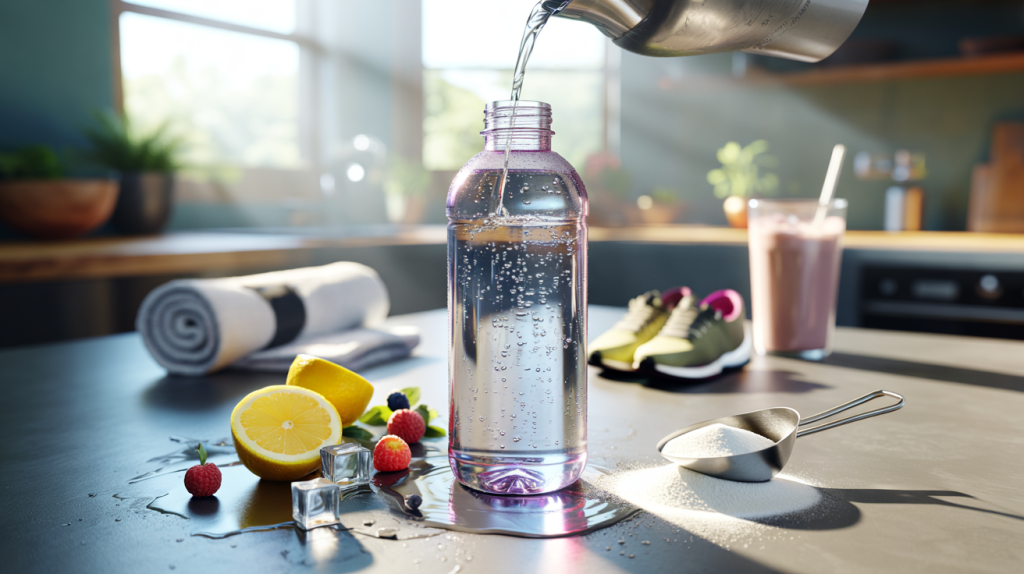
Protein water has slipped from gym bags into supermarket shelves, promising clean protein without the milky heaviness of shakes. Simple idea : clear flavored water with isolated protein, often 7 to 20 grams per bottle, usually low in calories and sugar.
The pitch hits a nerve for busy people who want protein without the fuss. It also raises real questions : what is inside, who benefits, and how does it compare to food. Here is the quick picture with numbers and sources so the choice feels easy, not noisy.
What protein water really is : from gym trend to grocery aisle
These drinks blend water, flavor, and a refined protein source. Most use whey protein isolate for a complete amino acid profile and a light, not creamy texture. Some use collagen, which lacks tryptophan and is considered an incomplete protein by nutrition scientists.
Brands list clear figures on the bottle. Protein2o reports 15 g of whey protein isolate with about 60 calories in a 16.9 ounce bottle, according to its label. Trimino states 7 g of whey protein isolate and 28 calories per 16 ounce bottle. No milk taste, often no sugar, and a see-through look that reads refreshing.
Nutrition facts : grams, calories and the science behind protein water
Daily protein needs set the baseline. The National Academies Dietary Reference Intakes from 2005 set 0.8 g per kilogram of body weight per day for healthy adults. That means roughly 56 g for a 70 kg person. One 15 g bottle covers around a quarter of that.
Active people and lifters often aim higher. The International Society of Sports Nutrition 2017 position stand recommends about 1.4 to 2.0 g per kilogram per day for regularly active individuals. For the same 70 kg person, that is 98 to 140 g per day, where protein water can fill gaps between meals.
Calories typically stay low because isolates strip out carbs and fat. Many bottles sit between 25 and 90 calories. Added sugars should be limited anyway : the Dietary Guidelines for Americans 2020 to 2025 advise less than 10 percent of daily calories from added sugar, so zero sugar options fit well.
When protein water helps and when it does not
It shines when appetite is low, time is tight, or dairy texture feels heavy after a workout. Runners cooling down on hot days like the light mouthfeel. Office workers between meetings appreciate protein without crumbs or cleanup.
Common mistakes keep popping up. People sometimes count collagen waters like complete proteins when building daily totals. Collagen is useful for skin and connective tissue, but it does not replace complete proteins for muscle repair. Others drink it on an empty stomach expecting full satiety, then feel hungry soon after because there is little fiber or fat.
Another watchout : sweeteners and acids can bother sensitive stomachs during intense training. Start with half a bottle and see how digestion reacts. Taste fatigue also hits fast if every bottle is the same flavor, which quietly reduces your intake plan.
How to choose eau protéinée without the marketing noise
Real talk : labels can be labled in ways that distract. A short scan avoids the traps and matches the bottle to the goal.
- Protein per bottle : at least 10 to 15 g if you want a meaningful bump between meals or after training.
- Protein source : whey isolate for a complete profile and fast digestion. Collagen for skin or joint goals, not as your main protein.
- Sugar and sweeteners : zero or very low added sugar. If sensitive, trial different sweeteners to find what sits well.
- Electrolytes : useful after sweaty sessions. If you did not sweat much, you may not need the extra sodium.
- Acids and flavor : citrus acids can irritate some during hard exercise. Rotate flavors to avoid taste fatigue.
- Allergens and certifications : look for lactose free, gluten free, or third party tested seals when relevant.
- Use case : recovery, travel, or snack. Pick the bottle size and protein amount that fit that moment.
There is also a simple budget twist. A shaker with water and a scoop of plain whey isolate delivers a similar clear profile, minus the flavors and with more control over protein grams. For a collagen goal, combine collagen peptides with a separate complete protein elsewhere in the day to keep your amino acid balance on track.
Numbers guide the final call. If a 15 g bottle helps you hit 1.4 to 2.0 g per kilogram on training days, it earns its spot. If you already meet the 0.8 g per kilogram baseline with meals, use protein water selectively, like during travel or hot weather sessions when regular food feels like too much.