
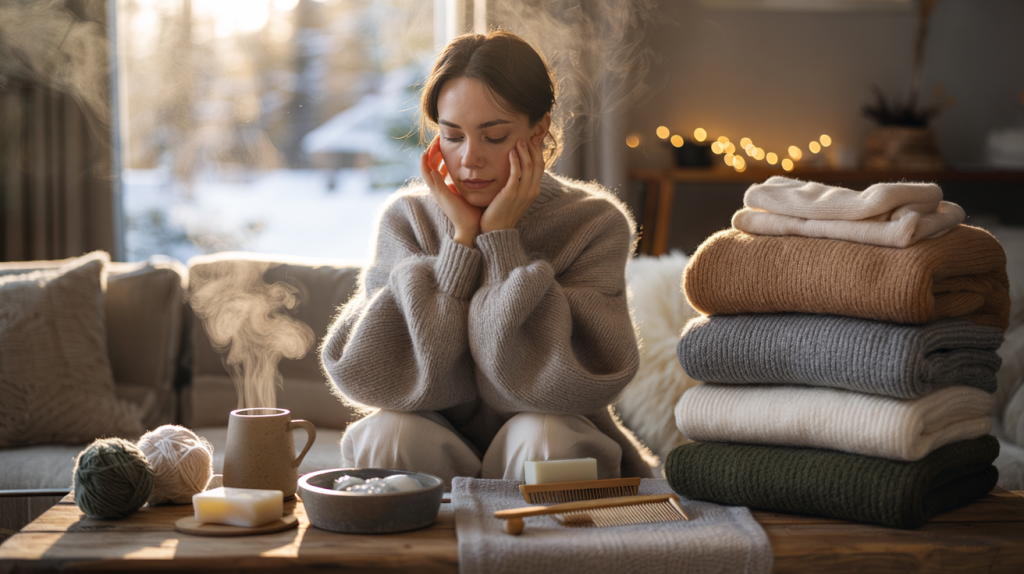
Craving a real cocoon feel at home. Decode the pull cocooning trend, the right fabrics, fits and care so your sweater stays soft, warm, and beautiful.
Searches for “pull cocooning” spike when temperatures dip, because comfort has become a daily need, not a luxury. The promise is simple : a sweater that wraps the body, traps warmth, and calms the day. Yet many knits look plush on screen and end up scratchy or sagging after two wears.
The core of a true cocooning sweater is not only thickness. It comes from fiber choice, knit density, gentle construction, and an easy fit that lets air insulate. Get those four right, and the effect is felt the second the sweater touches skin.
Pull cocooning, defined and why the trend stayed
At heart, a pull cocooning is a soft, slightly oversized knit that creates a microclimate around the body, the fashion equivalent of a quiet room. The appeal accelerated in 2020 as home life expanded to fill entire weeks. Remote work stuck around, so the sweater did too.
The main blocker shows up at checkout : composition lines look cryptic, and photos rarely show handfeel. Picking by look alone often leads to pilling or itch. The fix starts with fabric knowledge and a quick try-on routine that spotlights warmth without bulk.
Fabrics that truly cocoon, not just look soft
Wool is the benchmark for warmth with breathability. The Woolmark Company notes that wool can absorb around 30 percent of its weight in moisture without feeling wet, which keeps a steady, dry warmth in daily wear. That single property explains why a light merino sometimes feels warmer than a thicker acrylic.
Cashmere turns the dial toward cloud-soft. The Cashmere and Camel Hair Manufacturers Institute states that cashmere fibers typically measure under 19 microns in diameter, often 14 to 16 microns, which explains the buttery feel on sensitive skin. Lower micron count, softer touch, simple.
For easy care, cotton blends add softness but less thermal loft. Synthetics bring durability and price advantages, yet they can shed microfibers in the wash. Research from the University of Plymouth in 2016 found that a single domestic laundry load could release more than 700,000 synthetic fibers into wastewater. Choosing tight knits and washing gently reduces that impact.
Fit, size and small style choices that change everything
Warmth comes from trapped air, not weight. Aim for a relaxed shoulder seam and a little room at the chest, so air pockets form without looking boxy. Rib cuffs and hem help seal warmth where it escapes first : wrists and waist.
Texture matters. Looser yarns feel fluffy on the rack, but too-open stitches leak heat in wind. Mid-gauge knits usually strike the balance, especially with high-loft fibers like merino, alpaca, or cashmere. A simple crew neck keeps the cocoon intact, while a funnel neck adds calm in cold rooms.
Comfort mistakes tend to repeat. Buying too tight for a sleek line chills the body. Ignoring the hand test leads to itch. Skipping care labels shortens the sweater’s life. Here is a quick checklist to shop with clarity.
- Composition : seek high-loft fibers first, such as wool, alpaca, cashmere, or a wool-rich blend.
- Handfeel : rub the fabric on the neck for 10 seconds, any scratch then will annoy later.
- Knit density : hold fabric up to light, less show-through usually means better warmth.
- Fit : one size up or a relaxed cut helps trap air and layers easily over tees.
- Certifications : look for “OEKO-TEX Standard 100” on labels to reduce exposure to harmful substances.
Care, durability and the sustainability angle
A cozy knit should age well. OEKO-TEX launched “Standard 100” in 1992 to test textiles for harmful substances, a useful label when buying for sensitive skin. For natural-fiber sourcing, the Global Organic Textile Standard began in 2006 and remains a strong signal for organic processing.
Laundry habits decide how long a sweater stays beautiful. Hand wash or use a cold, short wool cycle, then dry flat on a towel, never hanging. That routine limits stretching and reduces microfiber shedding from any synthetic content, aligning warmth with cleaner water systems.
Waste is part of the real story. The U.S. Environmental Protection Agency estimated in 2018 that about 14.7 percent of textiles in municipal solid waste were recycled, with the rest largely burned or landfilled. A longer-lived sweater cuts that pressure, which is the quietest kind of sustainability.
So the missing piece is a two-step plan : choose high-loft fibers for real warmth, then lock in longevity with gentle care. Add one relaxed fit that layers over a tee at home and a thin merino under a coat outside. The result feels cocooning on the couch, looks presentable on screen, and stays soft through seasons. Simple, and definately satisfying.