
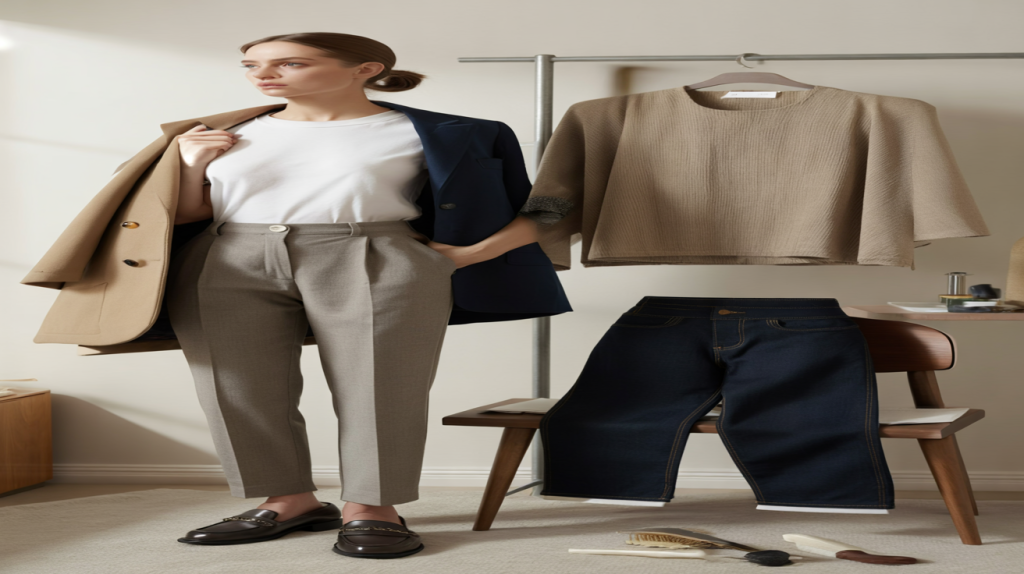
Open the closet, reach for a perfect tee, a sharp blazer, clean trousers, done. That easy elegance has a name right now : basiques haut de gamme femme. Think elevated essentials – white T-shirt in long-staple cotton, cashmere crew, silk shirt, tailored pants, trench, jeans that actually fit. The promise is simple : fewer pieces, better fabric and construction, more wears with less effort.
The shift is big and measurable. Bain et Company’s Fall 2023 update with Altagamma reported the personal luxury goods market reached €362 billion in 2023, with quieter, quality-led wardrobes holding ground. At the same time, the Ellen MacArthur Foundation flagged what these basics help to fix : clothing utilization has fallen 36 percent in 15 years, and less than 1 percent of textile fibers are recycled into new clothing. Textile Exchange’s Organic Cotton Market Report 2022 noted a 37 percent year-on-year rise in 2020-21 organic cotton output. And ThredUp’s 2024 Resale Report projects the US secondhand market at $73 billion by 2028 – quality pieces resell, fast fashion doesn’t.
What high-end basics really mean today : basiques haut de gamme femme explained
High-end basics are not about logos. They live in the cut, the handfeel, and the finish. A premium tee uses long-staple cottons like Pima or Supima for smoother yarns that pill less. A cashmere knit uses finer fibers and tighter gauge, so sleeves do not bag out after two wears. A blazer gets canvassing and clean seams, so it drapes instead of collapsing.
Color stays restrained – optic white, navy, camel, black, stone – because the silhouette does the talking. The pay-off shows in the mirror and in the calendar : pieces combine without thinking, and outfits take seconds, not twenty minutes of trial and error.
The smart buy case : numbers that favor quality over quantity
The math works in daily life. A $180 long-staple cotton tee worn 60 times costs $3 per wear. A $35 tee that loses shape after 6 spins sits at almost the same cost per wear, then goes straight to the back of the drawer. That difference compounds across the week.
Sustainability data backs the shift to fewer, better items. With clothing utilization down 36 percent in 15 years and less than 1 percent fiber-to-fiber recycling, according to the Ellen MacArthur Foundation, the most direct lever is extending use. Durable fabrics and solid construction extend lifespan. Resale completes the loop : ThredUp’s 2024 outlook shows growing demand for quality basics, which move quickly and keep value on secondhand platforms.
On materials, the supply side is changing too. Textile Exchange reported a 37 percent jump in global organic cotton production in 2020-21, signaling more availability for premium everyday pieces. Buyers feel the difference – organic long-staple cotton breathes, resists pilling, and washes cleaner. The result is simple : wardrobes stretch further.
The evergreen checklist : high-end basics for women that earn their keep
Build around a tight core. Edit ruthlessly, buy intentionally, then wear hard.
- White T-shirt in Pima or Supima cotton – medium weight, opaque, straight hem.
- Silk shirt (14 to 22 momme) – matte or sand-washed, not shiny, fluid drape.
- Tailored trousers – mid-rise, wool or wool-silk blend, full-length line.
- Cashmere crewneck – tighter knit, double-folded cuffs, no itch.
- Dark blazer – light canvassing, clean lapels, sleeve buttons that open.
- Trench coat – cotton gabardine, storm flap, real horn buttons if possible.
- Straight high-waisted jeans – raw or rinsed indigo, minimal stretch.
- Leather flats or loafers – stitched soles, soft lining, stable heel.
How to shop and care : fabrics, cuts, and the cost-per-wear that pays back
Start with touch. Run fingers over the fabric, then gently stretch and release. Quality snaps back. Hold a white tee to the light – you want density, not transparency. On knits, look for tight, even stitches. Inside a blazer, check for clean edges and secure seams. If a garment feels flimsy on the hanger, it will not improve at home.
Read the label like a contract. Cotton : long-staple where stated. Silk : momme count in the 16 to 22 range for shirts. Wool : look for traceable merino or a wool-silk blend for drape. Cashmere : single-origin or Grade A indicators help, but handfeel tells the truth. Hardware matters – sturdy zips, real corozo or horn buttons last longer.
Then run the numbers. Estimate wears across a season, not a year. A trench worn 40 times in spring and fall at $600 costs $15 per wear. Hold that against the weather-proofing and polish it adds. That is how quiet luxury wins – it shows up on busy mornings.
Care is the force multiplier. Wash tees cold, air-dry flat to keep shape. Steam silk instead of constant washing. Rest knitwear 24 hours between wears and use a sweater comb, not a harsh shaver. Resole leather flats before you see holes. Small habits extend life, cut replacements, and, truely, protect the budget.
The backdrop remains clear. Bain et Company’s 2023 figures show appetite for quality staying resilient, while circular data from Ellen MacArthur and the growth noted by ThredUp indicate where value goes when you are done wearing. Basiques haut de gamme femme sit right in that flow – timeless, useful, and ready for real days.