
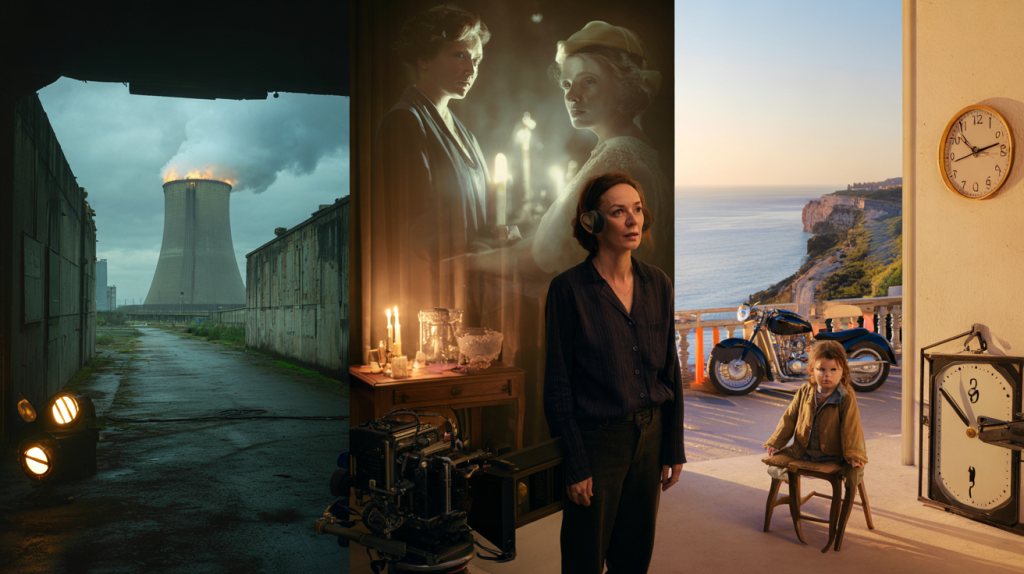
Clicking for answers on Rebecca Zlotowski et cinéma de genre makes sense. The French filmmaker has built a five‑feature run across 2010 to 2022 that keeps brushing against horror, thriller and melodrama without abandoning the intimacy that defines her work.
Here is the context, straight. Rebecca Zlotowski emerged with “Belle Épine” in 2010 at Cannes Critics’ Week, returned with “Grand Central” in Un Certain Regard in 2013, explored spiritism and show business in “Planetarium” at Venice 2016, reframed coming‑of‑age in “An Easy Girl” at Cannes Directors’ Fortnight 2019, then reached Venice Competition with “Other People’s Children” in 2022. The thread is clear: an arthouse voice testing genre borders inside France’s evolving landscape.
Rebecca Zlotowski and genre cinema : the immediate picture
The main idea lands easily. Zlotowski does not shoot pure horror or sci‑fi. She fuses genre textures with character led storytelling. That fusion answers a problem long seen in France, where auteur cinema often sat apart from pulpy thrills. Her films give viewers the tension, codes and atmosphere of genre while protecting emotional realism.
Take venues and dates, because they map intent. “Belle Épine” (2010) set a kinetic teenage world that felt like a subculture thriller, even as it lived in a raw, personal register. “Grand Central” (2013) staged love and danger around a nuclear plant, borrowing contamination anxieties that usually power disaster thrillers. The film stayed at Cannes’ Un Certain Regard, proof that hybridity can travel across festivals that privilege authorial signatures.
Then the most explicit flirtation with the supernatural arrived. “Planetarium” premiered at the Venice Film Festival in 2016 with Natalie Portman and Lily‑Rose Depp, invoking séances and prewar Europe. Ghosts, yes, but filtered through cinema history, star power and a producer’s dream of spectacle. It is Zlotowski’s clearest signal that genre can be a prism rather than a cage.
From Belle Épine to Planetarium : the codes she borrows, the warmth she keeps
“An Easy Girl” came in 2019 at Cannes Directors’ Fortnight with sunlit Riviera temptation, class games and a nimble caper mood. The setup winks at the heist and seduction template, then settles into a precise portrait of desire and social mobility. In 2022, “Other People’s Children” entered Venice Competition and tracked attachment, step‑parenthood and time passing. No horror here, yet the suspense is unmistakable: will bonds hold or break. Familiar genre engine, different fuel.
A common mistake when talking about Zlotowski and genre is to search for scares or chase scenes only. The work stays elsewhere. She borrows the scaffolding – danger zones, occult promises, seduction plots – and fills it with everyday stakes. The result keeps tension high without abandoning the human scale that built her reputation since 2010.
Concrete markers help. Five features in twelve years, each launched at a major festival slot linked to discovery or prestige, show a strategic pattern. Cannes Critics’ Week 2010, Un Certain Regard 2013, Venice 2016, Directors’ Fortnight 2019, Venice Competition 2022. The path mirrors a broader French shift where genre elements increasingly find space in A‑list programs.
French genre right now : what changed around Zlotowski
The wider backdrop matters. French genre surged back into headlines when Julia Ducournau won the Palme d’Or in 2021 with “Titane” at Cannes. That date rewired expectations worldwide about what French cinema allows under its top spotlight. Coralie Fargeat’s “Revenge” had already toured festivals in 2017, while filmmakers like Bertrand Bonello kept mixing horror and history across the 2010s. The field opened.
Inside that momentum, Zlotowski’s strategy looks deliberate. She maintains an auteur framework while importing genre signals audiences recognize instantly. That path offers financiers a familiar reference point and gives festivals the thematic depth they prize. It also meets viewers where they are: hungry for feeling et thrills, but not willing to lose nuance.
There is another point, more pragmatic. Cross‑pollination grows access. A Venice premiere for a film with spiritism vibes in 2016, then contemporary relationship suspense in 2022, helps international distribution see continuity. It keeps risk controlled while letting style evolve. Small step by small step, the boundary moves.
How to watch Rebecca Zlotowski’s genre side : a quick guide
For a clear tour, here is the single snapshot that maps the codes she bends.
- “Belle Épine” (2010, Cannes Critics’ Week) : teen subculture energy edging toward biker‑movie danger.
- “Grand Central” (2013, Cannes Un Certain Regard) : workplace romance staged against nuclear risk, borrowing thriller tension.
- “Planetarium” (2016, Venice Film Festival) : séances, showbusiness and prewar Europe, a supernatural aura around studio dreams.
- “An Easy Girl” (2019, Cannes Directors’ Fortnight) : Riviera temptation, class games, light caper undertones turned intimate.
- “Other People’s Children” (2022, Venice Competition) : emotional suspense structured like a melodrama with ticking clocks.
So where does this leave the cinéma de genre label. With Zlotowski, it sits beside the films, not on top of them. The analysis is simple. She threads genre codes to lift stakes, uses festivals that welcome hybrid forms, and keeps character at the core. If a fully committed horror or sci‑fi feature arrives one day, it will fit the trajectory already visible since 2010. And yes, that path is definitly getting clearer as France keeps embracing bold, shapeshifting cinema.