
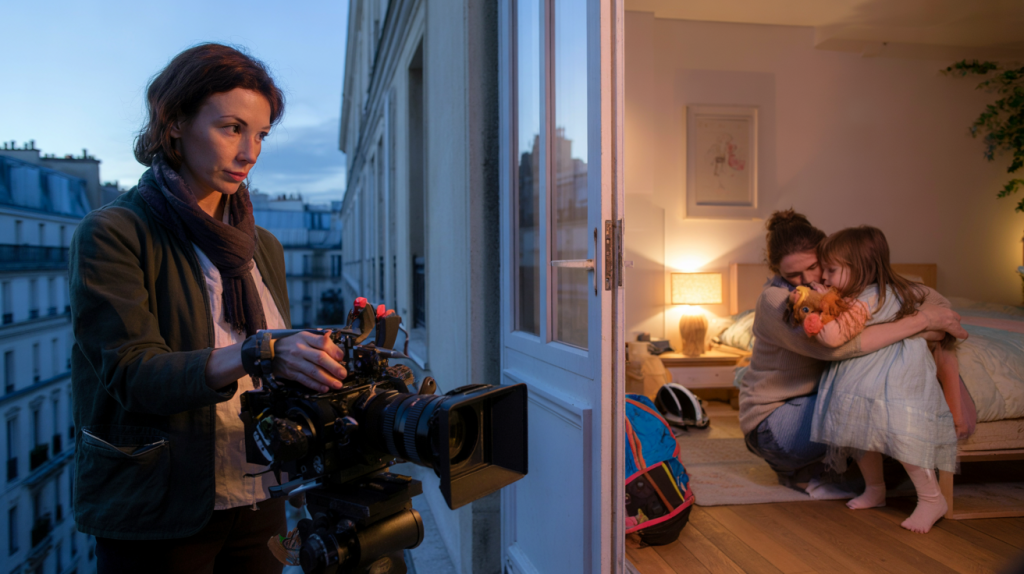
Rebecca Zlotowski interview: the heart of “Other People’s Children”
A candid entretien with filmmaker Rebecca Zlotowski lands where audiences most want it: inside the making of “Other People’s Children”, the Venice Competition title that quietly set 2022 buzzing. The conversation turns on intimacy on screen, the reality of stepfamilies, and how a finely tuned script can hold contradictions without forcing resolution.
Context helps. Rebecca Zlotowski emerged with “Belle Épine” in 2010, then moved through “Grand Central” in 2013, “Planetarium” in 2016, and “An Easy Girl” in 2019, before premiering “Other People’s Children” in the 79th Venice Film Festival in 2022. Across those years, the through line is clear: desire, class, and female perspectives shaped with a precise camera and an attentive ear.
Craft choices, casting gravity, and a life folded into fiction
The main idea she keeps returning to feels simple: intimacy is not a small subject. It is the story. With “Other People’s Children”, Rebecca Zlotowski tracks a woman who loves a man and his daughter, and loves them in different keys. The tension comes from daily gestures, not plot twists. That’s deliberate, she says in interviews around Venice, because tenderness on screen needs time and air.
There is also the matter of casting. Virginie Efira carries the film with a presence that reads lived-in. When a performer of that scale anchors a character without explaining her, the audience leans forward. Add Roschdy Zem and Chiara Mastroianni, and the triangle gains texture fast. The goal was never melodrama. The goal was recognisable life.
Numbers sketch the arc. Five features from 2010 to 2022 map a steady evolution, while a detour into series with “Les Sauvages” in 2019 widened the canvas. A season-long structure changes pacing instincts. Scenes can breathe, then tighten. Coming back to a compact feature after that asks different muscles.
What interviews reveal about theme, method, and reception
Interviews around the 2022 premiere circle three recurring points: writing from the body, editing like a musical phrase, and accepting ambiguity. Rebecca Zlotowski speaks about scenes built from physical beats first and dialogue second. Then in the edit, rhythm leads. If a moment lands, it stays. If it explains too much, it goes. Clean cuts, warmer meanings.
On the autobiographical thread, she doesn’t play coy. The film touches experiences many in France know: blended families, the ache of attachment, the calculus of time with a child who is not yours. That everyday reality is social, not just private. The interview format lets her adress the fear audiences sometimes confess: will this hurt to watch. The honest answer is yes, a little. Also yes, it can be tender.
Facts help anchor the feeling. “Other People’s Children” world-premiered in Venice in 2022 in Official Competition, a slot that historically sets the tone for European releases rolling into autumn. Before that, “An Easy Girl” arrived in 2019 and drew attention at Cannes’ Directors’ Fortnight for its Riviera lightness sharpened by class questions. In 2016, “Planetarium” paired Natalie Portman and Lily-Rose Depp, a cross-Atlantic signal of ambition. The progression is visible on a timeline, not just in reviews.
French cinema now: risk, audience trust, and what comes next
So what does this entretien add to a wider picture. That French cinema still bets on risk when it is personal and legible. Rebecca Zlotowski’s filmography shows the wager: detailed writing, open emotion, careful framing. None of it is loud, all of it precise.
There is a practical lesson for readers who create or just love films. Characters made from specific, local choices travel further than generic archetypes. A Paris classroom, a scooter ride, a bedtime routine in a small apartment. When those details show up, viewers connect across borders. That’s how a Venice Competition berth in 2022 can translate to steady word of mouth months later.
What’s missing in many conversations is the timeline pressure directors face between festival premiere and release. Post-Venice, a film has a narrow window to convert buzz into audiences. Clear messaging about theme and tone matters as much as star power. The Rebecca Zlotowski interview underlines that point without slogans. Speak plainly about what the film does. Name the stakes. Trust the viewer’s intelligence. It sounds modest. On screen, it reads bold.