
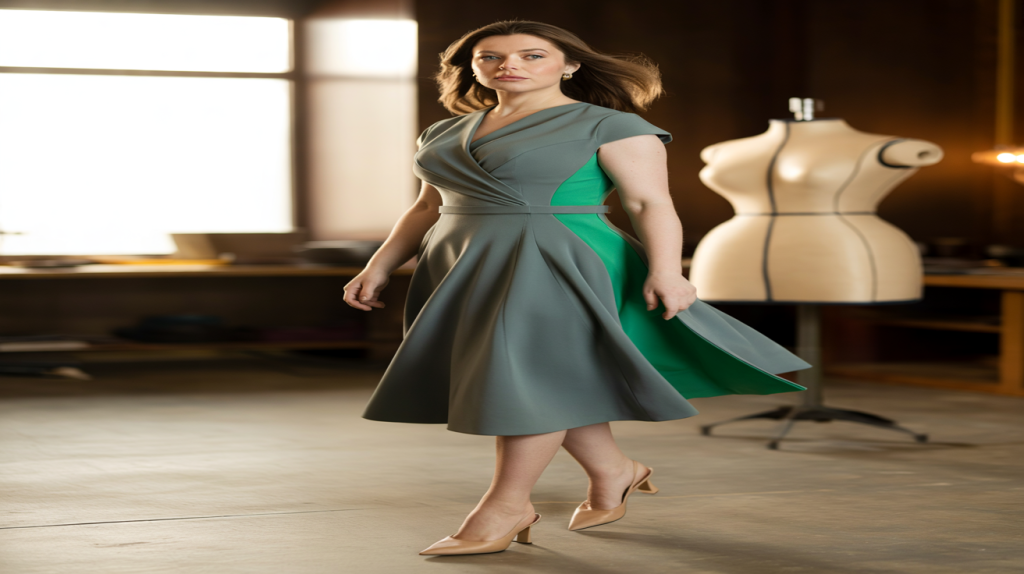
Robe taille de guêpe decoded: cuts, comfort, and real tips to get a wasp waist effect without the squeeze. Fashion history, fabrics, and smart styling.
Looking for a robe taille de guêpe that sculpts the waist, smooths the midriff, and still lets you breathe. Good call. This dress category focuses on structure and optical balance, not pain. Think shaped seams, smart fabrics, and a skirt that releases from the waist for that instant hourglass.
The idea is not new. Christian Dior’s New Look in 1947 celebrated a nipped waist with a full skirt, a formula revisited by Vivienne Westwood’s corsetry in the 1990s and amplified again after Kim Kardashian’s 2019 Met Gala moment. Today, the wasp waist dress lands in daily wardrobes, with modern stretch and lighter boning replacing rigid tricks of the past.
Robe taille de guêpe : what it really means and why it flatters
A robe taille de guêpe focuses on three zones: defined waist, supported torso, released skirt. The upper part shapes the bust and draws the eye inward at the smallest point of the torso. From there, the skirt opens, creating contrast that reads as a sharper waist, even without extreme cinching.
Pattern choices matter. Fit and flare dresses follow the classic code. Wrap cuts draw a diagonal line across the midriff, visually slimming the center. Bodices with princess seams contour the ribcage, while a subtly higher waist placement elongates legs. The goal stays the same: a precise waist point that sets up a clean vertical line.
Choosing your wasp waist dress by body type et occasion
The quickest win comes from fabric and seam placement. If the waist seam hits just above your natural bend, the leg line looks longer. If the seam sits too low, the torso can look heavy. That tiny shift changes everything on camera and in person.
There is useful science behind the effect. Research by Devendra Singh in 1993 linked a waist to hip ratio around 0.7 with a consistent perception of balance across cultures. No one needs to chase a number, but design can echo that proportion using flare, darts, and color blocking.
Common mistakes show up fast: a stiff bodice with no give, belts that squeeze instead of define, and skirts that cling at the hip instead of releasing from the waist. Real life needs movement, especially at weddings or long work events.
- Look for 2 to 5 percent elastane in woven blends for hold with comfort.
- Choose princess seams or a wrap front to sculpt the torso without corset panels.
- Place the waist seam at or slightly above your natural waist for leg length.
- Use darker shades at the center and brighter or textured panels at the sides to sharpen the waist.
- For occasions, a midi length reads polished while keeping the wasp waist contrast visible.
Comfort first : fabrics, shapewear, movement
Modern fabrics solved a lot. Lightweight twill, compact ponte, and satin with mechanical stretch create structure that moves. If shapewear enters the chat, it should smooth, not shrink. The trend backs this up. The Wall Street Journal reported SKIMS reached a 4 billion dollar valuation in 2023, showing smoothing layers turned mainstream, not niche.
A few practical fit checks help on the spot. Sit and raise your arms in the fitting room. If the waist seam climbs uncomfortably or the zipper strains, sizing or fabric composition might be off. Boning can be fine in small doses near the side seams, though soft tape boning beats rigid inserts for day wear.
Footwear completes the line. A slingback or a slim boot continues the vertical flow from waist to hem. Chunkier shoes can work with a fuller skirt, since volume at the bottom balances the cinched center without stealing the silhouette.
Care and tailoring : keep the wasp waist effect
Tailoring turns a good wasp waist dress into a great one. A quick nip at the side seams or a dart tweak aligns the waist with your natural bend. Many dresses include extra seam allowance inside, so a specialist can fine tune without changing the design.
Care routines extend that clean line. Steam between wears instead of frequent full washes, especially for structured weaves. Hang by the waist seam on a clip hanger to avoid stretching the shoulders. If the skirt grows with time, a small hem refresh returns the lift that defines the silouette.
Seasonality helps planning. Lighter sateen and soft poplin fit spring events, textured jacquard handles winter light, and matte crepe works year round. One last move. A slim belt in the exact shade of the dress hides the seam and sharpens the center line, which amplifies the wasp waist effect without adding pressure.