
A hunter becomes the hunted. Published in 1939, Geoffrey Household’s novel “Rogue Male” lands with the speed of a pulse and the precision of a trap. An unnamed English sportsman stalks a European dictator, is caught, escapes by inches, then fights to survive as an international manhunt closes in. The premise feels bare, almost surgical. The execution is anything but.
Context matters. The book arrives on the eve of war and reads like a fuse already lit. Its influence is proven in hard facts and dates. “Rogue Male” appeared in 1939. Fritz Lang filmed a version as “Man Hunt” in 1941, a British Film Institute profile lists it under that year with Walter Pidgeon and Joan Bennett. The BBC returned to the story in 1976 with “Rogue Male” starring Peter O’Toole. Decades later, The Guardian placed the novel at No 88 in its series “The 100 best novels” in 2015. There is also a sequel, “Rogue Justice”, published in 1982.
Rogue Male by Geoffrey Household: the razor wire premise
The novel opens with a failed shot at a dictator and the immediate consequences. The narrator, never named, tells the story as a confession and a field report. The tone stays clipped, intimate, practical. That voice builds tension as clearly as a map.
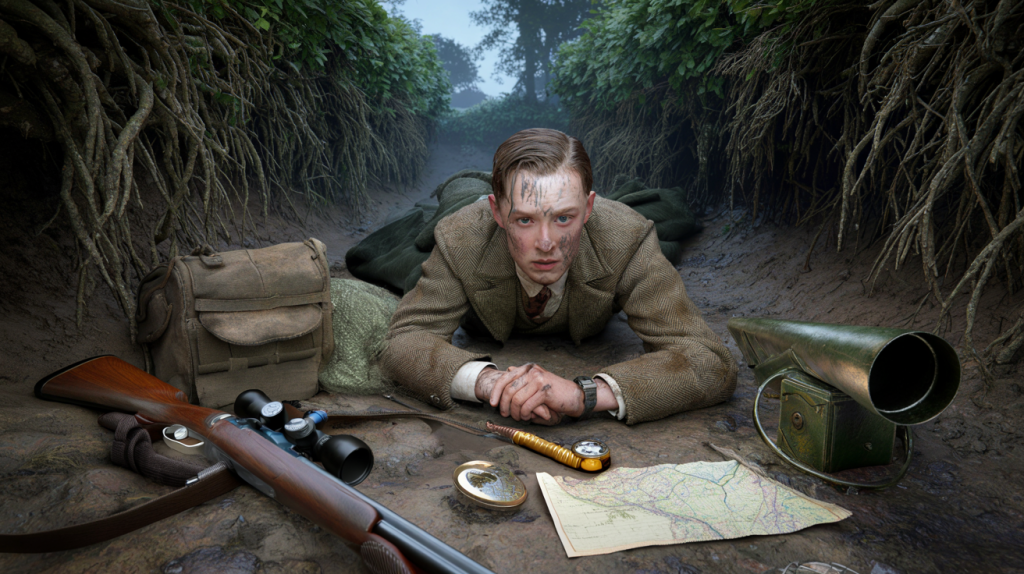
Then comes the long escape. City streets, country lanes, a cargo hold, finally the Dorset hedgerows. He digs into the earth and waits, literally. Readers have called those burrow chapters some of the most claustrophobic in English fiction. The hunter on his trail, Major Quive Smith, thinks like a sportsman too, and that duel becomes the book’s steel core.
This setup solves a familiar problem. Many thrillers promise stakes then drift. “Rogue Male” keeps pressure constant by stripping the plot to survival and pursuit. No filler. No sideshow. The result still grips new readers who crave pace without noise.
Facts that anchor the legend: dates, screens, reception
Publication came in 1939 from a London press, just weeks before Europe ignited. Hollywood moved fast. “Man Hunt” reached cinemas in 1941 with director Fritz Lang and actors Walter Pidgeon, Joan Bennett, and George Sanders, a timeline recorded by the British Film Institute. British television circled back in 1976 with a BBC adaptation directed by Clive Donner and fronted by Peter O’Toole.
Critical memory has kept the book in view. In 2015, The Guardian’s ranked history placed “Rogue Male” at No 88 among the “100 best novels” in English, confirming the title’s long tail. Geoffrey Household later returned to the character in “Rogue Justice” in 1982, which closes a thread that the first book leaves open by design.
Numbers aside, the staying power comes from texture. Fieldcraft, animal cunning, tiny choices that change the day. It feels uncomfortably real because the prose keeps to what the narrator can see and do right now.
Why it still bites: themes, style, and that Dorset hideout
The anonymity of the hero is not a trick. It turns him into a pressure test for conscience. Did he intend to kill or only to prove he could approach a tyrant undetected. The book lets the question hang until the reader cares about the cost more than the answer.
The survival sections read fast, then slow, then fast again. Short sentences snap into longer lines that drift like fatigue. That rhythm mirrors fear. The Dorset burrow is the novel’s signature image, built from soil, roots, and hunger, as tangible as rain on a tarp.
There is also an uncomfortable thread of sportsmanship between prey and pursuer. Quive Smith believes the world is a game of skill. The hero knows that game collapses under real terror. That clash gives the final chapters their edge.
How to read Rogue Male today: a quick route that works
New to Geoffrey Household or returning after years. This path helps the story land without spoilers or confusion.
- Start with “Rogue Male” in any modern edition, then read “Rogue Justice” from 1982 to see the aftermath
Screen versions do not replace the text. “Man Hunt” carries Fritz Lang’s shadowy style and changes several beats to fit 1941 studio rules. The 1976 BBC film keeps closer to the bone and lets Peter O’Toole lean into the isolation. Both demonstrate why the premise travels across eras, but the novel’s first person intensity remains unique.
Looking for proof that a lean thriller can hold a place in the canon. The 2015 Guardian ranking provides a marker. The book’s war edge and its refusal to grandstand do the rest. Readers who like Frederick Forsyth or John le Carré often cite Household as a missing link between adventure romance and the modern man on the run.
One last nudge. The chapters are short, the detail is practical, the moral knot tightens without speeches. “Rogue Male” still feels present tense. That is why it definitly keeps finding new readers, one breath, one crawl, one choice at a time.