
Rogue Male : the adaptation everyone circles
A nameless hunter lines up a tyrant in his sights, then slips into a brutal game of pursuit. That pulse never stopped. Geoffrey Household’s 1939 novel “Rogue Male” keeps returning to cinema talk, with a fresh feature adaptation long in development and fans watching for movement.
The story already hit screens twice with impact. Fritz Lang retold it as “Man Hunt” in 1941, reframing the plot for wartime audiences months before the United States entered World War II in December 1941. In 1976, the BBC delivered “Rogue Male” as a television film starring Peter O’Toole, a lean survival drama that stuck closer to the book’s taut cat and mouse rhythm.
Why Geoffrey Household’s “Rogue Male” still grips filmmakers
The main idea lands fast. One man, one impossible shot, and a chase that folds politics into pure survival. Filmmakers see a clean premise with room for modern resonance, from surveillance culture to lone wolf myths.
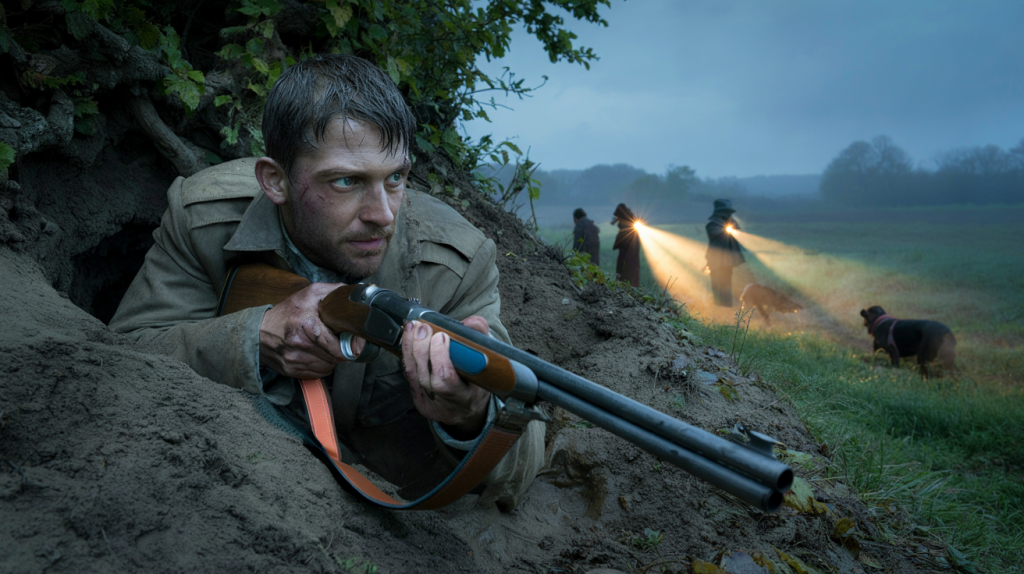
Observation from decades of viewings shows the same magnet : the novel’s second half, when the protagonist digs into the English countryside, becomes pure cinema. Earth, sweat, a burrow, and the hunter hunted. Audiences lean in because the stakes shrink to breath by breath.
Here is the hurdle many teams try to solve. Update the political trigger without flattening the ambiguity that made 1939 feel so dangerous. Change the name of the dictator and it turns generic. Keep the ethics dilemma and the tension spikes. Getting that balance right decides whether a new film feels alive or just dutiful.
From Fritz Lang’s “Man Hunt” (1941) to the BBC film (1976) : a quick map
Fritz Lang’s version moved fast for its time and bent details to fit 1941 studio rules. It added a romantic subplot and sharpened the propaganda edge, which made sense in the summer of 1941. The core image remained : a practiced shooter steps back from assassination, then runs for his life through city shadows and fog.
The BBC’s 1976 film with Peter O’Toole stripped that away and went back to mood and terrain. Viewers remember the burrow scenes and the suffocating quiet. Broadcast on British television in 1976, it channeled the novel’s patience and carried a colder, more internal energy than Lang’s noir pace.
- Two anchors exist on screen already : “Man Hunt” from 1941, lean studio thriller energy, and the BBC’s “Rogue Male” from 1976, closer to Household’s survival focus.
The new adaptation : what the trades actually reported
Industry outlets reported in 2016 that Benedict Cumberbatch and his company SunnyMarch were developing a feature adaptation of “Rogue Male”. The project positioned Cumberbatch to star as the unnamed hunter, with development active in the second half of the 2010s according to those trade reports.
That timing mattered. The book turned 77 years old in 2016, and tense political currents made its premise feel freshly sharp. Since those announcements, formal production updates stayed quiet in public channels, a familiar pattern for literary thrillers that cycle through drafts before cameras roll.
For readers tracking specifics, the facts stand clear. The novel dates to 1939. Lang’s film landed in 1941. The BBC return arrived in 1976. The modern feature entered development in 2016 with Cumberbatch attached at announcement stage. No widely reported start date followed. That is the file, as of today.
How to watch the story now and what a faithful film needs
Start with the book. Household’s prose runs spare and propulsive, and the unnamed narrator’s restraint gives filmmakers a tonal roadmap. Then sample the two screen branches to see the spectrum. The 1941 take shows how to weaponize pace. The 1976 film shows how to hold on silence without losing grip.
Common adaptation mistakes show up quickly. Over explain the politics and the suspense drains. Lose the landscape and the survival arc thins out. Forget the stalking counter moves and the antagonist turns weightless. There is a reason the novel’s rural hideout section still gets cited by writers rooms : it compresses psychology into action without speeches.
A grounded strategy for a new feature looks almost modest. Keep the hero nameless and precise. Let the first reel move like a pursuit across borders, then narrow into the soil and hedgerows. Use contemporary tech lightly and avoid easy shortcuts. Most of all, protect the moral ambiguity around the opening shot. The question of intent carries the whole engine, and viewers can smell when it gets tidied up. Do that, and “Rogue Male” definitly breathes on screen again without echoes swallowing it.