
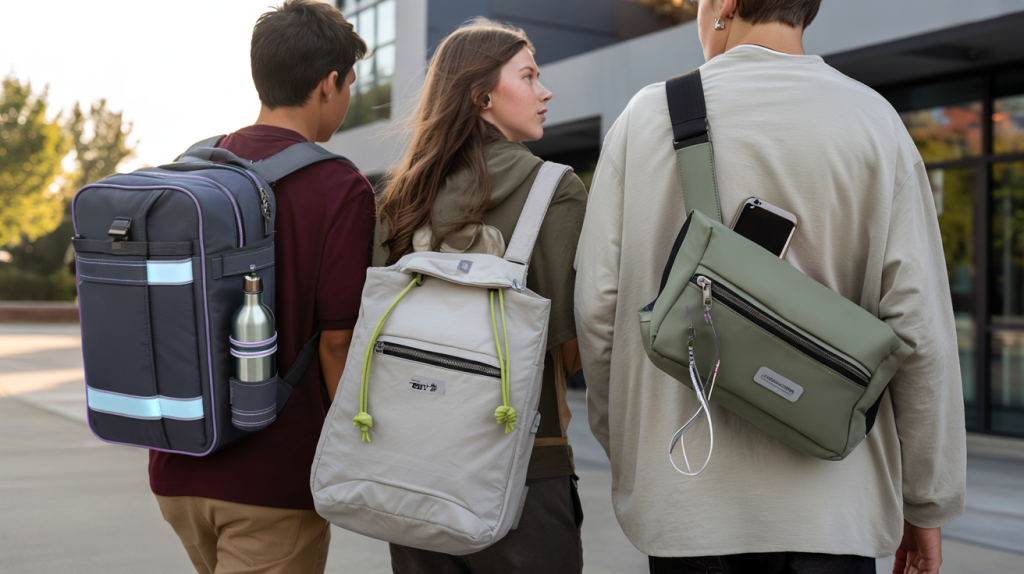
Scroll through any school drop-off this year and the signal is loud: the sac d’adolescence tendance 2025 mixes identity with utility. Teens carry compact crossbodies for quick days, soft-structured totes with zips for everything days, and mini backpacks that still fit a laptop sleeve. Water bottle holsters are non negotiable. Reflective piping quietly shows up. Recycled fabrics move from niche to normal. It looks cool, but it also works.
The stakes are real. Smartphones sit at the center of daily life, so padded tech compartments are the new baseline. Pew Research Center reported in 2023 that 95 percent of teens ages 13 to 17 have access to a smartphone. Weight is the other issue: the American Academy of Pediatrics advises a backpack load of 10 to 20 percent of a child’s body weight, a limit many exceed when sports kits and laptops pile up. Good design reduces that strain, without killing style.
Sac d’adolescence tendance 2025: shapes, colors and materials that stick
The main shift is pragmatic flair. Teens want a bag that passes dress codes, holds tech and signals taste. Parents want durability, back friendliness and a price that does not blow the back-to-school budget. Both can win.
Color first. WGSN and Coloro named “Future Dusk” their Color of the Year 2025, a violet blue that plays nicely with neutrals and metallic trims. Expect muted greens, graphite and off white to pair with it, while neon accents show up on cords or zipper pulls rather than full panels.
Shapes follow routine. A light crossbody or sling for after-school hangouts. A soft tote with a top zip for the heavy days. A compact backpack with a stable base for everything in between. Convertible straps let one bag do two jobs, so a teen can go from bus to practice without swapping gear. Materials skew toward recycled polyester and ripstop nylon for scuff resistance, plus treated canvases that shrug off drizzles.
Data check: spending, resale and why these details matter
Budgets did stretch. The National Retail Federation stated in 2023 that K to 12 back-to-school spending hit 41.5 billion dollars, with families averaging 890.07 dollars. Bags are only a slice of that, yet a smart choice saves replacement costs midyear.
Resale reshaped the hunt. ThredUp’s 2024 Resale Report noted that 63 percent of Gen Z look for an item secondhand before buying new. Translation: classic colors and repairable hardware keep value. When a strap frays or a zip fails, the bag becomes hard to resell.
Screens changed design priorities. With smartphone access at 95 percent among teens, padded sleeves and internal cable pockets went from nice to necessary. External bottle pockets cut the spills that ruin notebooks. Reflective details add visibility at dawn bus stops and late club pickups, a small add that parents quietly appreciate.
Buying guide for parents and teens: comfort, capacity, eco signals
A quick checklist avoids weak points and buyer’s remorse. Try the bag loaded, not empty, and adjust straps so the bottom sits near the low back. If the pack pulls the shoulders backward, it is too heavy or too long.
- Capacity: everyday school loads usually sit between 18 and 25 liters. Lighter days work with 12 to 16 liters. If sports gear rides along, split into a second tote.
- Straps and back panel: wide, padded straps and a cushioned back spread weight. A sternum strap helps on long walks.
- Tech fit: a dedicated sleeve for 13 to 15 inch laptops or tablets with soft lining. Keep the device against the back for balance.
- Zippers and seams: look for lockable or covered zips and box stitching at stress points. YKK hardware is a good sign of longevity.
- Water and weather: water resistant fabric and a coated base keep books dry. An internal pouch for wet gym clothes stops leaks.
- Safety and visibility: reflective tabs or piping on front and straps without turning the bag into a bike vest.
- Materials and labels: recycled polyester or cotton blends, and certifications like OEKO TEX Standard 100 for substance safety.
- Care and warranty: removable panels or machine washable liners extend life. Brand repair or long warranties reduce waste.
Eco is not just a logo. Recycled fibers reduce virgin plastic use, and sturdy stitching keeps a bag in circulation longer which also helps resale. When a teen outgrows the look, a clean, undamaged bag sells or donates faster. That aligns with the resale habit Gen Z already shows in data.
Style mistakes to dodge and simple fixes that work all year
One common misstep is going too small on capacity. A cute micro backpack that cannot fit a notebook ends up abandoned by October. Pick the smallest bag that fits a water bottle, device and two core classes, then rotate extras in a locker or slim pouch.
Another is chasing prints that date in a month. Trends move fast, but a base in navy, charcoal or Future Dusk with swappable charms, straps or patches keeps the vibe fresh. Personalization belongs on add ons that can change, not on the core shell.
Overloading is the quiet dealbreaker. Weigh the packed bag at home. If it breaks the American Academy of Pediatrics 10 to 20 percent rule, remove non essentials or split loads. Rolling options exist but can be tricky on stairs and buses, so test the route before commiting.
Last piece is fit. Short torsos need shorter back lengths, not just tighter straps. Try the bag with a hoodie on and with a tee shirt so it feels right in any season. Keep receipts and note return windows. A sac d’adolescence tendance 2025 that feels good on day one will definitly get used on day 100.