
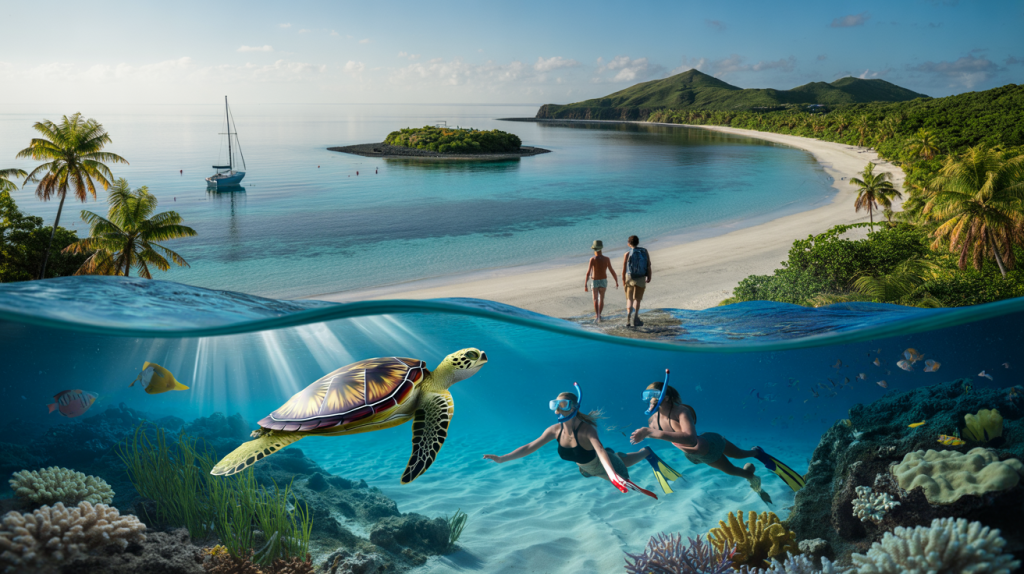
Why Saint John delivers: beaches, trails and reefs in one place
Craving a Caribbean day that starts with a powdery beach, shifts to a shady forest trail, then ends face-to-face with a sea turtle. Saint John, in the U.S. Virgin Islands, lines that up without fuss. According to the National Park Service, Virgin Islands National Park protects roughly 60 percent of the island since 1956, which is why the sand stays clean, the hills stay green and the reefs still pull you in.
Travelers come for three names that keep popping up: Trunk Bay for a signposted underwater trail, Maho Bay for calm water and turtles, and Waterlemon Cay for the kind of reef you talk about later. Hikes match the vibe: Lind Point to Honeymoon Bay, the Reef Bay Trail with petroglyphs, Ram Head for blue-on-blue views. NOAA notes hurricane season runs June 1 to November 30, so timing matters. The Virgin Islands Coral Reef National Monument, created in 2001, shelters mangroves and corals in bays like Hurricane Hole, a quiet snorkeling gem.
Best beaches on Saint John for swimming and snorkeling
Trunk Bay looks unreal, then you slip on a mask and it gets better. The underwater snorkeling trail features plaques that point out coral and common fish species, so beginners feel guided without a guide. Early morning brings the clearest water and fewer fins in your frame.
Maho Bay is where kids and first-time snorkelers relax into it. Sea turtles feed on seagrass in the shallows, and the bay stays forgiving even if trade winds pick up. Keep a respectful distance and never stand on coral. NOAA reminds visitors that sea turtles are protected wildlife – observe, do not touch.
Francis Bay stays glassy most days, with long, lazy laps for swimmers and a fringe reef for a gentle snorkel. On the south shore, Salt Pond Bay invites a calm drift over patch reefs with less crowd. Around Leinster Bay, a short walk delivers Waterlemon Cay, one of the island’s clearest reef circuits. Swimmers often go clockwise around the cay to stay with the current, then exit where they started. Simple, smart, safe.
– Snapshot list for a first visit:
– Trunk Bay: postcard sand and a marked snorkeling trail.
– Maho Bay: mellow water, frequent turtle sightings.
– Waterlemon Cay: vibrant reef loop, best on a calm morning.
– Honeymoon Bay: beach club services, easy swim in turquoise.
– Salt Pond Bay to Ram Head: snorkel then hike for the view.
Top hikes in Virgin Islands National Park: views, petroglyphs, ruins
Lind Point Trail starts right near Cruz Bay and winds to Salomon and Honeymoon beaches through dry-forest shade. That quick access turns a ferry arrival into a swim within an hour. Good traction shoes beat flip-flops here.
The Reef Bay Trail pulls you down through orchids, historical ruins and freshwater pools to a beach backed by jungle. Near the lower valley, the famous petroglyphs sit beside a reflecting pool – a rare glimpse into pre-Columbian art preserved in plain sight. Check NPS updates before you go after heavy rain.
From Salt Pond Bay, the Ram Head trail climbs to a ridgeline over open sea. Sunset light paints St. Croix in the distance on a clear day. Trade winds can be brisk, so a hat stays helpful. Cinnamon Bay rewards a slower walk through sugar mill remains and coastal forest, mixing nature with history in the time it takes to drink a bottle of water.
How to plan: seasons, ferries, safety and local rules
Arrivals are simple. Ferries from Red Hook on St. Thomas to Cruz Bay typically take about 20 minutes, per the Virgin Islands Port Authority. Grab cash or a card, then land in the walkable heart of Saint John. Car rentals sell out in peak periods – book early if exploring beyond taxis.
Water stays warm year-round. NOAA sea surface records in the northeastern Caribbean generally hover around 26 to 29°C, with the calmest snorkeling often in the morning before winds rise. During hurricane season from June 1 to November 30, flexible dates help dodge storms; winter brings cooler air and busier beaches.
Coral health matters. The Government of the U.S. Virgin Islands restricts sunscreens with oxybenzone, octinoxate and octocrylene since 2020 to protect reefs, so pack reef-safe formulas only. Do not touch coral or anchor on it, and float over shallow sections instead of standing. Mangrove snorkeling in Hurricane Hole sits within the 2001 reef monument – stay gentle around prop roots, where juvenile fish shelter.
Bring enough water for hikes, a rashguard for sun, and fins if currents pick up around cays. If conditions look rough, switch bays. That is the Saint John advantage: short distances, different exposures, quick plan B. One more thing before you travell: check NPS alerts for trail or beach updates, then sync your day with the tides, not the clock.
Sources: National Park Service for park history and sites; NOAA for hurricane season dates and sea temperatures; Virgin Islands Port Authority for ferry timing; Government of the U.S. Virgin Islands for sunscreen rules.