
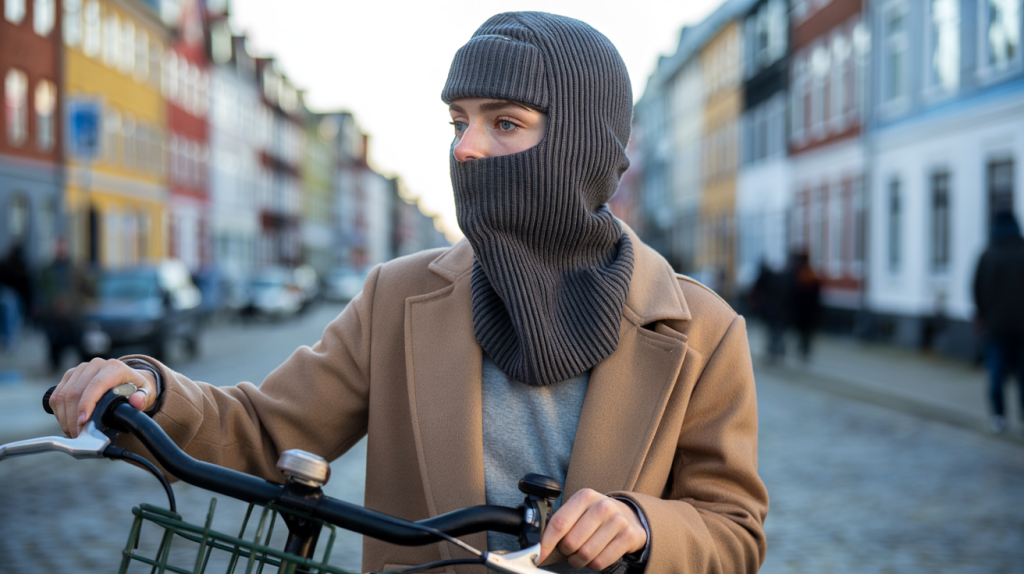
Suddenly, the balaclava is not just for powder days. The Scandinavian take – clean, cozy, unfussy – has moved from ski slopes to city sidewalks, showing up at Copenhagen Fashion Week and in everyday commutes. The appeal is immediate : warmth, anonymity when wanted, and that minimalist finish the Nordics do best.
Searches spiked as winters tightened and wardrobes simplified, and the timing makes sense. Google Trends data shows interest in the term “balaclava” peaking globally in January 2022, returning each cold season as a staple query. On the ground, the piece fits the way Scandinavians actually live – biking, walking, layering – so style and function finally shake hands.
Scandinavian balaclava trend : why it clicked now
Here is the core of it. The balaclava solves a real problem: face, ears and neck in one snug layer, but with a slim profile under coats. Street style around Copenhagen Fashion Week AW22 and AW23 captured the mood: ribbed wool hoods in quiet tones, tucked into oversized coats, zero fuss.
There is also a sustainability undertone. Copenhagen Fashion Week introduced sustainability requirements in 2020, and since 2023 brands must meet 18 minimum standards to show. Source : Copenhagen Fashion Week. That pressure nudged designers toward responsible materials and seasonless accessories – exactly where a balaclava thrives.
Function backs the trend. Merino wool can absorb up to 30 % of its dry weight in moisture while staying comfortable to the touch, which keeps humidity from freezing on skin in sub-zero air. Source : The Woolmark Company. In short, the fabric works as hard as the look.
How to style a balaclava the Scandinavian way
Nordic outfits begin simple, then layer with intent. One great formula: a charcoal ribbed balaclava, a camel tailored coat, a grey crewneck, relaxed trousers, and sturdy sneakers. The hood frames the face and cleans up the neckline, so the silhouette reads sharp, not bulky.
A common mistake is going too tight or too loud. If the knit strangles, it will ride up and ruin lines. If the color screams, it hijacks the outfit. Scandinavian style leans tonal – black, oatmeal, forest green, navy – with ocassionally a soft pastel to lift winter light.
For busy mornings, think practical layers you can adjust on the move :
- Pick a medium-gauge knit that stretches over headphones without warping.
- Match texture to coat : smooth jersey under sleek wool, chunkier ribs under puffers.
- Frame the face : show some hairline or a small earring to keep it human, not tactical.
- Cycle-proof it : choose a longer neck panel that tucks deep into a scarf or collar.
- Keep color tight to two or three shades across the whole look.
Materials, brands and sustainability : Nordic DNA
Materials make or break comfort. Merino offers warmth without itch, alpaca runs softer and loftier, while cashmere reads luxe but delicate. Tech blends with recycled polyester add wind resistance for cycling days. If you run warm, a lighter jersey knit helps regulate heat.
Check for credible standards. Labels like GOTS for organic fibers and OEKO-TEX Standard 100 for harmful substance testing help you avoid greenwashing. Source : GOTS, OEKO-TEX. Some Scandinavian labels known for clean, practical knitwear – Acne Studios, Ganni, ARKET, COS, Holzweiler – release seasonal hoods that mirror their outerwear palettes, so pairing becomes effortless.
Care matters as much as composition. Woolmark advises hand washing wool in lukewarm water around 30 °C and drying flat to keep shape. Source : The Woolmark Company. That single habit extends life and keeps edges crisp under coats.
Buying guide : fit, care and price points
Fit first. The opening should sit a finger’s width from cheekbones and just skim the chin when worn full-face. When folded back as a hood, it should lie flat beneath a collar. If it bunches at the back of the neck, size up or choose a lighter gauge.
Then weigh use case. For urban commutes, a merino or merino-nylon mix balances warmth and durability. For alpine trips, look for wind-resistant panels or a double-knit face. If you want something office-friendly, fine-gauge wool in navy or black disappears under a tailored coat.
Budget is wide. High street options start low and deliver solid basics, while designer versions in cashmere or brushed mohair climb steeply. Prioritize touch, elasticity recovery, and clean finishing at the face opening rather than just a logo.
One last detail makes the piece work day to day : keep the neck panel long enough to tuck into knitwear, not just your coat. That seal between layers is the quiet trick that keeps warmth in – very Scandinavian, very effective.