
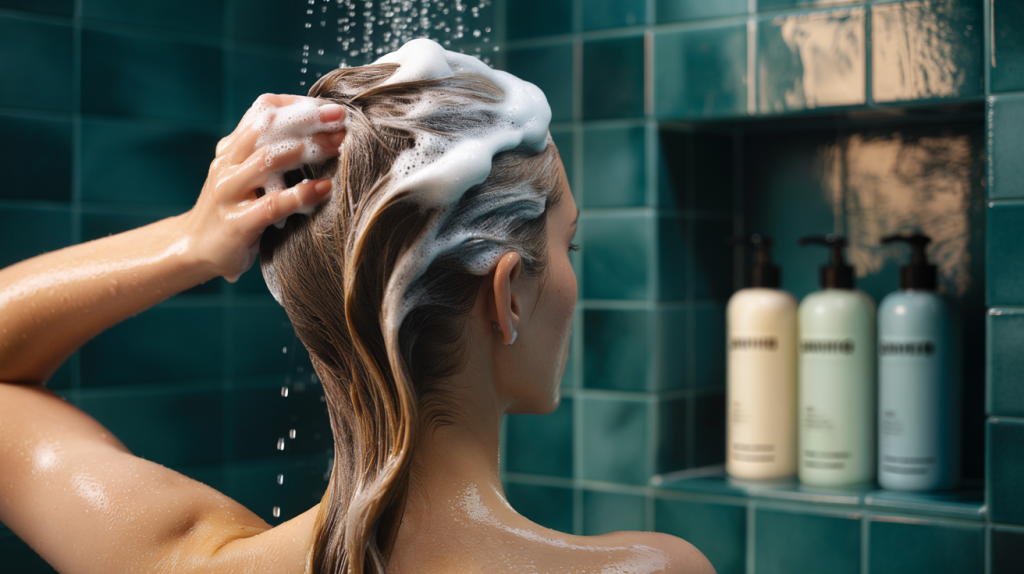
Heard of the shampoo sandwich technique and wondering if it actually helps with greasy roots and dry, frizzy ends? The idea is simple and surprisingly practical : layer your wash so the scalp gets a thorough cleanse while the lengths stay cushioned. It has been shared by hairstylists and exploded on TikTok and Instagram through 2023 and 2024 for a reason.
At its core, the method sits between classic double cleanse and reverse washing. First shampoo focuses on buildup. Conditioner then shields mid-lengths and ends. A second scalp-only shampoo lifts oil without roughing up fragile strands. Rinse, then finish with a light conditioner. The result many chase : airy roots, calm lengths, less snags.
What is the shampoo sandwich – and why it went viral
The technique targets the very real split many deal with : oily scalp, parched ends. Modern styling products and hard water stack up faster than expected, while heat and color leave the lengths depleted. Layering wash steps helps tackle both sides in one go.
Dermatology basics support the approach. The American Academy of Dermatology notes the scalp typically sheds 50 to 100 hairs a day, which means tugging and rough cleansing add avoidable stress. Hair growth averages about 0.5 inch per month according to the AAD, so preserving length matters when every centimeter counts.
There is also the pH story. A 2014 review in the International Journal of Trichology reported that healthy scalp and hair sit near pH 4.5 to 5.5, while many shampoos land higher. Placing conditioner between shampoos acts like a buffer on the cuticle when you need a deeper scalp clean.
How to do the shampoo sandwich step by step
Think of it as a gentle double cleanse with a cushion in the middle. Time on scalp, not elbow grease, does the heavy lifting.
Use lukewarm water. Hot water swells the cuticle and can increase frizz. Cool the rinse at the end for extra smoothness.
Pick formulas that match the task : a light, clarifying or balancing shampoo for the scalp, a slip-rich conditioner for mid-lengths and ends. The AAD advises leaving conditioner on for 1 to 3 minutes – enough for detangling without weigh down.
Here is the routine many find workable on wash day :
- Shampoo 1 : Emulsify a small amount. Massage only the scalp for 60 to 90 seconds. Rinse.
- Conditioner buffer : Apply mid-lengths to ends. Do not touch the scalp. Detangle gently with fingers.
- Shampoo 2 : With conditioner still on the lengths, cleanse the scalp again for up to 60 seconds. Add water to foam, not more product. Rinse everything together.
- Final condition : Light layer on lengths. Leave for 1 to 3 minutes. Rinse cool.
Who should try it – and who can skip
If roots look slick by day two but ends feel rough, this is squarely in your lane. Fine hair that collapses at the crown yet tangles at the tips often benefits because the scalp gets properly clarified while the lengths stay protected.
Coily and curly patterns can adapt the method on a gentler cadence. Focus on a mild, sulfate-free cleanser and richer conditioner. The American Academy of Dermatology advises less frequent shampooing for drier or textured hair, which pairs well with a cushioned cleanse like this.
If the scalp is very dry, irritated, or flaking persistently, pause trends and speak with a board-certified dermatologist. Medical issues such as seborrheic dermatitis or psoriasis need targeted care, not layering tricks.
The science check – sebum, pH and damage control
Why the sandwich works comes down to friction and exposure time. Conditioners deposit cationic agents that reduce combing force and help align the cuticle. Keeping that shield on the lengths while re-cleansing the scalp limits how often fragile areas meet detergent.
Hair biology supports a gentle approach. A 2015 overview in the International Journal of Trichology describes the growth cycle with roughly 85 to 90 percent of scalp hairs in anagen at any moment. Protecting fibers already formed – the visible shaft – reduces mechanical wear that can outpace regrowth.
pH matters too. Staying closer to the scalp’s mildly acidic range – about 4.5 to 5.5 per the 2014 International Journal of Trichology review – helps keep the cuticle flatter. That usually translates to less frizz and better light reflection. Products labeled as low pH or balancing tend to play nicer with this routine.
Two guardrails finish the picture. First, frequency. Oily or gym-heavy scalps may sandwich every wash. Others might use it only when there is heavy product buildup. Second, pressure. Let the cleanser sit for a minute rather than scrubbing hard. Strong scrubbing risks microdamage and extra shedding that looks scary but is definetly avoidable.
One last nudge to make it work in real life : size the dose down. A quarter-size shampoo per cleanse is often enough, then add water to boost lather. If the scalp still feels coated, extend massage time instead of piling on more product. That small tweak keeps the sandwich light – and the results consistent.