
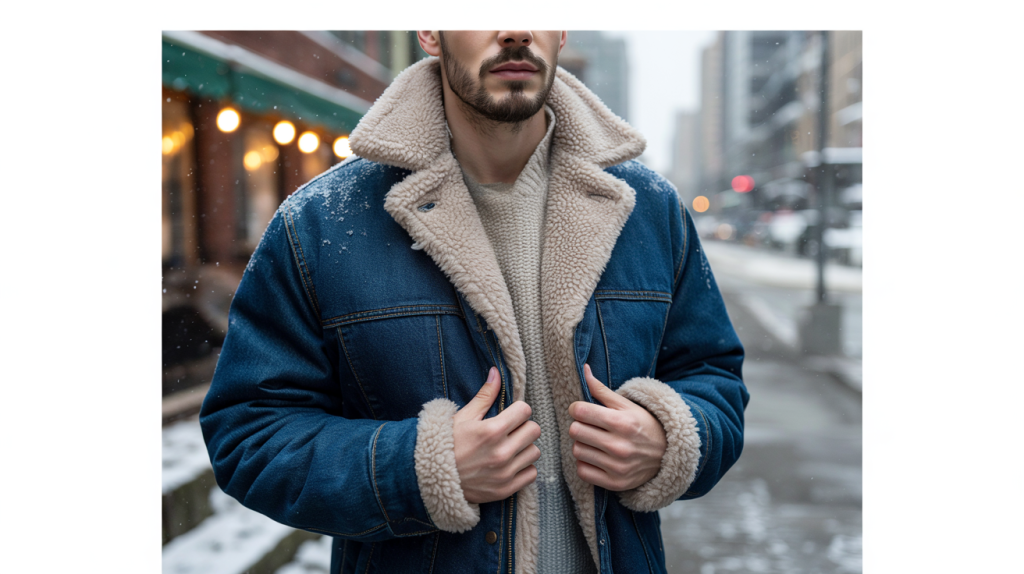
Cold snaps arrive, and the search spikes for a jacket that looks sharp and feels like a hug. The sherpa-collar jacket lands right in that sweet spot, pairing plush fleece at the neck with sturdy shells like denim, corduroy, leather or wool to lock in warmth where heat escapes fastest.
This piece is not just a trend. It solves a real winter problem: keeping the face and neck warm without bulky scarves, while adding structure that elevates everyday outfits. From city commutes to weekend walks, the sherpa collar cushions icy wind, and the lined body or sleeves, when present, stretches that comfort beyond the neckline.
Why a Sherpa Collar Jacket Wins Winter
The idea is simple. A soft, high-pile fleece at the collar traps warm air around the neck and chin, which are high-loss zones in cold weather. Many models add a full sherpa lining inside the torso to extend insulation, so the jacket works with just a knit and a tee underneath.
Style plays a role too. The contrast between matte fleece and a structured shell gives texture you can see from a distance. That detail reads winter without screaming ski lodge, which is why it pairs cleanly with jeans, tailored pants, or a sweater dress and boots.
Fabrics and Facts: What Sherpa Fleece Really Is
Sherpa fleece usually means a synthetic pile, often polyester, engineered to mimic curly wool. The concept dates to the late 1970s, when Malden Mills, later known as Polartec, developed modern fleece in 1979 with outdoor partners like Patagonia (Polartec company history, 1979).
Why the fuss about texture. Those tiny loops create air pockets that slow heat loss. Natural wool does something similar. According to The Woolmark Company, wool can absorb up to 30 percent of its weight in moisture without feeling wet, which helps manage clammy conditions when the weather turns mixed.
Materials matter for impact. An IUCN report in 2017 estimated that synthetic textiles release around 0.5 million tonnes of primary microplastics into the ocean every year and account for 35 percent of that form of pollution. That does not mean avoiding fleece entirely, it means washing smart and choosing tighter knits or blends that shed less.
How to Choose and Style Your Sherpa-Collar Jacket
Start with warmth needs. If winters are mild, a denim or corduroy shell with sherpa collar and partial lining covers school runs and office days. In harsher climates, look for full-body sherpa lining, a wind-blocking shell, and a collar that stands tall without scratching your jaw.
Fit helps or hinders heat. A slightly relaxed cut allows layering without bunching, while snug shoulders keep drafts out when cycling or moving fast. Neutral colors keep it versatile, but a tan or cream sherpa collar on navy, black or camel always lights up the face.
Quick checklist for the smart buy :
- Collar height that reaches the jawline, with a soft facing to avoid irritation
- Full or partial sherpa lining depending on your winter lows and commute time
- Shell choice by use : denim for casual, wool blend for office, leather for wind resistance
- Secure closures : sturdy zipper or snaps that seal the storm flap
- Pocket placement you will actually use, ideally hand-warmer pockets with soft lining
- Label clues : OEKO-TEX Standard 100 for tested harmful substances, recycled content if available
Care, Longevity and Impact: Make Your Winter Piece Last
Care determines whether the fleece stays cloud-soft. Wash inside out on cool cycles, low spin, and skip fabric softener that can gum up fibers. Air-dry flat to keep the pile lofty, then brush lightly with a garment brush to lift any matted spots.
Reduce shedding at home. Use a microplastic-catching laundry bag or filter insert during washes, which traps stray fibers before they enter wastewater systems. That small step directly speaks to the IUCN 2017 finding on synthetic microfibers.
If sustainability ranks high, look for recylced polyester blends or wool-lined options. Repaired seams, replaced zippers and de-pilled fleece extend life far longer than a seasonal fling. That is the quiet win : a sherpa-collar jacket that still looks good by the third winter, not just the first.