
Meta: Is “Silver Star” really the heir to “Thelma and Louise”? Get the facts, the yardstick, and the telltale signs to judge the claim without the noise.
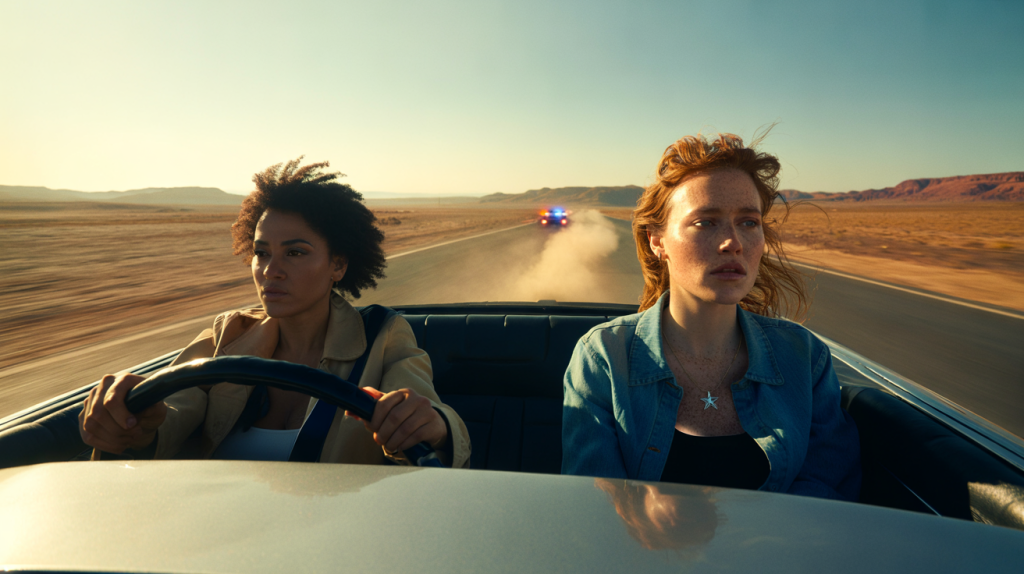
A convertible slices through the desert, friendship strapped to the front seat, consequences roaring behind. That image belongs to “Thelma and Louise” and still rules pop culture. Now a new name bubbles up: “Silver Star”. The question lands fast. Does it carry the same fearless promise or just borrow the shine.
Context matters. “Thelma and Louise” arrived in 1991 under director Ridley Scott and screenwriter Callie Khouri, whose debut script won the Academy Award for Best Original Screenplay in 1992. Two women. One 1966 Ford Thunderbird. A final frame that became a generational shorthand. Any heir needs more than attitude. It needs stakes, texture, and a road that changes its travelers.
What made Thelma and Louise a bar setter
Facts first. The film opened on 24 May 1991 in the United States. It earned six Academy Award nominations and won one for writing, as recorded by the Academy of Motion Picture Arts and Sciences. Stars Geena Davis and Susan Sarandon each received Best Actress nominations. That was rare side by side recognition for a duo whose arc never flinched.
The plot travels light yet cuts deep. Two friends flee an attempted assault, cross state lines, and step into a story where the system is a character too. The car is not only a vehicle, it is agency on wheels. This was not a remake, not a trend, but a line in the sand that many films still reference.
Those details set the bar. If “Silver Star” claims the mantle, it needs narrative propulsion that never leaves its protagonists behind, a voice on the page as sharp as Khouri’s, and images that live rent free years later.
What would make “Silver Star” a true heir
Audiences do not ask for a copy. They ask for a legacy to be honored and refreshed. That means specificity over slogans, a journey with consequences, and choices that feel lived in. Stakes that escalate without turning the leads into symbols.
Think about the craft. Who is writing and directing. Are the two leads equal engines of the story. Does the journey force them to renegotiate power, safety, and friendship in a way that feels contemporary, not nostalgic cosplay. And yes, does the landscape act like a second character rather than wallpaper.
Here is the simple checklist used by many programmers and critics when the “heir” label pops up :
- A clear two hander anchored by complex female protagonists, not a hero with a sidekick
- A road narrative where each location turns the plot and the characters, scene by scene
- A moral chase that tests systems of authority as much as individuals
- A distinctive visual grammar that builds memory images, not just pretty frames
- Creditable authorship on the page and behind the camera, publicly identified and accountable
Recent road stories that kept the flame alive
There has been no vacuum. “Queen and Slim” released in 2019 with director Melina Matsoukas and writer Lena Waithe brought a modern fugitive romance that confronted policing and visibility. “Nomadland” arrived in 2020 and went on to win Best Picture at the 2021 Oscars for director Chloé Zhao, proof that a road can carry intimacy and economic truth.
More tones exist. “Drive Away Dolls” landed in 2024 from Ethan Coen and Tricia Cooke, playful and queer, a reminder that road stories bend genre. “Thelma” in 2024 followed June Squibb as an elderly grandmother on a mission after a phone scam, another angle on agency and motion. None are copies. All show the template can adapt.
So any “Silver Star” conversation sits in a living lineage. The yardstick is public, and the context rich with recent examples and dated releases that can be checked by anyone curious enough to compare.
How to read the “Silver Star” buzz without getting lost
Look for receipts. Trade outlets such as Variety, Deadline, or The Hollywood Reporter typically name the writer, director, producers, and financing when a project is real. Distribution plans, festival submissions, and release windows are usually stated early when a film wants to be discovered.
Numbers help, even small ones. If “Silver Star” is real and aiming for the heir label, expect concrete data points that echo how “Thelma and Louise” was documented: the year of release, credited authorship, awards submissions, runtime, and screening dates. Without those, the label stays marketing fog.
There is also the footage test. A teaser or a scene shown at a festival can reveal whether the relationship at the core breathes. Dialogue cadence, how the camera sits with the two leads, the way a roadside stop turns the story. It is the fastest way to move past talk.
Until those pieces surface, the most honest path is to treat “Silver Star” as a promise to be verified. The legacy it seeks is public record from 1991 and 1992. The bar is clear, the route mapped, and the audience definitly ready to judge with open eyes once the facts and images arrive.