
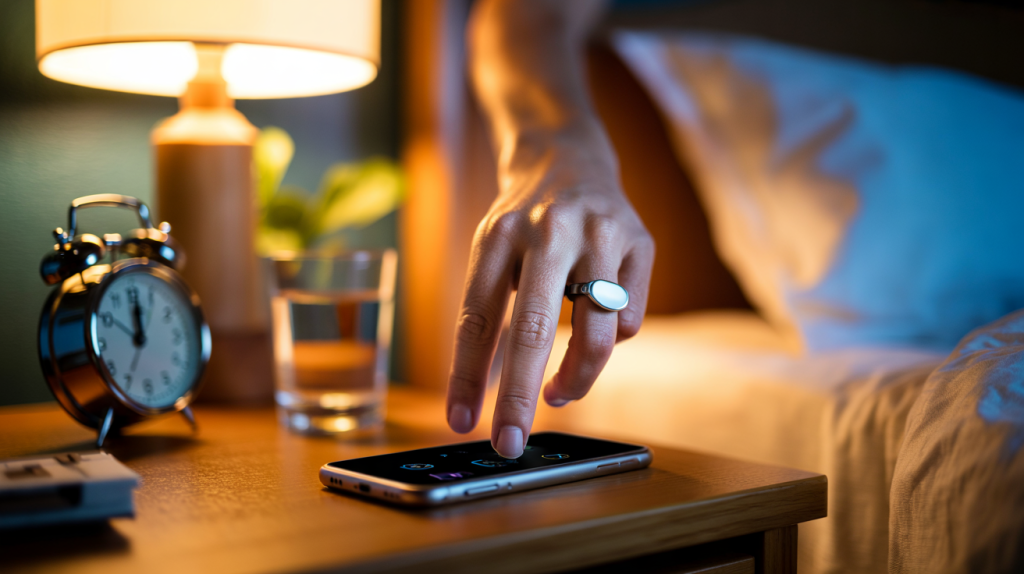
Screens keep nibbling at attention. A new ally slips on the finger and stays quiet, yet it changes the day: a smart ring that turns digital detox from a vague wish into small, trackable wins.
The idea is simple. A connected ring watches sleep, heart rhythms and micro stress in real time, then nudges focus and rest while keeping the phone out of hand. No glowing display, no feed. The category is growing fast: Oura popularized it, Samsung entered with Galaxy Ring in 2024, others like Ultrahuman and Circular follow. For anyone searching for a lighter way to unplug, this is where the habit shift begins.
Digital detox with a smart ring : what it really means
Most people are not trying to quit tech. They want fewer interruptions and better sleep. Global usage shows the bind: DataReportal’s Digital 2024 report estimates people spend 3 hours 45 minutes a day on mobile internet, and 6 hours 40 minutes online in total. That is a lot of taps and swipes.
A smart ring focuses on the body first. It tracks sleep stages, heart rate variability and temperature to spot fatigue and overstimulation. Then the companion app translates that into simple guardrails like quiet hours, gentle movement breaks and bedtime wind downs. The detox is not a switch off stunt. It is a guided routine.
How a connected ring nudges you off the phone
Notifications are the classic trap. Research led by Carnegie Mellon University in 2015 asked participants to silence notifications for a day. People reported lower stress and greater focus after the break. A ring makes that kind of relief repeatable by pairing signals from the body with phone settings like Do Not Disturb and app limits.
Sleep is the next lever. A University of Bath study published in 2022 in Cyberpsychology, Behavior, and Social Networking found that taking a one week break from social media improved well being, anxiety and depression scores. Rings help people get close to that effect without quitting everything: bedtime prompts, dim phone mode and a morning check in that rates recovery before the inbox rush.
Here is a concrete flow. The ring flags low heart rate variability late afternoon, a sign of strain. The app suggests a five minute breathing pause and delays non urgent notifications for the next hour. In the evening, the ring’s sleep score recommends an earlier lights out, and the phone locks social apps at 22:00. Small, repeatable, definetly doable.
Numbers behind the trend : brands, dates and prices
Oura said in 2022 that it had shipped more than one million rings. That milestone put rings on the wellness map and showed demand for screen free wearables that care about recovery, not more alerts.
Samsung unveiled Galaxy Ring in 2024, bringing sleep tracking, heart rate and integration with its phones. At launch in 2024, the listed price was about 399 dollars in the United States, with no mandatory subscription. Oura Ring Gen3 starts around 299 dollars and includes an optional membership at 5.99 dollars per month for advanced insights. Ultrahuman Ring Air has been listed near 349 dollars depending on region. Typical battery life ranges from 4 to 7 days per charge, which matters for consistency.
These are not fitness watches. That is the point. Rings keep data flowing while removing the urge to glance at yet another screen, which is exactly what a detox needs.
A simple plan to try a ring powered detox
Start light. Two weeks is enough to feel a shift without going extreme. The aim is fewer interruptions, deeper rest and a calmer loop between the body and the phone.
Set up takes an hour: size the ring, connect the app, enable Focus or Do Not Disturb sync, choose one or two goals like better sleep and fewer evening pings. Then let the ring watch and nudge while days unfold.
The World Health Organization advises at least 150 minutes of moderate activity per week. Pairing that with ring driven prompts for short walks or stretching compounds the benefit, since movement helps both stress and sleep quality.
Here is a crisp checklist to make it real :
- Pick a quiet window : choose 14 days with no big travel or deadlines.
- Define phone rules : social and news apps lock after 22:00, calls allowed.
- Use ring prompts : accept breathing and break suggestions when strain rises.
- Move on purpose : aim for 20 to 30 minutes of easy activity most days.
- Charge smart : top up the ring during showers to avoid gaps in sleep data.
- Review once a week : check sleep, HRV and time on phone, then adjust one setting.
- Keep the bedroom clean : phone outside the room, ring on finger, alarm on watch or a simple clock.
Costs are clear, cues are gentle, and the body leads. A connected ring will not delete the feed or cancel work, yet it gives the missing piece of a digital detox : timely signals that arrive without another screen calling for attention.