
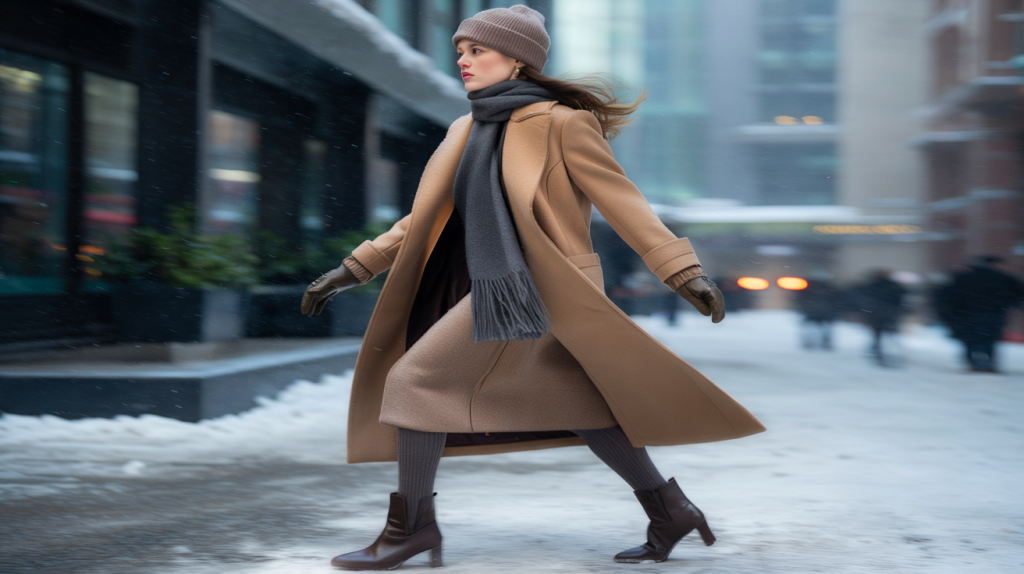
The temperature drops, style does not have to. The fast route to winter elegance starts with a thin thermal base, a structured coat, sleek insulated boots et clean lines that keep heat in and bulk out. Add texture – wool, cashmere, leather – and winter looks level up instantly.
Cold bites harder in the wind, so protection matters. The U.S. National Weather Service notes that at 0°F with 15 mph wind, wind chill feels like -19°F and frostbite can hit in 30 minutes. That is why elegance in deep winter pairs aesthetics with function : warm base layers, wind-resistant outerwear, and targeted accessories that look refined while sealing out drafts.
Cold Weather Elegance : The Formula That Actually Works
One observation stands out : most winter outfits look bulky because warmth is asked from a single item. Flip the logic. Get most of the heat from an invisible, breathable base layer, then let the coat focus on shape. A tailored wool or cashmere-blend coat creates a clean vertical line while the base does the heavy lifting.
Balance is the quiet secret. Slim underlayers with a strong-shouldered overcoat create structure. Cropped puffer with fluid trousers or a long coat with fitted knitwear – either route shapes the silhouette. Color helps too. Deep neutrals – camel, chocolate, charcoal, navy – soften heavy textiles and read expensive on camera and in real life.
Layering With Science : Fabrics, Fits et Real Warmth
Fabric choice decides whether the look breathes or swelters. Merino wool regulates heat and handles sweat better than synthetics. The Woolmark Company reports that Merino can absorb up to 35 percent of its dry weight in moisture before feeling wet, which keeps skin drier and warmer in the cold. That single fact explains why a thin Merino base beats two thick cotton knits.
Outerwear needs both insulation and a wind barrier. Fill power in down tells you loft and warmth to weight – common ranges go from 500 to 900, with higher numbers delivering more insulation per ounce according to the International Down and Feather Bureau. If down is not your thing, look for recycled polyester insulation and a tight-weave shell that blocks wind.
Head and hands matter, just not for the old myth. The British Medical Journal flagged in 2008 that the idea of losing most body heat through the head was overstated. Heat escapes from any exposed area. Translation for style : wear a lined beanie, a scarf sealing the collar, and insulated gloves – all matched to the coat for a crisp, intentional finish.
Polished Winter Accessories That Pull the Look Together
Accessories do more than decorate – they lock in warmth and sharpen lines. One focused set can transform a simple coat into a complete outfit.
- Choose a thin Merino or silk-thermal base : invisible, warm, zero bulk under tailoring.
- Wrap the neckline : a cashmere scarf tucked inside the lapel stops drafts and looks refined.
- Elevate boots : insulated leather or suede with a slim shaft reads sleek with midi skirts.
- Swap tights : fleece-lined or merino-blend 80–200 denier keeps legs warm under dresses.
- Go lined gloves : cashmere or Thinsulate lining feels luxe and works on early morning commutes.
- Top with a beanie or felt hat : match texture to coat fabric for an intentional monochrome feel.
Care, Tailoring et Small Upgrades That Change Everything
Fit has always sold elegance. A coat with sharpened shoulders and sleeves hemmed to the wrist looks twice as expensive. Many off-the-rack pieces transform with small tweaks : bring the waist in slightly, shorten sleeves, and press the lapel roll. A tailorred coat frames even chunky sweaters without strain.
Texture control keeps outfits clean on the second wear. Use a fabric shaver on knits, a clothes brush on wool, and steam rather than iron to revive drape. Leather needs conditioner in winter to prevent salt stains and cracking. Rotating footwear helps too – give boots 24 hours to dry fully between outings to preserve shape and grip.
When temperatures plummeted last January, cities felt the wind more than the mercury. That is where strategy wins. Pair a heat-trapping base with a structured coat, then edit accessories to seal openings. The science backs it – block wind, manage moisture, add loft – and the mirror agrees : longer lines, richer textures, and quiet color stories keep outfits elegant even on the coldest mornings. Sources : National Weather Service Wind Chill Chart, updated page 2023. The Woolmark Company, fabric performance guides. International Down and Feather Bureau, fill power standards.