
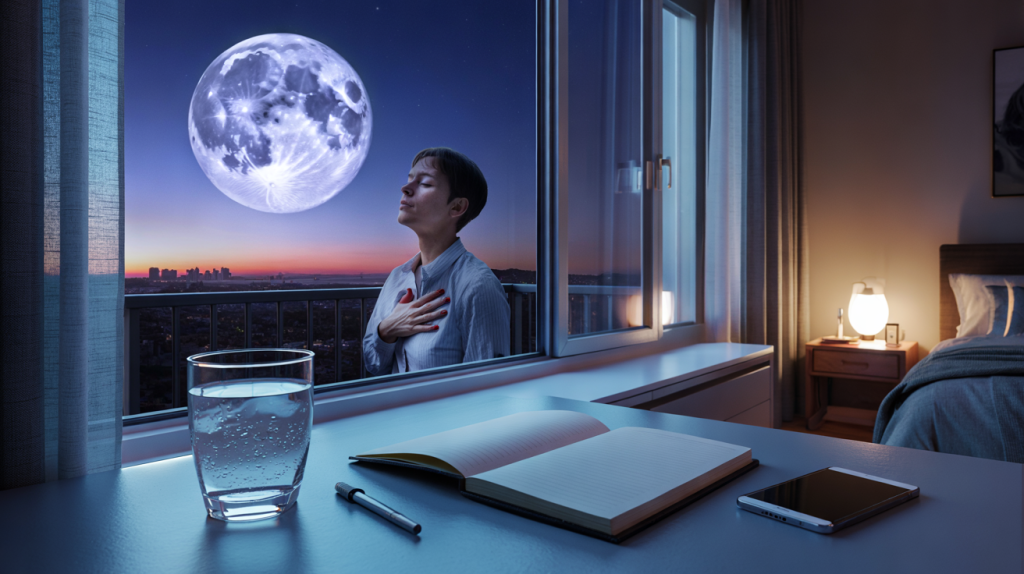
The Supermoon pulls eyes to the sky for a reason. When the full Moon swings closest to Earth at perigee, it can appear brighter, bigger, and strangely motivating – a perfect moment to reset routines, set intentions, and clear the mental clutter that slows momentum.
There is data behind the glow. NASA lists a Supermoon as “up to 14 percent larger and 30 percent brighter” than a micromoon, thanks to the Moon’s elliptical orbit. The term itself dates to 1979, credited to astrologer Richard Nolle. On any full Moon night, moonrise happens around sunset and moonset near sunrise, a simple timing window that helps plan what to do and when.
Supermoon basics: what changes, what doesn’t, and why that still helps
Main idea first: the Moon’s gravity has always touched ocean tides and human sleep patterns. Large meta-analyses on lunar effects show mixed outcomes, yet some studies report small shifts in sleep duration around the full Moon. That nuance matters. No instant miracles, but the night feels different enough to anchor new habits.
Observation on the ground: people report clearer focus after a symbolic reset. Not magic – a ritual creates a cue, the brain files it, and behavior follows. The Supermoon gives a rare visual cue visible to everyone on the block, tonight, no special gear needed.
Problem to solve: good intentions slip without structure. The fix arrives with timing. Aim personal rituals near moonrise or just before bed, when energy naturally dips and the sky does the mood work for you.
How to harness Supermoon energy at home
Keep it practical, kind, and light. The point is to feel the shift, not build a shrine or shop for crystals at midnight.
Try this flow tonight, then adjust next month. Rituals stick when they stay easy.
- Step outside at moonrise for 3 minutes. Name one thing to release and one thing to grow. Say both aloud.
- Write a single-page brain dump. No order, no filter. Fold it and place it under a glass of water by the window.
- Declutter one drawer or one app screen. Small cut, immediate relief.
- Set a 30-day micro-goal with a number: 10 pages read nightly, 2 workouts weekly, 15 minutes of language practice.
- Five-breath reset: inhale 4, hold 4, exhale 6. Twice. Then bed.
Example that lands: a parent with a noisy schedule used the August 2023 Supermoon to start a two-line journal at moonrise. After 30 days, stress notes dropped from daily to twice a week. Tiny ritual, compound gain.
Mistakes that quietly drain the effect
Overloading the night with tasks. One ritual wins. Five lose. Each extra step adds friction, and the brain postpones.
Waiting for perfect skies. Clouds come and go. If the Moon hides, keep the timing and run the plan indoors near a window. Consistency beats view.
Skipping numbers. Vague wishes float off. A measurable target sticks. Behavioral science keeps repeating this since the 1960s, and the pattern hasn’t changed.
Science, symbolism, and the sweet spot that actually works
Let’s be clear. The Supermoon will not bend outcomes on its own. Still, the increase in brightness and size – documented by NASA’s figures – creates an event that feels rare. Humans act on rare moments. That psychological doorway is the leverage.
The analysis is simple. A strong visual cue plus a timed, minimal ritual reduces decision fatigue. Lower friction leads to action. Repeated action shapes identity. Once the identity catches up, the ritual becomes optional because the habit runs itself.
One missing piece often ignored: recovery. After the ritual, dim lights and protect sleep. Full Moon nights can nudge rest for some people, so anchor the room with a cooler temperature around 18 to 19°C, cut screens 30 minutes before bed, and keep a notepad nearby for restless thoughts. If wake-ups occured, write one line and return to breath counts. The night stays quiet again.
Next step is already on the calendar. Full Moons come every 29.5 days. Look up your local moonrise time on a reliable service like timeanddate.com, use the same two-step ritual, and track one metric for 30 days. The sky provides the cue. The rest runs on your rules.