
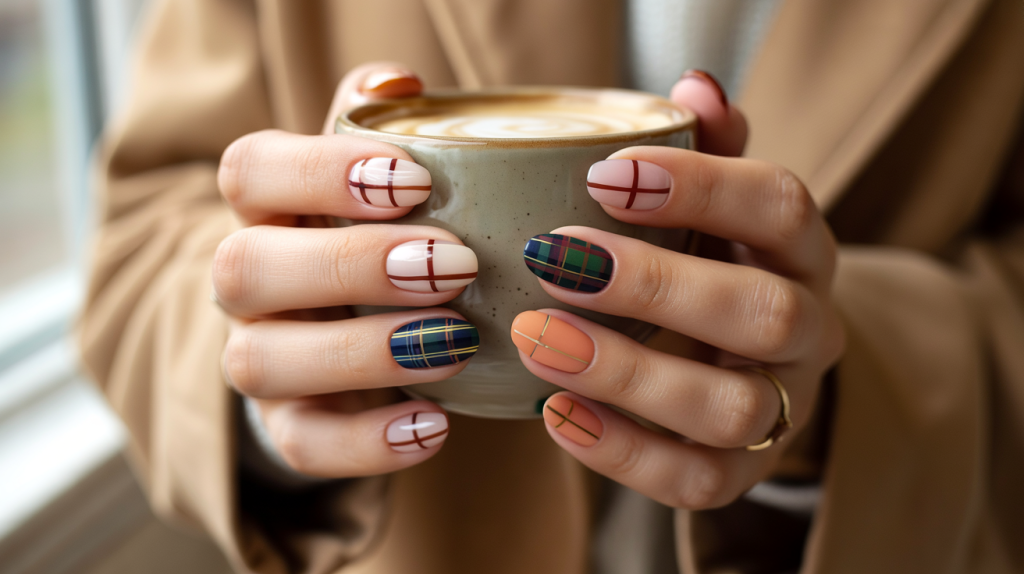
Plaid on nails signals instant cozy: a knit sweater in miniature, a latte in color. Tartan nail art – also searched as “ongles motif tartan” – surges every fall because it flatters short nails, makes neutrals pop, and looks designer without a salon bill.
Here is the big picture. Tartan links fashion heritage and modern beauty, so the look never dates. It is versatile on almond, squoval, or bitten nails, and plays with classic reds or new season shades. Think 2024’s Pantone Color of the Year, Peach Fuzz, warming up a classic black watch grid source. The goal : quick steps, crisp lines, and zero smudge drama.
Tartan nail art trend : why “ongles motif tartan” keeps returning
Patterns with story stay. Tartan carries centuries of identity in Scotland, outlawed by the Dress Act in 1746 then legal again in 1782 source. A national register even arrived with the Scottish Register of Tartans Act in 2008 source.
That heritage meets wearable beauty. Plaid complements wool coats and trench checks, so nails echo outfits instead of fighting them. It also scales well: one accent nail for minimalists, full set for maximalists. Easy to read from a distance, still intricate up close.
Season after season, fashion houses revisit checks, which keeps the manicure relevant. A rich burgundy grid over cream reads festive in December; navy and forest green feels collegiate in September. Then spring swaps in Peach Fuzz with milk chocolate lines for a softer, colorfull scheme source.
How to create plaid nails at home : tools, colors, and the right pattern order
One principle leads to clean tartan: paint from broad to thin. Lay the base, add thick bars, then thinner contrast lines, and finish with the finest highlights. Let each layer set before the next.
Tools help. Striping brushes handle long lines, while ultra-thin liner brushes draw hairline accents. Regular tape can mask edges for crisp blocks. Fun fact : 3M introduced Scotch tape in 1930, and that straight edge still saves manicures today source.
Color strategy matters. Start with a cream, nude, or deep green base. Add two bold bars that cross, usually vertical then horizontal. Layer a second shade in thinner lines offset from the first. End with a slim white or gold line that makes the pattern pop. Top coat seals shine and smooths texture.
Beginner friendly kit :
- Two polishes in high contrast plus one light highlight shade
- Striping brush and detail liner brush
- Tape or nail vinyls for straight guides
- Quick-dry top coat and a small cleanup brush dipped in remover
Fixing common plaid mistakes without starting over
Lines wobble when the brush is too loaded. Wipe nearly dry, anchor your pinky on the table, and pull the brush in one calm motion. If a bar looks chunky, thin it by running a clean liner brush along the edges while the polish is still soft.
Bleeding under tape happens when polish floods. Press tape edges down firmly, use thinner coats, and peel tape while polish is slightly wet to avoid ridges. A crisp correction: dip a fine brush in non-acetone remover and shave the edge.
Color muddiness creeps in when similar tones overlap. Keep one dark, one mid, one light accent. If contrast is gone, restore it with a final razor-thin white or metallic line that sits just off the main bars so the plaid reads clearly.
Salon or DIY : durability, cost logic, and nail safety facts
Gel plaid lasts longer, which suits travel or holidays. The American Academy of Dermatology says gel manicures typically last up to two weeks when applied and cured properly source. Regular polish is kinder to quick changes and budget, and removal is faster at home.
Care for nails between sets. The AAD recommends gentle removal, moisturizing after acetone, and brief nail breaks to reduce peeling and brittleness source. That matters more when layering multiple plaid looks through the season.
About lamps : a 2023 study reported that UV nail polish dryers emitting 365 to 405 nm damaged mammalian cells in vitro, with about 20 to 30 percent cell death after a single 20 minute exposure and 65 to 70 percent after three exposures source. For those concerned, consider LED units with timed low-heat modes, sunscreen on hands before curing as the AAD suggests, or choose regular polish plaid that air dries source.
If the pattern still feels daunting, book a single accent nail at a salon and study the line order. Then replicate the same order at home on a full set. That small shift often turns plaid from tricky to routine.