
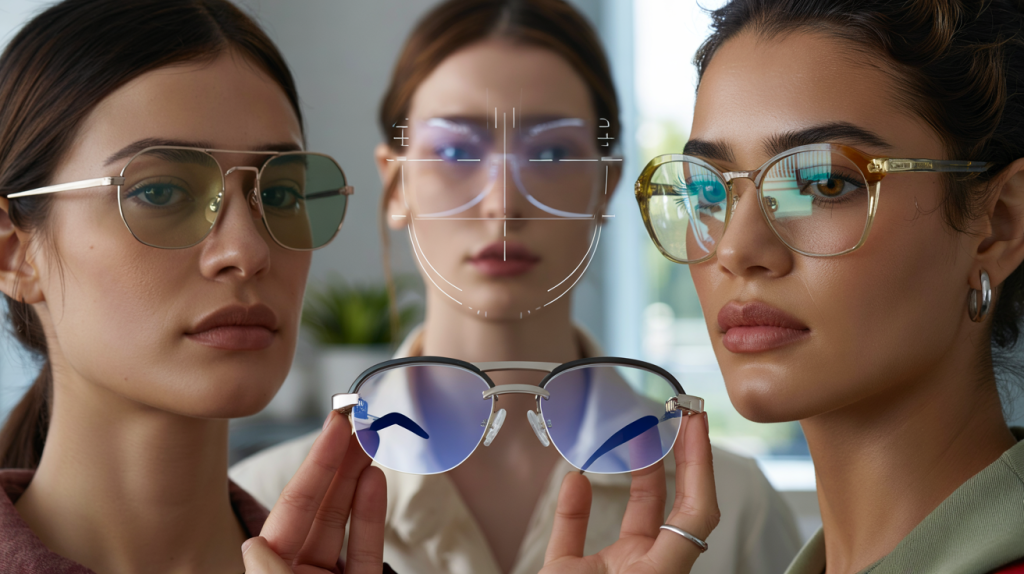
2026 glasses go bold and clever: cleaner lines, lighter metals, bio-acetate, smarter lenses. See what’s trending now, with data, picks, and fit tips.
Prescription frames take the spotlight in 2026. Expect fine titanium ovals, squared 90s silhouettes, translucent crystal acetates, and subtle color tints that shift from desk to dinner. Lenses level up too: high-precision coatings, screen comfort options, and solutions shaped by real life – not just runway vibes.
The stakes are clear. More screens, more eye strain, and a rising need for prescription accuracy push design to serve health and style at once. Growth backs the shift: “The global eyewear market size was valued at USD 169.82 billion in 2022 and is expected to grow at a compound annual growth rate of 8.5% from 2023 to 2030.” Grand View Research. That momentum fuels better materials, smarter fittings, and frames that last.
2026 eyewear trends: shapes, colors and materials that feel right now
Silhouette first. Slim ovals and soft rectangles bring a clean, intelligent look, while angular 90s squares add presence without the heavy weight. Micro-rounds return for smaller faces. Rimless creeps back with bolder bridges.
Color lands gently. Think smoked crystal, tea-tinted tortoise, slate blue, and soft olive. Clear gradients on lenses add a tiny lift indoors, then glide into evening. High-shine metal in silver and pale gold keeps things crisp.
Materials change how frames feel. Titanium stays king for comfort and strength. Bio-acetate and recycled acetates step into mainstream catalogues, with lighter textures and matte finishes that age well. The goal: less bulk, more polish.
Health et tech: lenses that work harder in 2026
Screen life is not slowing. “At least 2.2 billion people have a vision impairment or blindness” and many cases remain unaddressed, notes the World Health Organization in its 2019 report. Comfort-forward lens designs matter.
For distance and desk shifts, modern progressives smooth the mid-range jump. Blue-violet light filtering can ease evening fatigue for heavy device users, while photochromic options remove the need for a second pair outside. For growing kids and teens, myopia management sits front row: the landmark projection from Ophthalmology states “4,758 million people (49.8%) will be myopic” by 2050 Ophthalmology, 2016. Parents ask about defocus designs or ortho-k as part of the care plan.
Fit gets smarter too. More optical stores now test digital measurements, capturing pantoscopic tilt, vertex distance, and wrap angle for sharper lens centering. The result: less distortion, faster adaptation, fewer headaches.
Sustainable frames: bio-acetate, titanium and circular choices
Eco is no longer an add-on. Titanium earns points for durability and low weight, extending the wear cycle. Bio-acetate – plant-based plasticizers instead of fossil – reduces impact and keeps color depth. Some makers offer repairable hinges and modular temples to extend life.
Waste drops when a frame survives multiple lens updates. Choosing timeless fronts – not seasonal novelty – cuts replacement churn. Cases and cleaning sprays move to refill systems in many boutiques, a small shift that adds up over years.
How to choose 2026 glasses: a simple field guide
Too many options can freeze a purchase. Use this quick path to a pair that flatters, performs, and lasts.
Pick your scenario first – office, hybrid, commute, sport – then shape the frame to it. A narrower PD or petite face usually loves smaller ovals or micro-rounds. Wider faces balance with soft rectangles. High prescriptions benefit from smaller lens heights to keep thickness tidy.
One common mistake: buying a striking acetate that slips. Comfort rules. A 1 mm difference in bridge width or nose-pad style can decide if you wear them daily or never. Test stability by nodding, smiling, reading – real-life moves.
Numbers guide the health side. If you end most days on screens, ask about a screen comfort coating and a mid-range zone tuned to your desk distance. Outdoor time or frequent travel may fit a light photochromic with fast fade-back. If a child’s prescription climbs each year, bring up myopia control at the next checkup – early steps matter.
Try building a two-pair wardrobe: one statement, one minimalist. It spreads wear, saves hinges, and keeps outfits fresh. If budget allows only one, go with a versatile neutral like smoked crystal or matte coal in titanium. Then add personality with accesories – a colored chain or clip-on sun.
2026-ready picks to test in store:
- Slim titanium oval or soft rectangle for all-day comfort
- Translucent crystal acetate in tea, slate, or olive for subtle color
- Rimless with a bold bridge for a light-but-graphic vibe
- Photochromic or blue-violet filter if evenings on screens feel heavy
The missing piece many skip is measurement quality. Ask for digital fitting data and lens centering proof – PD, heights, wrap, tilt. Pair that with a sturdy case and a six-month fit check. Style follows, comfort sticks, and the glasses work as hard as you do.