
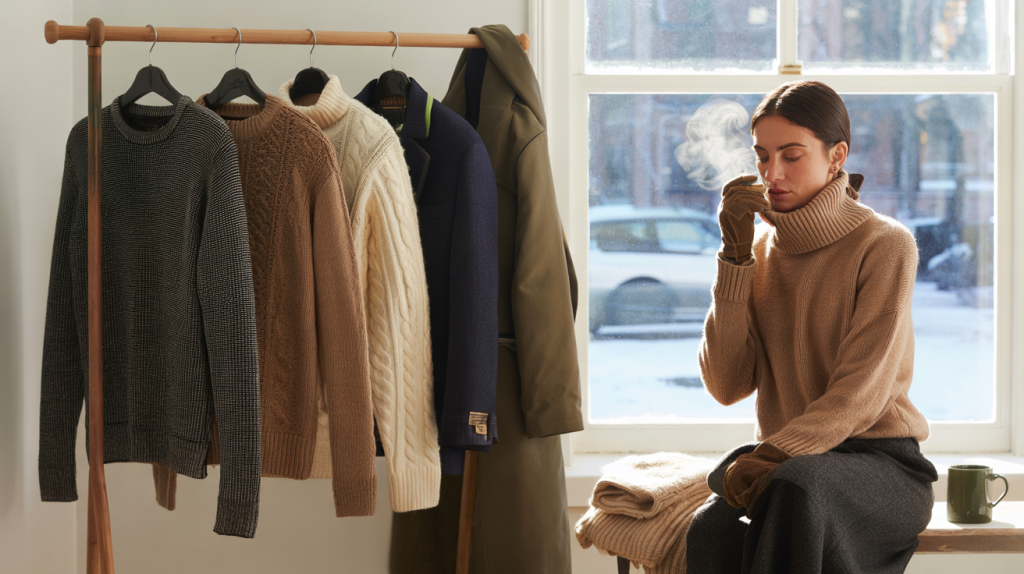
Frozen buses, foggy breath, a heater that runs all day. When winter bites, the right knit does more than look good. It locks in warmth, stretches your outfits, and keeps bills in check. Here are the five sweaters that carry a week of looks without fuss : a merino crew neck, a cashmere turtleneck, a chunky cable knit, a zip mock neck and a classic cardigan.
There is a practical reason this short list works. Layering smart knits lets the thermostat drop while comfort rises. The U.S. Department of Energy states that setting a thermostat back 7 to 10 degrees for 8 hours can save up to 10 percent a year on heating costs, and that is real money in a cold month, source : U.S. Department of Energy, 2023. Wool also helps manage sweat in overheated rooms : merino can absorb up to 30 percent of its weight in moisture without feeling wet, source : The Woolmark Company, 2022. The daily tug between cold streets and warm offices has occured every winter, and the right lineup solves it.
Winter wardrobe essentials : the must have sweaters that work every day
Capsule thinking simplifies shopping. One knit for offices, one for sharp nights out, one for true cold, one athletic but polished, and one layer that opens and closes on demand. Real life approved.
- Merino crew neck : thin, breathable, slides under a blazer or a parka without bulk.
- Cashmere turtleneck : soft, insulating, turns a simple coat into a statement on short days.
- Chunky cable knit : thick stitches trap air, ideal on windy weekends or early commutes.
- Zip mock neck : sporty and neat, vents heat on the move and seals in warmth when needed.
- Classic cardigan : buttons add control over temperature at the desk or on the sofa.
Warm fabrics that do the job : merino, cashmere, cotton and blends
Not all knits warm the same. Merino wool insulates even when damp and resists odors, which helps on back to back wear. The Woolmark Company reports merino can hold moisture up to 30 percent of its weight without clamminess, source : The Woolmark Company, 2022.
Cashmere brings loft and luxury, but weight matters. Typical fiber diameter ranges from roughly 14 to 19 microns, which explains that cloud like feel, source : Cashmere and Camel Hair Manufacturers Institute, technical guide. Denser knits pill less and last longer, especially when blended with a little nylon for strength.
Cotton sweaters feel familiar and easy to wash, yet they hold moisture and insulate less in bitter cold. Save them for mild days or office layering. As context, wool remains relatively scarce compared with synthetics : wool represents about 1 percent of global fiber production, which partly explains price and availability, source : Textile Exchange, Preferred Fiber and Materials Market Report 2023.
Fit, layering and care : common mistakes to avoid
Too tight kills insulation. Air is the real heater inside a knit. Aim for a crew neck that lets a thin tee glide underneath and sleeves that stop right at the wrist bone. A turtleneck should hug without squeezing the throat.
Layer order matters. Start with a breathable base, add merino or a cardigan, then a chunky knit only when the air outside bites. A turtleneck under a structured jacket keeps form, while a zip mock neck under a coat handles temperature swings on trains and in queues.
Care saves money. Wash wool rarely, air it often. When washing, cooler cycles cut energy and fiber stress. Energy Saving Trust notes that washing at 30 degrees can use around 40 percent less energy than higher settings, source : Energy Saving Trust, 2023. Dry flat on a towel to keep shape. Rotate knits to rest fibers, which reduces pilling.
Smart shopping : price, quality and a capsule knitwear plan
Buy less, but buy right. Feel for density by gently stretching the fabric and holding it to the light. If light floods through, warmth will escape too. Check seams for clean, even stitching. Look for certified wool or cashmere to trace origin and animal welfare where possible.
Think in cost per wear. A 100 dollar merino worn twice a week for one winter sits at about 1 dollar per wear by spring. A chunky cable knit at 150 dollars that serves for three winters can drop under 50 cents per wear. Numbers like that beat a bargain that fades after ten outings.
Round out the capsule with color logic. One dark neutral for grit and travel, one light or mid tone to brighten short days, one accent that lifts a simple coat. Then the system works day after day without staring at the closet in a rush.