
Ryan Murphy’s Beauty, Right Up Front
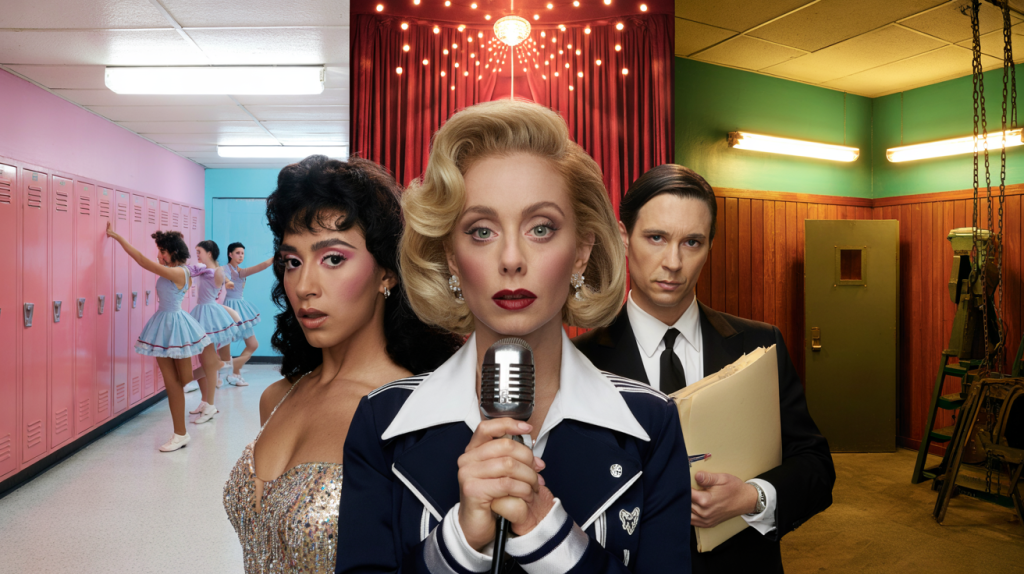
Call it high-gloss camp or cinematic pop. The Beauty Ryan Murphy is a recognizable visual language: candy-bright palettes, razor-clean frames, unapologetic theatricality, and faces lit like legends. It is a look that turns TV into an event. That style also powers influence. Netflix’s own Top 10 data recorded “Dahmer – Monster: The Jeffrey Dahmer Story” crossing 1 billion hours viewed within 60 days in 2022, one of the platform’s biggest English-language runs.
Scale followed the vision. In 2018, The New York Times reported Ryan Murphy signed a five-year Netflix deal valued at up to 300 million dollars. Awards backed it up. “The People v. O. J. Simpson: American Crime Story” earned 9 Emmy wins in 2016 according to the Television Academy, while “Pose” premiered in 2018 with what FX said was the largest cast of transgender series regulars for a scripted show. The Golden Globes honored Ryan Murphy with the Carol Burnett Award in 2023.
Inside the Ryan Murphy Look: Color, Composition, Control
At first glance, the Murphy universe feels lush and hyper-curated. Saturated reds and powdery pastels. Symmetry that pulls the eye to a single, decisive detail. Music cues that glide a scene from delicious to dangerous in seconds. It is beauty as narrative fuel.
The method did not arrive in a vacuum. “Glee” erupted in 2009 with tight choreography and glossy, performance-first framing that reintroduced show-choir spectacle to primetime. Billboard reported in 2013 that the Glee Cast had amassed 207 entries on the Hot 100, a modern chart record at the time. Visibility followed style: “Pose” stitched ballroom elegance to social history, and in 2019 Billy Porter became the first openly gay Black man to win the Emmy for Outstanding Lead Actor in a Drama Series, per the Television Academy.
There is also commercial clarity. When “Dahmer” surged in 2022, Netflix highlighted its billion-hour milestone. Momentum then pulled “The Watcher” into the same cultural slipstream that fall. The signature is consistent: beauty as a hook, story as the engine, casting as the conscience.
Proof in Numbers: Reach, Awards, Resonance
Audiences tend to respond to both polish and punch. The franchise power of “American Horror Story” kept building since 2011, with FX extending its lifespan across the decade. “Glee” hit awards early, winning the Golden Globe for Best Television Series – Musical or Comedy in 2010 and 2011, as listed by the Hollywood Foreign Press Association.
Impact sits in representation too. FX’s announcement for “Pose” underlined a record-setting roster of transgender series regulars in 2018, and that choice redirected casting norms across prestige TV. Awards validated the craft while mainstream platforms scaled it to global reach. Different measures, same signal.
So the beauty is not just surface. It is a system where design heightens character, themes confront power, and the camera insists on presence. That is why the images linger. And yes, why they sell.
How to Spot The Beauty Ryan Murphy in Any Scene
Patterns help decode the work. Once noticed, they are hard to unsee. Here is a quick field guide that remains useful across series old and new.
- Color as code : primaries and pastels telegraph mood shifts before dialogue lands.
- Face-first framing : close-ups isolate power, fear, or desire, then let silence bite.
- Orchestration : needle drops or swelling score lift a scene into operatic territory.
- Period-perfect textures : hair, wardrobe, and production design tighten time and place.
- Ensemble focus : layered casts where a supporting turn can detonate an episode.
Why this grammar resonates today comes down to trust. Viewers want clarity in a crowded feed. A Murphy show announces itself instantly, then promises stakes. The proof sits in the numbers cited by Netflix, the Emmys, and the HFPA. The path there started years earlier, with the quicksilver momentum of “Glee” in 2009 and the muscular anthology structure of “American Crime Story” in 2016.
For anyone mapping the look to the impact, three points connect cleanly. First, the style travels across genres without losing identity. Second, the casting expands who gets framed as iconic. Third, partners invest when audiences reward consistency. The New York Times noted the 300 million dollar deal in 2018 for a reason.
A small caveat sits at the edge of this story. Beauty can seduce so fully that texture risks becoming the headline. The craft works best when design reveals character, not covers it. That is where “Pose” and “The People v. O. J. Simpson” still hit hardest, long after awards nights. The missing piece for new viewers is simple, definitly: start with one episode that wears the signature loudly – then watch how the style turns into substance scene by scene.