
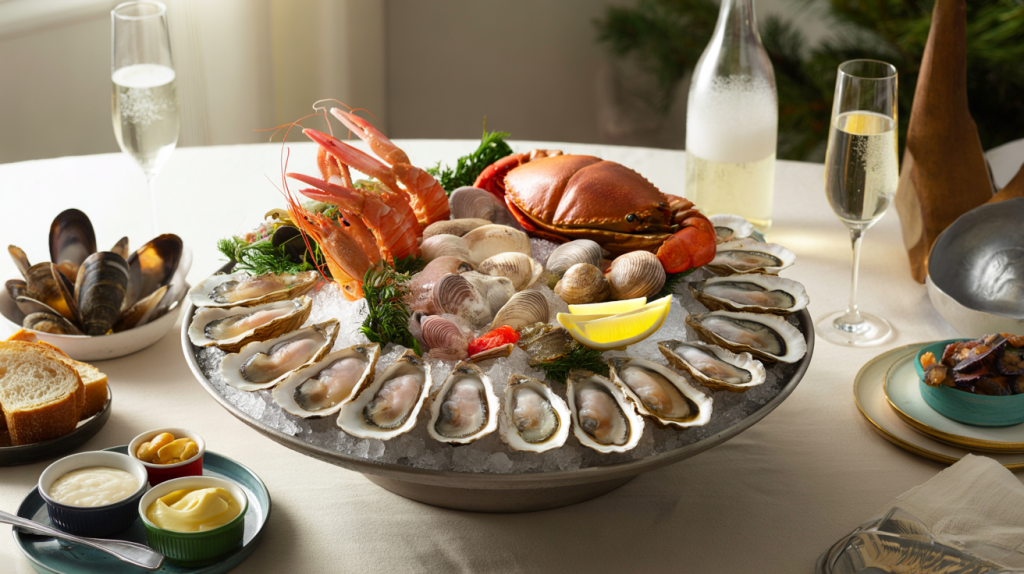
Want a Christmas seafood platter that looks luxe and eats like a dream? Here are the exact quantities, prices, safety rules, and pairings that make it sing.
Across countless Christmas tables in France, the plateau de fruits de mer has become the showpiece that stops chatter and starts applause. Demand peaks late December, and so does expectation: shimmering oysters, bright prawns, sweet crab, maybe a lobster that looks straight out of a postcard.
Context matters. FranceAgriMer reported in 2022 that roughly half of annual oyster purchases land between Christmas and New Year, which explains why fishmongers book out fast and prices shift with the tide. The goal is simple : build a platter that is generous, safe, and sustainable, without stress or last minute panic.
How to build a plateau de fruits de mer for Christmas without stress
Start with the table you have, the people you love, and the appetite you expect. A balanced platter mixes raw and cooked shellfish so every guest finds a favorite, from mineral oysters to meaty crab. Cold stands taller when textures vary and colors pop.
Quantities drive confidence. For a classic platter, plan 6 oysters per adult, 200 to 300 grams of shell-on prawns per person, and one shared centerpiece like a crab or half lobster per two. Add whelks or clams for chew, and a small pot of brown shrimp for sweetness.
Timing helps. Order live shellfish 48 to 72 hours ahead, ask for provenance and size grades, and pick up on the morning of service. Cooked crustaceans can be bought the day before, chilled immediately, and dressed just before plating. Ice or frozen gel packs underneath the tray keeps the chill steady.
- Checklist for a 6 person platter : 36 oysters, 1.2 to 1.8 kg shell-on prawns, 1 large crab or 3 small, 3 to 4 handfuls of whelks, lemon, mignonette, aioli, good mayonnaise, rye or sourdough, seaweed for garnish, plenty of ice.
Prices, sourcing, and seasonality : what to expect in 2024
Holiday pricing reflects peak demand and weather. A quality platter assembled at a fishmonger often ranges from 25 to 60 euros per person depending on species and size grades, with lobster and king crab as the main drivers. Booking early still secures the best choice at fair value.
Sourcing is part of the celebration. The Marine Stewardship Council noted in 2024 that more than 20,000 products carry the blue label worldwide, a quick signal for certified sustainable fisheries. Ask for MSC on prawns and crab, and for recognized French appellations on oysters when available.
Waste should not be a guest. The Food and Agriculture Organization estimated in 2020 that about 35 percent of fish and seafood is lost or wasted along the supply chain. Buying to real appetites, reusing shells for stock the next day, and keeping cold chain tight cuts that down immediately.
Seasonality adds flavor. Cold waters in December give oysters a clean, firm bite, and brown crab is usually full. If storms hit the coast, transport can slow, so plan a flexible mix : a few more prawns if oysters run tight, or an extra dressed crab if lobsters are light.
Food safety on the day : cold chain, shucking, allergies
Safety rules are not negotiable. The U.S. Food and Drug Administration advises keeping seafood at 4 °C or below, and never leaving perishable foods out for more than 2 hours, or 1 hour if the room runs hot. Build the tray last, serve chilled, then return leftovers to the fridge fast.
Live oysters should close when tapped. Any with cracked shells or off smells go straight to the bin. Shuck over a clean towel, keep the liquor, and sit oysters on crushed ice. If vulnerable guests are present, consider offering some cooked shellfish alongside raw options to ease minds.
Allergens must be visible. Under EU Regulation No 1169/2011, crustaceans and molluscs are listed allergens and should be clearly indicated for guests. Keep serving utensils separate for sauces, and label dips if you add mustard, eggs, or dairy.
Illness prevention has a simple rhythm : clean hands, cold surfaces, short serving window. The CDC has consistently identified norovirus as a leading cause of foodborne illness, which makes that basic hygiene routine worth its weight in caviar.
Pairings that lift the platter : sauces, bread, wine
Accompaniments make the music. Lemon wedges and a classic mignonette bring brightness. Good mayonnaise and a garlicky aioli warm up cooked prawns and crab. Add rye or country bread, salted butter, and a little seaweed for a coastal frame.
Wine stays crisp and clean. Muscadet from the Loire, Chablis with a light hand on oak, or a brut Champagne served around 8 to 10 °C let shellfish shine. A dry cider sits beautifully with crab if you want less alcohol on a long lunch.
Presentation seals the deal. Build height with ice, nestle oysters in groups, then tuck prawns and crab where hands reach naturally. A small bowl of warm water with lemon on the side lets guests reset fingers between bites. One last note that definetly helps : call the fishmonger, state your headcount, and ask for sizes that fit your budget, then pick up early to keep your cold chain unbroken.