
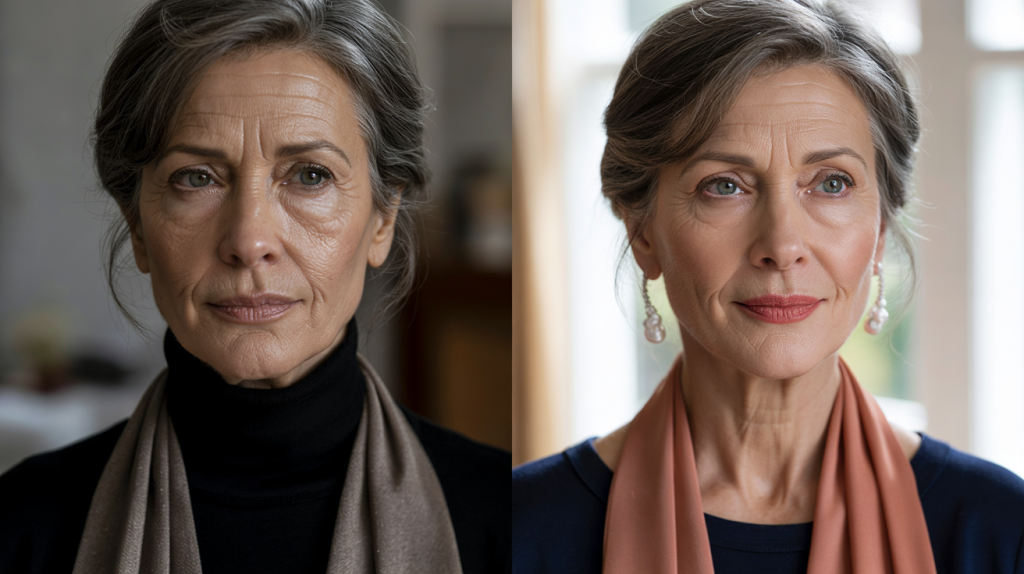
After 50, some shades can age the face fast. See which colors to avoid, the science behind it, and easy swaps that add light and lift today.
One color near the face can add years in seconds. Not a trick of the mirror, but how pigment, contrast and light play on maturing skin. The wrong tone deepens shadows, makes the complexion look dull, and draws attention to lines that were quiet yesterday.
Why this happens matters. As skin changes with age, facial contrast softens and pigmentation becomes less even. The American Academy of Dermatology Association reports that women can lose about 30% of skin collagen in the first five years after menopause, which flattens light reflection and structure. DermNet NZ notes that solar lentigines affect more than 90% of light skinned people over 60. Colors that once flattered can suddenly fight the face.
Colors that age the face after 50 : the quick answer
Pure black worn right under the chin or close to the cheeks often looks the harshest. It throws hard shadows, accentuates marionette lines and under eye circles, and drains warmth from the skin.
Next in line : ashy beige, greige and murky taupe near the face. These low energy neutrals mimic sallow tones, so the skin looks tired and the eyes recede.
Icy pastels like baby pink and frosty blue can wash out the complexion. Brown heavy or gray toned nude lipsticks flatten lip contrast so features look older than they are.
Why color choice changes after menopause : science and perception
Facial contrast is a known cue for perceived age. A Journal of Vision study by Aurélie Porcheron, Emmanuelle Mauger and Richard Russell in 2013 showed that aspects of facial contrast decrease with age and that lower contrast makes faces look older. Color around the face either rebuilds that contrast or reduces it.
Biology stacks the deck. With collagen loss in the early postmenopausal years, skin reflects less light and fine lines cast bigger shadows. The AAD figure of about 30% collagen loss in the first five years after menopause sets the scene for why deep black hardens features while soothed mid tone colors soften them.
Pigment spots become common with cumulative sun exposure. DermNet NZ documents that more than 90% of light skinned adults over 60 develop solar lentigines. Low contrast clothes and makeup echo those uneven tones, so the eye reads more age. Colors that lift brightness around the face help the viewer focus on the eyes and smile instead.
Common mistakes with black, beige and lipstick shades
Many keep a beloved black turtleneck as a uniform. On a 25 year old, it looked sharp. After 50, that same black under the jaw can deepen jowls and pull the mouth down. Try moving black away from the face with a white or ivory collar or a scarf that adds light.
Beige feels safe, yet the wrong one is unforgiving. Gray beige and cool stone suck warmth from the skin. A warmer oatmeal or camel brings back life, especially in daylight where cool neutrals go flat.
Lipstick tells the same story. Brownish nudes and dead taupes erase lip definition. A clear rose, raspberry or a blue based red rebuilds contrast so teeth look brighter and skin looks clearer. A quick test in natural light beats any bathroom verdict at 7 a.m.
Smarter color swaps and wardrobe tips for instant radiance
Small changes do the heavy lifting. Use color to add light high on the torso and near the face while keeping the darker anchors below the waist. The goal : restore contrast without shouting.
Try these easy swaps that respect a mature pallette :
- Trade pure black by the face for deep navy, soft charcoal, espresso or dark teal that still reads sleek but casts gentler shadows.
- Replace ashy beige and greige with warm oatmeal, camel, sand or light cocoa to bring warmth back to the skin.
- Swap icy pastels for clear mid tones like coral, periwinkle, soft peacock, tomato red or rosewood that lift the cheeks.
- Choose lip colors in raspberry, pink berry, rose brown or blue based red instead of brown heavy or gray toned nudes.
- Add light with accessories : pearl, soft gold or brushed silver necklaces, off white collars, luminous scarves close to the face.
One more thing the camera proves. Move black to trousers and keep a lighter neckline. Photos instantly look kinder. If hair has gone salt and pepper, echo that with gentle contrast rather than extremes. The science of facial contrast from 2013 still guides the eye today, and the everyday fix is as simple as placing kinder colors where the face needs light.