
Meta description : Dive into The Harder They Come by Jimmy Cliff – the 1972 film and soundtrack that carried reggae worldwide, key facts, tracks, and how to start today.
One film. One voice. A soundtrack that jolted reggae from Kingston streets to international radios. “The Harder They Come” with Jimmy Cliff still lands like a live wire, mixing grit, melody, and a story that refuses to fade.
Released in 1972 and directed by Perry Henzell with co-writer Trevor D. Rhone, the Jamaican feature turned Jimmy Cliff into a global face for the music it championed. The movie reached U.S. screens in 1973 and built a cult following through late-night screenings, while its 12-track album became a gateway to roots reggae for countless listeners (British Film Institute; Rolling Stone’s 500 Greatest Albums of All Time). One song on that LP already had proven power : “You Can Get It If You Really Want” hit No. 2 on the UK Singles Chart in 1970, two years before the film’s release (Official Charts Company).
The Harder They Come, 1972 : why Jimmy Cliff’s breakthrough still matters
The main idea is simple and strong : a fearless portrait of ambition colliding with a tough system, carried by songs that move the plot as much as the heart. The result still answers a modern hunger for real voices and lived-in storytelling.
Many people approach it for the music and stay for the raw human story. Jimmy Cliff plays Ivanhoe Martin, a country kid chasing stardom in Kingston’s music scene, pushed toward outlaw fame when doors slam shut. That push and pull between dream and survival keeps new viewers hooked.
There is a common problem when revisiting classics : fearing dusty pacing or dated sound. Not here. The dialogue pulses in Jamaican patois, the city feels alive, and the camera lingers on faces that tell their own truths. Running roughly 120 minutes, the film wastes little time on filler and lets the songs work like narrative anchors (BFI).
Inside the film : Perry Henzell, Kingston grit, and Ivan’s rise
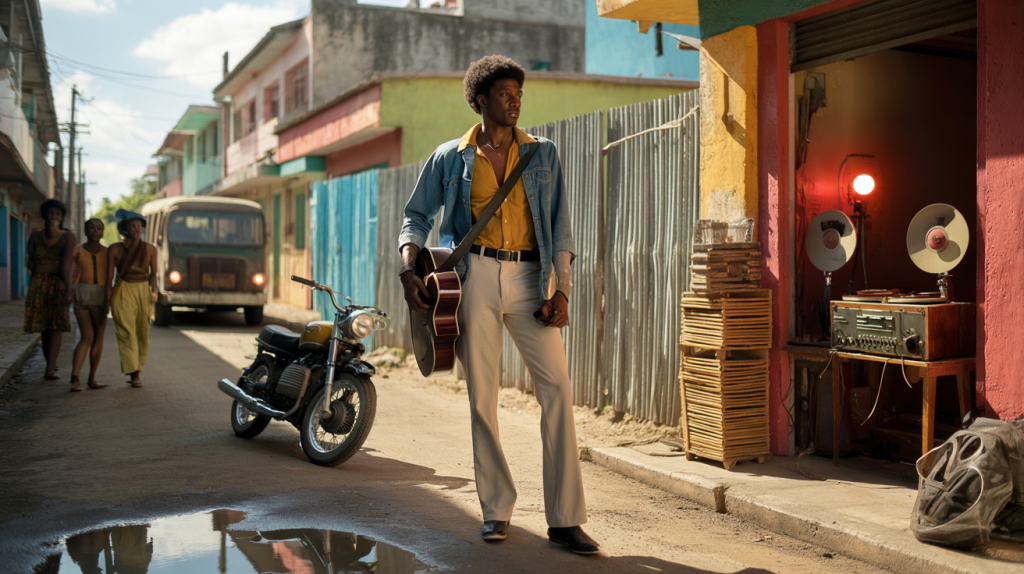
Perry Henzell shot on location, catching streets, dancehalls, and studios with a docu-like eye. The texture is palpable. Buses, yard gossip, church hymns, recorder lights in the studio – the details stay sharp.
Cliff’s Ivan is no saint, and the film does not try sanding him down. He writes a standout tune, hits the wall of industry gatekeepers, and slides into notoriety. That tension mirrors early 1970s Jamaica, when a booming sound system culture met economic frustration and media myths.
Distribution mattered. After its 1972 Jamaican premiere, the film’s 1973 U.S. bow introduced audiences to reggae beyond novelty status, helped by repertory cinemas that programmed it again and again. Word of mouth did the rest, a slow-build momentum that today streams try to replicate.
Soundtrack power : songs that spread reggae beyond Jamaica
The album feels like a carefully sequenced mixtape of the era. Rolling Stone places the soundtrack in its 500 Greatest Albums of All Time for good reason : every track pushes story and mood, not just vibes.
Numbers and dates tell the journey. “Many Rivers to Cross” arrived in 1969, aching and timeless. Toots and the Maytals cut “Pressure Drop” in 1969, a shot of justice and joy. Desmond Dekker’s “007 (Shanty Town)” predates the film and sketches urban youth hustle. The Melodians’ “Rivers of Babylon” carries a spiritual ache that deepens the plot’s moral fog.
Essential spins for newcomers :
- Jimmy Cliff – “The Harder They Come” : the title cut that frames Ivan’s resolve.
- Jimmy Cliff – “You Can Get It If You Really Want” : a 1970 UK No. 2 single that became the movie’s hopeful heartbeat (Official Charts Company).
- Jimmy Cliff – “Many Rivers to Cross” : recorded in 1969, pure catharsis.
- Toots and the Maytals – “Pressure Drop” : 1969 energy, justice in three minutes.
- Desmond Dekker – “007 (Shanty Town)” : ska-to-reggae bridge with street smarts.
- The Slickers – “Johnny Too Bad” : the outlaw’s soundtrack, stark and sticky.
The bigger point : this LP did not just accompany a film. It taught ears how to hear reggae’s bass-forward architecture, call-and-response hooks, and rooted storytelling. The album remains a clean on-ramp for anyone exploring the genre’s classic period.
Listen and watch now : simple ways to dive in
Start with the film to meet Ivan, then loop the album. That order helps the lyrics land, and the city soundscape will feel layered on repeat listens. Subtitles help with patois without dulling rhythm.
For audio, play the record front to back once, then pick a favorite and trace its lineage. “Pressure Drop” into later rock covers. “Many Rivers to Cross” into gospel tradition. Connecting dots turns a great listen into a map of influence.
If sharing with someone new, keep it short and sweet. Offer two tracks, not ten. Cue the title song and “Johnny Too Bad” for contrast – uplift next to fatalism. Then let curiosity do the pull. The film and its 12-track companion still feel definitly alive because they never preach. They show. And the beat carries the rest.