
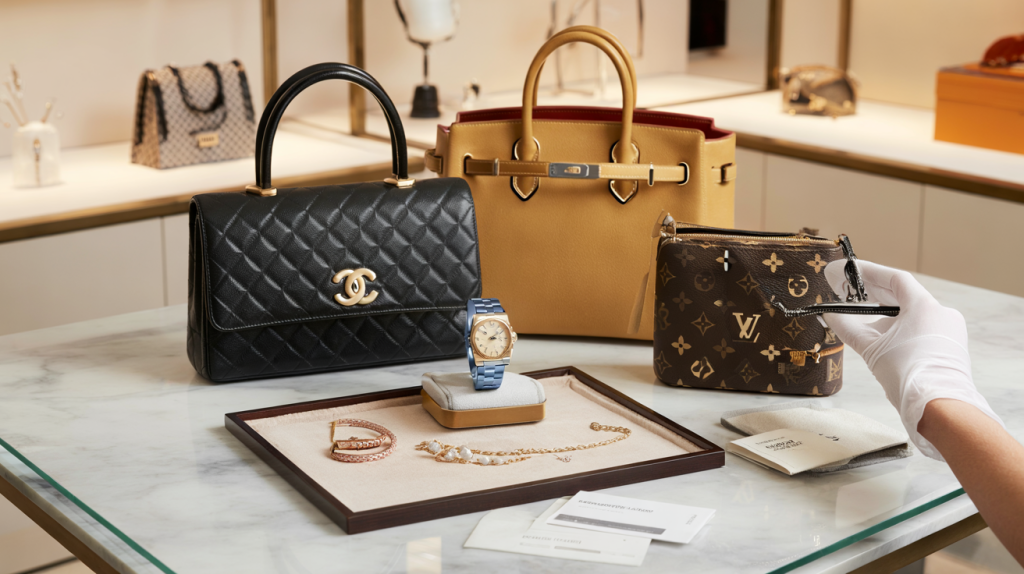
Searches for second hand luxury have exploded, and the winners are clear : Chanel, Hermès, Louis Vuitton and Rolex keep drawing the most clicks and the fastest checkouts. Handbags, watches and fine jewelry from these maisons do not just hold attention, they often hold value, which is why demand stays high on platforms from Vestiaire Collective to The RealReal.
Context matters. The global personal luxury goods market reached 362 billion euros in 2023, a new high according to Bain and Company, and resale has become one of its most dynamic engines, with the global secondhand sector projected to hit 350 billion dollars by 2028 and the United States expected to reach 73 billion dollars over the same horizon (ThredUp 2024 Resale Report, Bain and Company 2023). Put simply, shoppers want iconic labels at smarter prices, and they want them now.
Second hand luxury is booming : what buyers search first
The main idea is simple. When people enter the resale market, they look for investment grade icons first. That means a Chanel Classic Flap, a Hermès Birkin or Kelly, a Louis Vuitton Speedy or Neverfull, and on the wrist a Rolex Submariner or Datejust. In jewelry, Cartier Love and Van Cleef and Arpels Alhambra keep leading gift lists.
Observation after observation lands on the same point. Logos still trigger quick decisions, yet quiet luxury rose as shoppers looked for long term pieces that work every day. That shift lifted demand for Celine, The Row and Loro Piana on trusted platforms, while archival Prada and Gucci kept resurfacing with seasonal spikes linked to runway buzz.
There is a problem that can be solved. Prices and authenticity vary a lot across sites and regions, and the best pieces sell before casual browsers even see them. Knowing which brands and models move fastest reduces regret and helps buyers bid with confidence.
Top sought after brands on the resale market : the evergreen shortlist
Across leading marketplaces, these names consistently rank among the most searched and transacted for bags, watches and jewelry. One shortlist, clear and usable.
- Chanel, Hermès, Louis Vuitton, Dior, Gucci, Prada
- Celine, Saint Laurent, Goyard, Bottega Veneta
- Rolex, Omega, Cartier, Tiffany and Co., Van Cleef and Arpels
Why these brands stay on top changes by category. Chanel and Hermès anchor handbag value because styles recur, craftsmanship stays tight, and waitlists or price increases keep retail access limited. Louis Vuitton’s monogram canvas remains a status code that reads from across the street. In watches, Rolex sets the reference point for liquidity and service networks, while Omega offers heritage with broader price entry.
Prices, value retention and data : what the reports say
The macro picture explains the heat. The personal luxury goods market climbed to 362 billion euros in 2023, up year on year despite uneven demand in some regions, a result Bain and Company detailed in its 2023 update. Resale sits inside that story as a structural habit rather than a fad.
On the secondhand side, ThredUp’s 2024 Resale Report projects the global secondhand market to reach 350 billion dollars by 2028, with the United States hitting 73 billion dollars. That scale draws sellers with better closets and buyers who want access and value, which in turn improves selection. A loop that feeds itself.
For holding power, industry trackers have repeatedly placed Hermès at the top of handbag value retention, with Chanel and Louis Vuitton forming the next tier, and Goyard performing strongly on smaller leather goods. Multiple resale indices and annual brand reports from platforms like Rebag and The RealReal showed these positions across 2022 and 2023. Watches tell a parallel story where Rolex dominates long term liquidity while steel sports models from Omega and Cartier sustain steady resale interest after the 2022 peak cooled.
How to shop smarter : authenticity, timing and condition
Shoppers often make the same mistakes. Buying too fast without checking serials and stamps. Ignoring condition grades. Skipping service histories for watches and provenance for jewelry. One more : focusing only on price and missing total cost with duties or refurbishment.
Concrete steps tend to work better. Target models with stable demand curves, for instance Chanel Classic Flap in black caviar with gold hardware, or a Rolex Datejust in 36 millimeters. Compare recent sold prices, not listing prices, across at least two platforms. Read the fine print on returns and third party authentication. If a timing window matters, watch seasonal cycles : pre holiday months often push prices up, while late January can bring quieter listings.
There is also a missing piece that unlocks deals : patience. Alerts and saved searches catch new listings within minutes, which is when the best items go. Build a short wish list, know your maximum, and be ready to move when the right condition and paperwork align. One small change can adress most headaches.
In the end, demand clusters around a few names for good reasons, backed by data and by the daily behavior seen on trusted platforms. Learn the patterns, focus on condition and documentation, and the second hand market becomes less of a gamble and more of a system.