
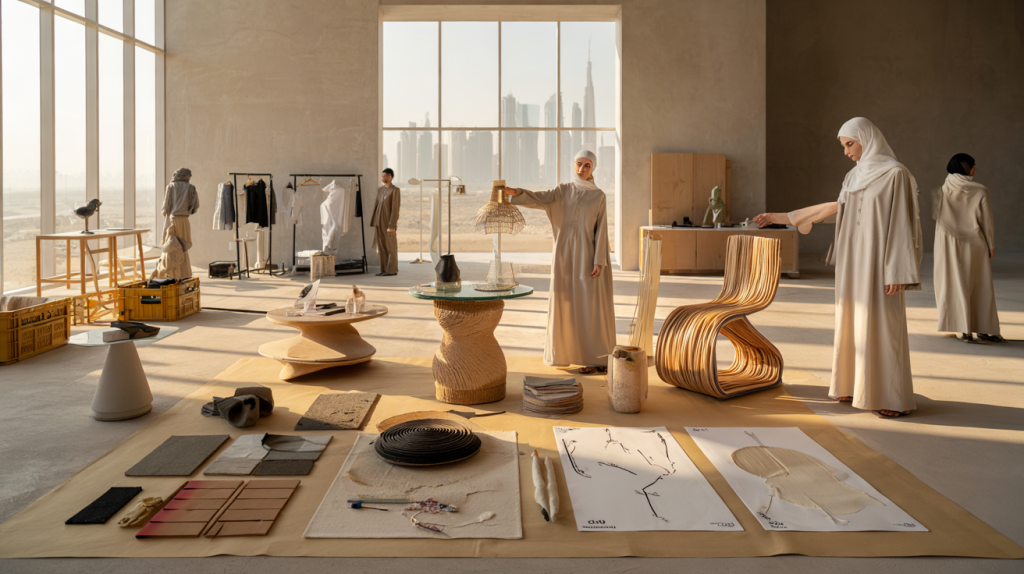
Fresh talent from the Arab world is stepping into the global spotlight with a mix of heritage, tech savvy and fearless material experiments. This surge is not a mirage. Cultural and creative industries account for 3.1% of global GDP and support 50 million jobs according to UNESCO 2022, and a growing share of that energy now points to the Middle East and North Africa.
The ecosystem matured fast. Dubai Design Week launched in 2015 and turned the city into a regional hub. Lebanon’s Starch Foundation, created in 2008 by Rabih Kayrouz and Tala Hajjar, seeded a generation of fashion voices. In 2019, the Saudi Ministry of Culture set up 11 sector commissions, then Riyadh hosted the Saudi Design Festival in 2022. Add Fashion Trust Arabia, founded in 2018 in Doha, and the second Sharjah Architecture Triennial in 2023. The result is a pipeline that did not exist at this scale a decade ago.
Emerging Arab designers : what is really happening now
The main idea is simple. Designers from Casablanca to Riyadh combine local craft with contemporary functionality, then test their drops on social channels before moving to fairs and retail. The problem they keep facing is distribution and long term funding, not creativity.
Observation on the ground shows how platforms stitched the scene together. Downtown Design, the contemporary design fair established in 2013 during Dubai Design Week, connects regional studios with buyers. Starch Foundation helps graduates build collections and press kits. Fashion Trust Arabia offers grants and mentorship that translate into production orders. These steps compress timelines. Careers that once took years can now accelerate in one season.
There is context behind the momentum. UNESCO’s 2022 mapping of cultural and creative industries quantified the sector’s economic weight, which encouraged governments and investors to move. The Saudi Ministry of Culture’s creation of 11 commissions in 2019 signalled public backing for design education, standards and festivals. Sharjah Architecture Triennial’s 2023 edition, curated by Tosin Oshinowo, brought global curators to see material innovation rooted in climate and scarcity. All that attracts buyers who used to skip the region.
From Dubai Design Week to Fashion Trust Arabia : the springboards that matter
Designers need credibility quickly. Events provide it. Dubai Design Week’s open studios and installations let young practices test ideas with visitors and retailers in the same week. Downtown Design offers the trade angle that makes invoices real, not just likes. The Saudi Design Festival, first held in 2022, adds a fast growing market that asks for hospitality, furniture and wayfinding at scale.
On the fashion side, Fashion Trust Arabia, founded in 2018, became a consistent launchpad with grants, mentorship and showroom access in Europe. Beirut’s Starch Foundation, running since 2008, proved how early career structure turns talent into viable labels. These dates matter because they map a new ladder. Before 2015, many Arab designers had to move out to grow. Today, the region hosts a functioning circuit from school to shelf.
One more layer is the biennial rhythm. The Sharjah Architecture Triennial in 2023 shifted global conversations toward resource conscious design suited to hot climates. That lens fits North Africa and the Gulf perfectly, and it nudges product designers to work with palm, clay, recycled plastic and bio based composites in ways that retailers can actually stock.
Common mistakes when approaching MENA creatives, and how to avoid them
The biggest mistake brands make is treating the region as one market. A capsule that sells in Dubai might miss in Beirut or Jeddah. Timelines, customs, and price points differ. Designers read those signals daily.
Another recurring error is asking for exclusivity without distribution. Many emerging labels survive on multi channel sales. Blocking online drops or local pop ups without guaranteed buy volumes hurts cash flow. Sounds obvious, yet it happens a lot.
There is also the storytelling gap. Retailers sometimes request generic desert motifs or gold accents. Designers in Casablanca or Ramallah are working with recycled rubber, laser cut wood, or zero waste pattern cutting. Let them lead. The work performs better when the brief reflects their reality, not a postcard.
How to discover and support emerging Arab designers today
The solution is not complicated. Follow the circuit that already delivers results, then back it with clear terms and patient capital. Start where visibility meets trade, and move with the calendar.
Here are reliable entry points with proven track records since their launch dates, useful whether building a buy, scouting talent, or just keen to find the next studio to watch :
- Dubai Design Week and Downtown Design : launched 2015 and 2013 in Dubai, the region’s anchor for installations, open studios and trade connections.
- Fashion Trust Arabia : founded 2018 in Doha, a gateway for fashion grants, mentorship and international showroom access.
- Starch Foundation, Beirut : created 2008, a mentorship platform turning graduates into brands with seasonal showcases.
- Saudi Design Festival : first edition 2022 in Riyadh, a growing hub for product, interior and communication design linked to public commissions.
- Sharjah Architecture Triennial : second edition in 2023, a curatorial lens on climate and resource based design that influences materials and form.
What ties everything together is consistency. Designers who publish process notes, share materials openly, and show up at these events build trust fast. Buyers who offer realistic minimums, clear payment timelines, and manufacturing contacts become long term partners. Miss that and opportunities vanish just as quickly as they appear.
One last tip feels small yet powerful. Track dates, not hype. If a studio debuts at Dubai in November, check whether it applies to Fashion Trust Arabia by spring, then aims for a Sharjah related talk the next year. That cadence signals ambition and operational discipline. People remember who can deliver, not just who can recieve praise.