
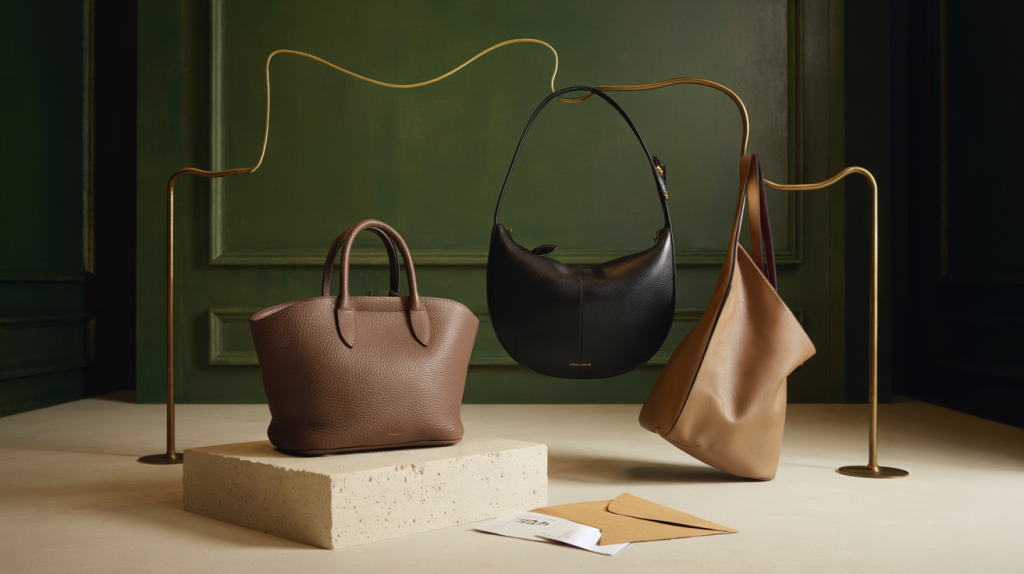
Sudden waitlists, street‑style sightings, and quiet luxury still ruling search feeds: The Row bags keep showing up where value lives. The question hitting wallets in 2025 is simple and sharp : which pieces from Mary‑Kate and Ashley Olsen’s label actually behave like an investment rather than an impulse buy.
Context matters. The Row launched in 2006 and built credibility through severe minimalism and elite materials, not loud logos. That strategy now meets demand spikes for the Margaux and the Half Moon, with some sizes barely staying in stock. Resale chatter follows scarcity. Yet timing, model, size and proof of purchase decide whether a bag retains or bleeds value.
Why The Row bags attract investors right now
The main idea comes down to three forces that can be measured : scarcity at retail, controlled distribution, and compounding brand equity. Luxury tends to protect prices during shaky cycles, and The Row sits at the top of quiet luxury – the aesthetic that refuses to fade.
There is a market backdrop to this. Bain & Company’s global luxury study estimated the personal luxury goods market at about €362 billion in 2023, an all‑time high driven by resilient top‑tier spending. That environment rewards labels with tight supply and consistent price discipline – The Row included.
Still, buyers hit a real pain point. Not every The Row bag behaves the same. The Margaux in specific sizes, the Half Moon in classic colors, or the N/S Park tote in full leather tend to move faster on resale than seasonal novelties. One mis‑step – overpaying for a hard‑to‑style color, skipping documentation – can crush any investment angle.
The Row Margaux, Half Moon and the models that signal value
Observation from the sales floor to resale feeds : the Margaux is the label’s value signal. Its structured silhouette, rigid top handles and pared‑back hardware fit corporate and creative wardrobes alike. Sizes matter. The Row has produced Margaux variations commonly known as 10, 12, 15 and 17 – proportions that serve very different use cases and storage rules.
The Half Moon became a quiet icon for hands‑free city days. In smooth leather and black, it aligns with the brand’s core DNA – a detail that helps resale discipline. Fabric or seasonal finishes look great but often cycle out faster, which affects holding periods.
Real life example : during retail shortages, a pristine Margaux 15 in grain leather with full set – dust bag, tags, and original proof of purchase – tends to list quickly and close near ask. A scuffed version in a niche color lingers, even if it cost more new. Condition and editability trump hype every time.
Data check : market signals, scarcity and price trajectories
Dates anchor the story. The Row’s founding in 2006 set a slow‑build strategy that still governs distribution. Controlled wholesale partners and limited direct stock keep supply tight. That scarcity is what investors actually buy – the chance that demand exceeds available units for the right model and size.
Macro numbers help frame risk. Bain & Company’s 2023 estimate – €362 billion for personal luxury goods – shows a sector that withstood rate hikes and shifting travel flows. Within that, leather goods historically lead margins for brands and hold price rises cleanly across seasons, which matters if a bag cannot be replaced easily at retail.
Price behavior typically follows three triggers : new‑season retail increases, social visibility spikes, and small‑batch drops that vanish in days. When two of those align, listing prices on trusted resale platforms firm up. When they don’t, liquidity thins. That’s why paperwork and timing do the heavy lifting.
How to buy The Row for investment : timing, condition, paperwork
There is a simple checklist that saves money and stress. It also keeps the door open to resell with minimal friction later.
- Target core models : Margaux (10/12/15/17), Half Moon, N/S Park in black, chocolate, or natural grain leather.
- Prioritize condition : no corner wear, clean lining, intact glazing, stored stuffed and upright – humidity controlled.
- Insist on a full set : branded dust bag, care card, original receipt or invoice. No proof, lower liquidity.
- Buy at retail or at a slight premium only when supply is tight and color is wearable year‑round.
- Track brand pricing cycles : quiet mid‑season increases can lift floor values for existing stock.
- Document everything : timestamped photos on arrival, serial or internal markers, and any repair tickets.
Logical flow explains the rest. If the goal is investment, cash sits in the delta between retail access and resale exit. That delta widens when the piece is a core style in a core color with perfect condition and proof. It shrinks when the piece is seasonal, marked, or incomplete. Simple, but definetly not easy.
The missing element that turns a good buy into a smart one is patience. Wait for restocks to avoid heavy markups. Choose the size people actually carry to work – often Margaux 15 for capacity or 12 for compact days. When in doubt, pass on the rare finish and take the classic leather. Liquidity beats novelty when value is the target.