
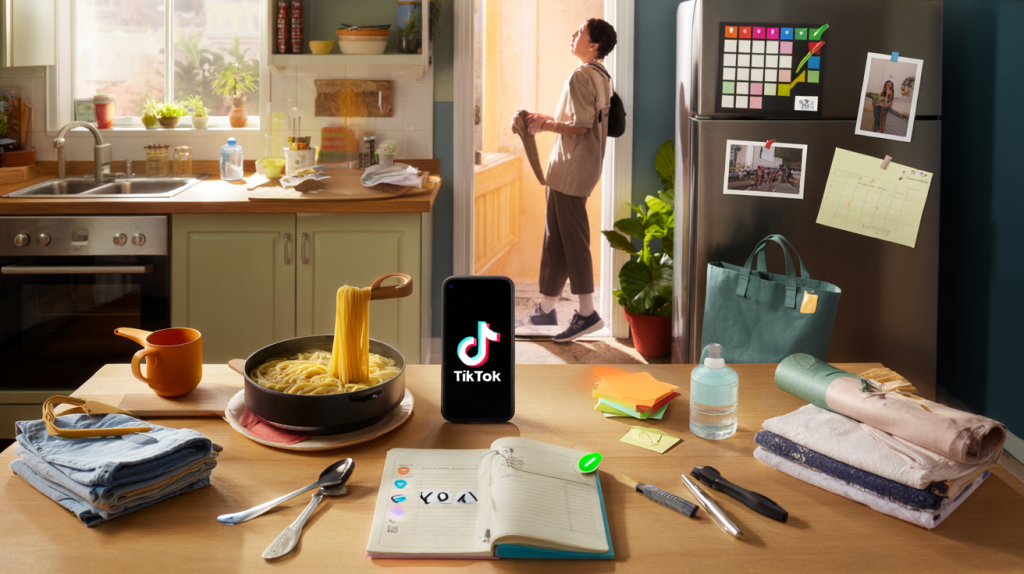
Another day, another aesthetic. Except this one asks for less staging and more living. “Having a life core” is the TikTok trend nudging users to swap endless micro-aesthetics for simple, offline habits that actually build a life: meeting friends, handling admin, cooking a meal that is not just for the feed.
The idea lands fast because it answers a real fatigue. After years of hyper-curated identities, creators post calendars on the fridge, community classes, messy group chats, a library card instead of a luxury haul. The promise feels practical and strangely refreshing. Not an image to chase, but a week to fill.
What “Having a Life Core” Means on TikTok
At its core, the trend values routines over vibes. Viewers see realistic week plans, a return to local spaces, and small rituals that ground a day. Nothing cinematic. Everything doable.
Creators film in quick cuts: a text to a friend, a 30-minute walk, bills paid before lunch, a pot of pasta, lights out at a decent hour. The captions are plain and kind. No gold-plated morning routine, no gatekeeping. Just consistency that builds momentum.
It is not anti-style. It is style as a byproduct of living well. If an outfit, a coffee corner, a bookshelf looks good, fine. But the point is that a social life, work, rest, and errands fit together – even imperfectly.
Why It Hit Now : burnout, algorithms, and Gen Z reality
Audiences feel the whiplash from trend churn. One week “mob wife”, the next “clean girl”. “Having a life core” slows that spin by focusing on action over identity, which reduces the pressure to perform a new persona every month.
There is also a mental health undertow. The World Health Organization reported in March 2022 a 25% increase in the prevalence of anxiety and depression during the first year of the pandemic, a spike that still shapes daily life. The appetite for grounded, offline connection makes sense next to that stat.
And then there is how we now use platforms. TikTok is not just entertainment anymore. It is where many track news, find communities, plan weekends, and learn basic life admin. A trend that translates into real-world steps spreads fast because it solves a boring, persistent problem: building days that feel lived in.
How to try “Having a Life Core” without the cringe : small moves that stick
Start tiny, share sparingly, keep it real. That trifecta lowers the bar and raises the odds you stay with it. A few moves work almost immediately.
- Schedule two recurring touchpoints each week : one social (call, walk, dinner), one practical (admin hour, laundry, money check).
- Anchor your day with bookends : a 5-minute morning reset and a 10-minute evening tidy. No aesthetic needed.
- Go local once a week : class, market, library, pickup soccer. Offline plans shrink decision fatigue.
- Use your phone like a tool : alarms for bills, notes for groceries, camera for progress – not proof.
- Post later, if at all : live the moment first. If it definetly helps, share the how, not the highlight.
What the numbers say : TikTok reach and the shift beyond aesthetics
Scale matters. In March 2023, TikTok chief executive Shou Zi Chew told U.S. lawmakers that the app had 150 million monthly active users in the United States, a reminder that a small behavior change can ripple through a huge audience.
Use has also matured. Pew Research Center reported in November 2023 that 33% of U.S. adults regularly get news on TikTok, up sharply year over year, and that figure rises to 44% among adults ages 18 to 29. A trend framed as “life infrastructure” naturally benefits from that shift toward practical content.
The broader mood still lingers. The World Health Organization’s March 2022 analysis of mental health in the pandemic’s first year highlighted a 25% global increase in anxiety and depression. Against that backdrop, trends that reward routine, community, and manageable goals find traction.
None of this needs a perfection filter. “Having a life core” works because it scales down choices and scales up contact with real people, real tasks, real time. The algorithm might amplify it, but the value lives off screen.