
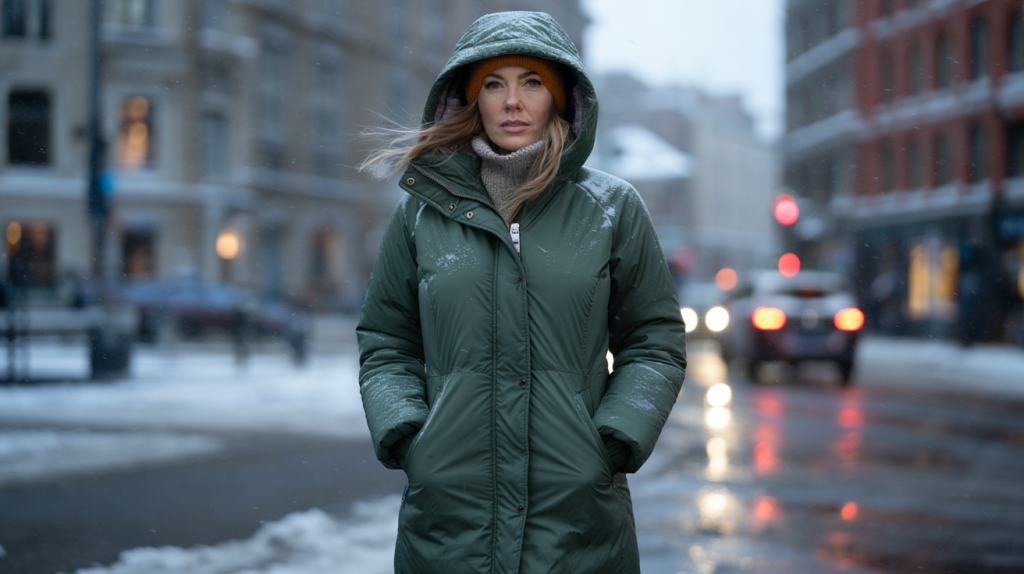
Frosty mornings, biting wind, slushy commutes. When the forecast drops below zero, the hunt is simple yet serious: a very warm winter coat for women that actually traps heat, blocks wind, and shrugs off sleet. The quick answer is clear. Real warmth comes from high loft insulation, windproof fabric, water resistance, a length that covers the thighs, a sealed hood, snug cuffs, and a fit that allows efficient layering.
The snag is noise. Marketing talk often eclipses facts. There are, though, concrete signals to trust. Down fill power numbers from 550 to 900, synthetic gram weights, waterproof ratings like 10,000 millimeters, a European cold standard called EN 342 from 2017, and wind chill data updated in 2001 by the National Weather Service. Taken together, these give a reliable path to the warmest choice without guesswork.
Very warm winter coat for women: what truly keeps body heat in
The main idea is simple. Warmth is trapped air that does not escape. A coat that reaches mid thigh or lower reduces exposure. A close, adjustable hood shields the neck and cheeks. Tight knit or ribbed cuffs stop drafts. Double storm flaps and a tall collar add a heat lock.
Insulation then does the heavy lifting. Down packs incredible loft per ounce, especially at higher fill power. According to REI Co‑op Expert Advice, common down fill power ranges from 550 to 900, with higher numbers offering more warmth for less weight. That loft only works if the shell blocks wind and the baffles prevent cold spots.
Wind turns cold into danger. The National Weather Service and the Meteorological Service of Canada updated the wind chill formula in 2001. At a wind chill near minus 28 degrees Celsius, exposed skin can freeze in about 30 minutes. Translation for coat buyers: windproof fabrics, sealed seams around shoulders and zips, and an insulated hood are not extras, they are essential.
Down vs synthetic insulation: fill power, gram weight, and when each wins
Down delivers the best warmth to weight. A jacket with 700 to 900 fill power down will feel toasty without bulk in dry cold, and it compresses well. REI notes that higher fill power gives more loft for the same weight, which helps when a sleek silhouette is wanted under a scarf or blazer.
Synthetics come into their own in wet cities or for active use. PrimaLoft explains that synthetic fibers continue to insulate when damp, drying faster than down. Many winter parkas use 100 to 200 grams per square meter in the body and a bit less in the sleeves for mobility. If the label lists only a single number, the coat likely uses uniform insulaton, which can feel warmer but stiffer.
One practical route is hybrid thinking. Choose down for very cold, dry climates and for travel that needs packability. Choose synthetic for coastal rain, snow that turns to drizzle, and stop start commutes. Some brands blend both, placing synthetic in moisture prone zones like shoulders and cuffs.
Weatherproofing and standards that matter: waterproof ratings, wind chill, EN 342
Warmth fails if moisture creeps in. REI Co‑op’s rainwear guidance explains that fabrics rated around 10,000 millimeters resist steady rain and wet snow, while 20,000 millimeters improves protection in prolonged storms. Fully taped seams at shoulders and the hood crown reduce leaks, and a durable water repellent finish helps snow bead off.
For workers or anyone facing prolonged deep cold, there is a formal benchmark. EN 342, revised in 2017, is a European standard for protection against cold environments. It evaluates thermal insulation, air permeability, and resistance to water penetration, offering a comparable way to judge cold weather garments beyond fashion claims.
Sustainability also counts. McKinsey and Global Fashion Agenda reported in 2020 that fashion is responsible for about 4 percent of global greenhouse gas emissions. Look for Responsible Down Standard certification for animal welfare, and newer PFC free water repellent treatments to cut persistent chemicals without losing weather resistance.
Fit, features, and style choices that change everything
Small design details stack up to big warmth. A coat that skims the body without squeezing allows insulating air to stay put. A two way front zipper prevents bunching when sitting on the train. Lined hand warmer pockets save fingers, and a removable, insulated hood adapts to changing forecasts.
Quick checklist before buying, in store or online
- Length covers mid thigh or below, with a drop hem at the back
- Hood adjusts at front and rear, with a stiff brim for sleet
- Cuffs are rib knit or adjustable, with internal gaiters if possible
- Down fill power 700 to 900, or synthetic 100 to 200 grams per square meter
- Outer fabric rated near 10,000 millimeters or higher, seams taped on shoulders
- Two way zipper, draft tube behind zip, and a chin guard
- Room for a mid layer without tight spots at shoulders and hips
- Third party tags such as Responsible Down Standard or bluesign approved fabrics
One last piece often missing is context. Temperature ratings on fashion coats are rarely standardized, so numbers can mislead. Use trusted signals instead. Match insulation type to your climate, back it with windproof fabric and a weather rated shell, and pick a length that shields the core and thighs. If the daily low dives or the wind howls, think in systems. Add a fleece or active insulation mid layer under the parka, just as the CDC’s winter safety advice recommends layering to manage moisture, warmth, and wind.
Sources : REI Co‑op Expert Advice, Down Insulation and Fill Power, accessed 2024. REI Co‑op Expert Advice, Rainwear: How waterproof is it, accessed 2024. National Weather Service, Wind Chill Temperature Index, updated 2001, weather.gov. EN 342:2017, Protective clothing against cold, European Committee for Standardization. PrimaLoft, Insulation overview, primaloft.com, accessed 2024. McKinsey and Global Fashion Agenda, Fashion on Climate, 2020.