
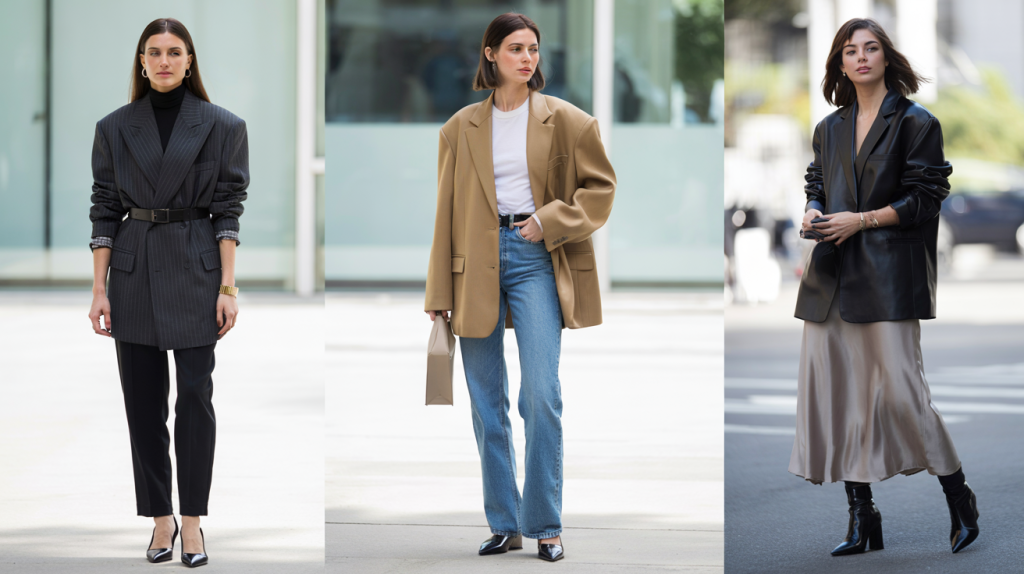
Nail the oversized blazer trend with fit rules, styling formulas, and data-backed buys. A fast, smart guide to the most wearable power piece of the year.
One jacket, instant polish. The women’s oversized blazer takes a T-shirt and jeans and turns it into a meeting look in 30 seconds. That quick.
Hybrid schedules kept comfort at the center, yet the need to look credible never left. The oversized cut bridges both – strong shoulders, relaxed volume, zero pinching. If the search is about size, styling, or smarter buying, this goes straight to the point.
Why the women’s oversized blazer wins now
Wardrobes shifted after 2020. Sneakers stayed, tailoring returned with looser ease. The oversized blazer sits right in that sweet spot: assertive but not stiff, effortless but not sloppy.
Money talks too. McKinsey’s State of Fashion 2024 projected the global fashion industry to grow 2 to 4 percent in 2024, favoring versatile staples over micro-trends that fade fast (McKinsey et The Business of Fashion, 2023). A relaxed blazer earns its keep across office, weekend, and travel.
There is a practical reason it keeps trending. Volume on top balances leggings, slim denim, or a fitted dress. The shape creates clean vertical lines that lengthen the silhouette without squeezing. It works year round, which stretches every outfit budget.
Fit and proportions: the 3-point test for an oversized blazer
Shoulders first. Aim for the seam to sit 1 to 2 cm past your shoulder bone. Any wider and the blazer collapses; any tighter and the armhole pulls.
Sleeves next. Hit the thumb knuckle when arms rest by your sides. Planning to layer a hoodie or chunky knit underneath – stop at the wrist bone. A tailor can shorten sleeves while keeping the original vent and buttons, so ask for the buttons to be buttonned after the alteration.
Hem and shape. A true oversized blazer covers the hips and tilts slightly longer in back. If you’re under 1.60 m, choose a mid-hip cut or add a tiny nip at the waist to keep your frame present. Lapel width around 7 to 9 cm reads modern, not boxy.
Styling formulas that work, from office to weekend
When time runs out, formulas save the day. Pick a texture or color anchor, then build simple lines around it. These pairs are tough to miss.
- Structured wool blazer + white tee + straight-leg jeans + loafers
- Pinstripe blazer + black turtleneck + tailored trousers + pointed flats
- Linen blazer + tank dress + minimalist sandals
- Monochrome blazer set + sleek sneakers for commute days
- Leather-effect blazer + satin slip skirt + ankle boots for night
Two micro-tweaks stretch each look. Add a thin belt over the blazer to shape the waist, or push sleeves to show a cuff or bangle. A mid-scale bag keeps proportions clean with the larger shoulder line.
What to buy and where: fabric, quality and lower-impact picks
Fabric matters more than any logo. For a year-round blazer, look for midweight wool around 220 to 260 g with a touch of elastane for movement. Warm weather asks for linen or linen blends that crumple lightly – that texture is the point. Viscose or cupro linings breathe better than polyester.
Quality markers are visible. Check lapel roll, even stitching, and whether the hem hangs straight. A single-breasted two-button style is the most adaptable. If you prefer double-breasted, keep buttons closer together to avoid a bulky front.
Care about impact and resale value – many readers do. The United Nations Environment Programme reported in 2023 that fashion accounts for an estimated 8 to 10 percent of global carbon emissions and around 20 percent of wastewater (UNEP, 2023). Lean on certificates where possible: OEKO-TEX Standard 100 has tested textiles for harmful substances since 1992, while the Global Organic Textile Standard launched in 2006 focuses on organic fibers and supply chain criteria. Buying better or buying secondhand both help.
Price vs longevity is the final check. A simple tailoring tweak – sleeve shorten or a small waist nip – runs far less than a replacement piece and extends wear for years. If in doubt between sizes, go one size up and tailor small areas rather than forcing a tight shoulder that you will not reach for.
One last move that changes everything right away: keep the blazer on a sturdy hanger to protect the shoulder line, then steam lapels before you leave. Crisp lines, relaxed volume, done.