
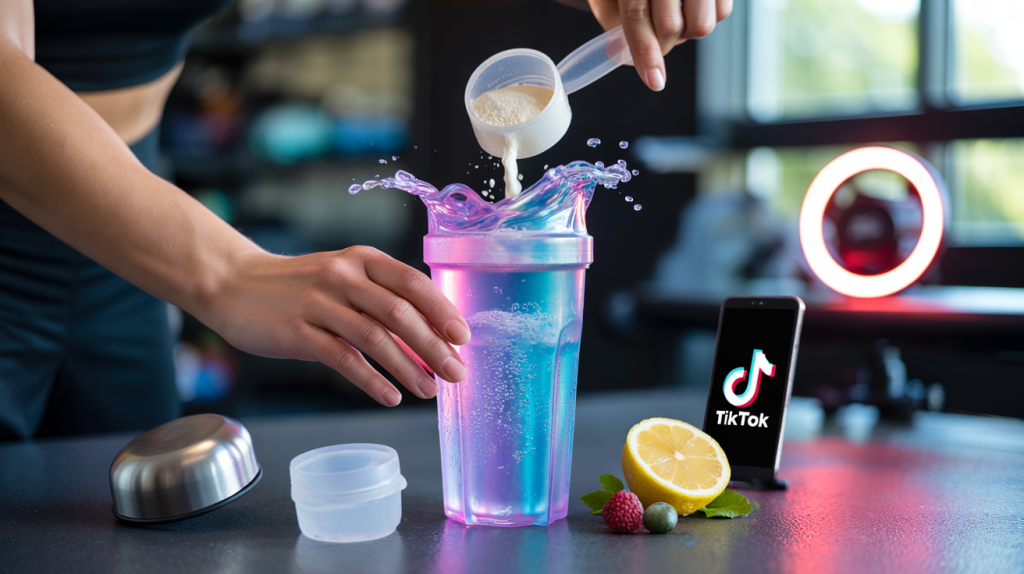
Shaker bottles clink on TikTok feeds as creators pour neon liquids and promise muscle, satiety, and hydratrion in one swipe. The craze has a name in French-speaking corners of the app – “eau protéinée” – but the pitch is universal: flavored protein water that feels like soda, drinks like water, and counts toward daily protein goals.
It taps into a real need. People want quick protein without milky shakes or heavy smoothies. Some bottles list 15 to 20 grams of protein with almost no sugar. Others use clear whey isolates that dissolve cleanly. The question that keeps popping up: is protein water legit for results, or just pretty hydration with a label glow-up.
What “eau protéinée” on TikTok actually is
At its core, protein water is either a ready-to-drink bottle or a clear whey isolate powder mixed with water and flavor drops. It looks like sports drink, not a shake. That is the hook.
Numbers help. Premier Protein Clear lists 20 g protein and 90 kcal per 16.9 oz bottle, with 0 g sugar and sucralose on the label (brand product page, 2025). Protein2o bottles show 15 g protein and roughly 60 to 80 kcal depending on flavor, also zero sugar (brand product page, 2025). Myprotein Clear Whey Isolate per scoop typically delivers about 20 g protein for around 90 kcal when mixed with water (brand product page, 2025).
On the demand side, protein targets are not imagined. The Recommended Dietary Allowance sits at 0.8 g per kilogram body weight per day for adults, a baseline noted by Harvard T.H. Chan School of Public Health in 2023. For training, a 2018 meta-analysis led by Robert Morton found gains in strength and size maximized near 1.6 g per kilogram per day, with a plateau beyond that range (British Journal of Sports Medicine, 2018).
Nutrition facts, real needs, and the catch with sweeteners
A single bottle with 20 g protein can cover a large chunk of a small meal’s protein. It also fits the classic post-workout window. Research by Daniel Moore reported that about 20 g of high quality protein stimulates muscle protein synthesis in young adults after resistance exercise (American Journal of Clinical Nutrition, 2009). Work by Yifan Yang suggested older adults may benefit from closer to 40 g in a given serving (Journal of Gerontology, 2012).
What about sweeteners that make protein water candy-like. The World Health Organization’s 2023 guideline on non-sugar sweeteners advises they should not be used as a tool for long-term weight management because benefits on body fat reduction are not supported over time. That does not ban them. It just sets expectations and encourages a whole-diet view.
For people with kidney disease, protein loading needs medical guidance. The National Kidney Foundation notes in 2024 that individuals with chronic kidney disease often require lower protein intakes than the general population, tailored to their stage of disease. Healthy, active adults are a different story, but the distinction matters.
Does protein water deliver daily – pros, cons, and who it serves best
The upside is simple. Clear protein goes down easily, curbs hunger a bit, and fits a busy routine. No blender, no grit. For those who dislike dairy textures, clear whey isolates can feel lighter while still providing essential amino acids.
The downsides are also clear. Some formulas rely on sucralose or acesulfame potassium for flavor, which not everyone enjoys. Flavored powders can hide under-drinking plain water. And when the entire day’s protein leans on drinks, meal variety takes a hit.
Think in use-cases. A commuter who struggles to hit 80 or 100 g protein per day could plug one protein water between meals and land closer to the Morton 1.6 g per kilogram sweet spot. A recreational lifter might prefer real-food protein at meals and keep one clear bottle for post-workout on hot days.
How to choose and mix “eau protéinée” that actually works
Labels and timing do most of the heavy lifting. The goal is a clean 15 to 20 g protein hit when appetite or logistics make solid protein tough. Then build the rest of the day around fiber, carbs, and fats from food.
When scanning options, match choice to context. Zero sugar can be a plus, but not if it crowds out calories you actually need after training. Lactose intolerance. Clear whey isolates typically contain minimal lactose, yet individual tolerance varies. If sensitive, trial a half serving first.
Real-world routine beats novelty. Rather than chasing every viral mix, anchor around consistent servings.
- Pick a target: 0.8 g per kilogram per day if sedentary, up to about 1.6 g per kilogram on training cycles, per Harvard T.H. Chan School and Morton 2018.
- Slot protein water where it helps: post-workout or as a mid-afternoon bridge when a meal is hours away.
- Check the label: aim for 15 to 20 g complete protein per serving and ingredients you actually like.
- Balance your day: add fruit, whole grains, legumes, eggs, fish, or tofu so micronutrients keep up.
- Mind sweeteners: if your day already includes several diet sodas or sugar-free gums, rotate in plain water.
One last piece that rarely trends on TikTok. Hydration still means water. Protein metabolism uses fluid, and training in heat raises needs. Keep a separate bottle of plain water on the desk or in the gym bag, then layer protein water with intent.
For anyone chasing lean mass or simply steadier appetite, “eau protéinée TikTok” can play a small but neat role. The science backs the protein targets, brand labels provide transparent grams, and the rest is habit design. Get that right and the shiny colors are just a bonus.