
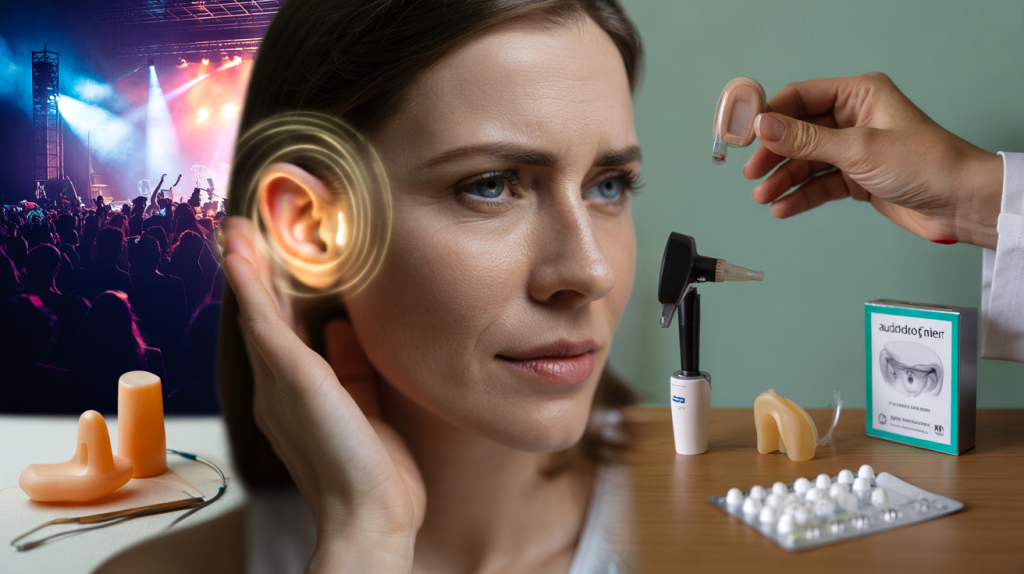
The ringing, hissing or whooshing that no one else hears can hijack sleep, focus and mood. Tinnitus is not a disease on its own but a symptom that often flags an issue in the ear, the hearing nerve or even the blood vessels nearby. Good news : there are proven ways to reduce its grip, and some causes can be fixed.
Scale matters. According to the U.S. National Institute on Deafness and Other Communication Disorders, about 10% of U.S. adults experience tinnitus lasting at least five minutes in a given year. Most cases are not dangerous. Some are. Unilateral or pulsatile tinnitus needs prompt medical evaluation. The faster the trigger gets found, the sooner relief starts.
Tinnitus 101 : quick context, common signs, real impact
Tinnitus shows up as sound with no external source. It can be high or low, steady or intermittent. Many notice it after a loud event, during quiet nights, or alongside hearing loss. Stress amplifies it. So does fatigue.
The risk grows with noise exposure. NIOSH sets a recommended exposure limit of 85 dBA for 8 hours, with risk doubling for each 3 dB increase. That concert, the workshop, the leaf blower – each can push ears past their safe window. Add age-related hearing loss and the odds climb.
Main causes of tinnitus : noise, hearing loss, medications, jaw and neck
Several pathways lead to the same symptom. The most frequent is sensorineural hearing loss – from aging or loud sound – which changes how the brain interprets missing frequencies. The brain turns up the internal gain and a phantom tone appears. Earwax can set it off too by blocking sound and irritating the ear canal.
Drugs can trigger or worsen tinnitus. High-dose aspirin and other salicylates, certain chemotherapy agents like cisplatin, some aminoglycoside antibiotics, and loop diuretics are well documented. Sudden one-sided tinnitus with hearing loss can follow viral infections or rarely an acoustic neuroma. Jaw clenching, temporomandibular joint dysfunction, and neck muscle tension also feed the noise by firing somatosensory inputs into the auditory system.
Treatments that help : evidence, timelines, and what to expect
There is no universal cure yet, but there is solid relief. A 2020 Cochrane review concluded that cognitive behavioral therapy reduces tinnitus distress and improves quality of life, even if loudness itself may not change. The effect matters in day-to-day living – sleep, focus, mood.
When hearing loss sits in the background, hearing aids often lower the perceived loudness and annoyance by restoring missing sound. That improves speech understanding and gives the brain a richer soundscape. Sound therapy – from bedside noise machines to app-based pink noise or notched music – can mask or retrain attention. For earwax, simple removal often helps within minutes.
Medical workups are targeted. The American Academy of Otolaryngology – Head and Neck Surgery advises audiometry for most persistent cases, and imaging when red flags appear. Unilateral tinnitus with asymmetrical hearing loss may prompt MRI to rule out vestibular schwannoma. Pulsatile tinnitus can require vascular imaging to look for treatable blood flow causes.
What to do now : practical steps and when to seek care
Small, consistent actions reduce the volume your brain gives to tinnitus. Start today, then build from there.
- Lower noise exposure : follow the 85 dBA for 8 hours guidance, wear ear protection at concerts and on the job, and give ears quiet breaks.
- Book a hearing test : establish a baseline and spot treatable hearing loss.
- Review medications : discuss recent changes with a clinician, especially salicylates, aminoglycosides, loop diuretics or chemotherapy.
- Try structured sound : bedside noise, fan, or app-based pink noise to smooth bedtime and concentration.
- Use CBT-based tools : therapist-led programs or validated digital programs to shrink distress and rumination.
- Address jaw and neck tension : dental guard for bruxism, physical therapy, gentle stretching.
- Protect sleep and stress routines : regular bedtimes, exercise, caffeine timing, brief relaxation drills.
Seek urgent care if tinnitus starts suddenly with hearing loss, is only in one ear with new imbalance, comes with facial weakness, or is pulsatile in rhythm with your heartbeat. Those patterns can signal conditions that need rapid treatment. For most, a stepwise plan works : identify the trigger, treat reversible causes, then layer hearing support, sound therapy and CBT. Relief builds over weeks, not days. Expect progress in stages, and you will likely recieve it.
Sources : U.S. National Institute on Deafness and Other Communication Disorders – prevalence estimate of tinnitus in adults; National Institute for Occupational Safety and Health – 85 dBA for 8 hours exposure limit; Cochrane Review 2020 – CBT effectiveness for tinnitus; American Academy of Otolaryngology – Head and Neck Surgery – evaluation recommendations for unilateral and pulsatile tinnitus.