
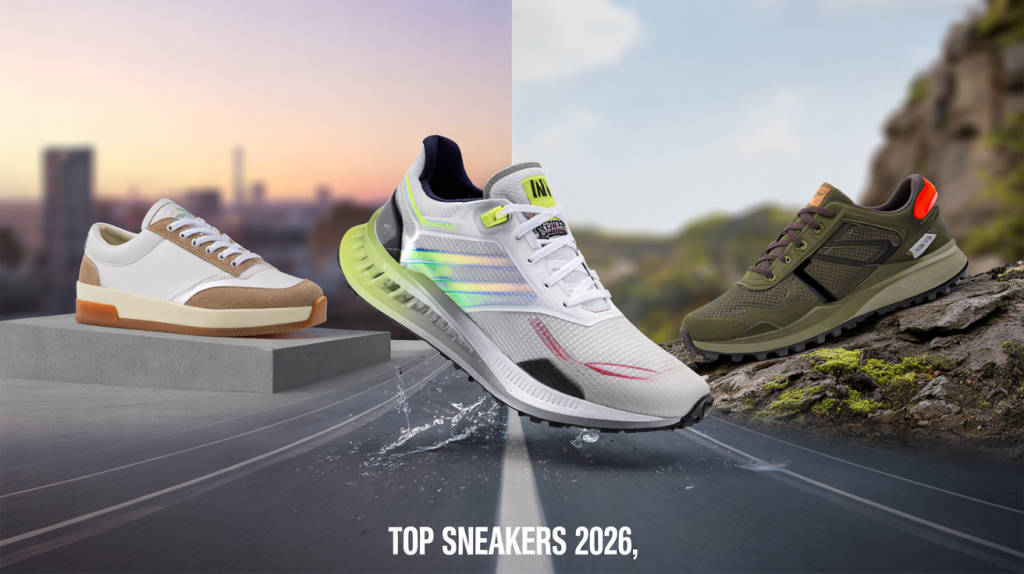
Top sneakers 2026, sorted by running, lifestyle and trail. Data backed trends, brands to watch, and smart buying tips that save time and money.
The sneaker race for 2026 is already on: comfort that wins daily miles, retro styles that keep selling out, and outdoor pairs that move from mud to metro. The point is simple. Readers want the models that will matter next, not last season’s leftovers.
The backdrop helps to sort the true contenders from the noise. The athletic footwear market reached 138.7 billion dollars in 2022 with a projected 4.9 percent compound annual growth through 2030, according to Grand View Research in 2023. Momentum keeps shifting too. Nike reported 51.2 billion dollars in revenue for fiscal 2023. On Holding posted net sales of 1.79 billion Swiss francs in 2023, up 46.6 percent year on year. Deckers Brands, owner of Hoka, said the Hoka label hit 1.81 billion dollars for fiscal 2024, up 27.9 percent. Performance sells, lifestyle sells, and the lines that deliver both rise fastest.
Best Running Sneakers 2026: Speed for Race Day, Comfort for Every Day
Runners in 2026 will still face the same trade off: super foam and a carbon plate for racing, versus cushioning and durability for training. World Athletics keeps a 40 millimeter stack height limit for road racing shoes, a rule confirmed in its technical updates in 2022. That ceiling shapes what brands can do at the very top end.
Expect trusted families to lead. Nike Pegasus and ZoomX powered racers, Adidas Adizero Adios Pro and Boston, Asics Gel Nimbus and Metaspeed, New Balance Fresh Foam and FuelCell, Hoka Clifton and Mach, Saucony Endorphin Speed and Pro, Brooks Ghost and Hyperion. These lines update yearly, refine fit and foams, and rarely miss on value.
Why these names. Because the numbers track with them. On Holding’s rapid growth came from daily trainers like Cloudmonster and performance models used in marathons. Hoka’s double digit gain rode maximal cushioning that turned once niche stacks into mainstream comfort. The direction for 2026 is clear: lighter foams, more stable platforms, and uppers that breathe better in heat.
Top Lifestyle Sneakers 2026: Retro Icons With Modern Comfort
On the street side, the pendulum still swings toward classic shapes. Adidas Samba and Gazelle moved from boutiques to wardrobes worldwide in 2023 and kept momentum into 2024. Nike Air Force 1 and Dunk, Air Jordan 1 and 4, New Balance 550 and the 990 lineage continue to anchor everyday looks, with seasonal makeups keeping demand fresh.
Comfort upgrades will decide what sticks through 2026. Expect more insole tech borrowed from performance lines, thinner yet stronger meshes, and recycled materials that do not change feel. Adidas has expanded recycled content across its range in recent years, and Nike’s Move to Zero program keeps pushing waste reduction in uppers and tooling. The direction is not a fad. It is a supply chain reality.
One more force: collaborations that edit shapes rather than scream. Clean palettes with one functional twist usually age better, and that is where resale values often hold. Quiet color blocking wins weekly wear. That is the goal.
Trail and Outdoor Sneakers 2026: Grip That Works in City and on Dirt
The outdoor crossover stays hot. Salomon XT 6 and Speedcross, Hoka Speedgoat and Challenger, Nike Pegasus Trail, Adidas Terrex lines and Asics Trabuco show why. Grip that does not slip on wet concrete, better toe protection, and midsoles that feel soft without mush let these pairs jump from hikes to commute.
Materials will matter as weather swings harder. Expect tougher ripstop, faster drying liners, and lug patterns that last longer on pavement. Brands already test these details with athletes off road, then tweak geometry for daily use. It readls well on foot, and it sells.
How to Choose Your 2026 Pair: Fit, Tech, Longevity
Shopping moves faster than ever. Here is a simple plan that cuts through the scroll and helps land the right pair for 2026.
- Start with use: race day, daily miles, office, travel, or trail. One clear goal beats five vague ones.
- Check the midsole: supercritical foams feel springy but may compress faster. Balanced EVA blends last longer.
- Mind the rulebook if you race: road racing stack height is capped at 40 millimeters by World Athletics.
- Weight and width: lighter is not always better if you need stability. Wide versions exist across major lines.
- Rotation saves shoes: one performance pair and one everyday pair spreads wear and keeps legs fresher.
- Verify sustainability claims on brand pages, not only on tags. Look for recycled content percentages and third party standards.
- Use release calendars from brands and retailers for drops. Early sign ups often unlock sizes that vanish later.
For running, lock a daily trainer from a proven family, then add a plated racer only if chasing a personal best under World Athletics rules. For lifestyle, lean on icons that now include better insoles and lighter uppers. For trail, prioritize grip and upper protection first, then weight.
The market context backs this approach. Big brands still scale, as shown by Nike’s 51.2 billion dollars in fiscal 2023 revenue. Fast growers shape trends, as On and Hoka did with cushioning and rocker geometries. Grand View Research’s 2023 forecast for steady growth through 2030 suggests the pipeline of models will stay rich. That means choice, but also noise. Focus on fit, purpose and verified specs, and the top sneakers of 2026 become pretty easy to spot.