
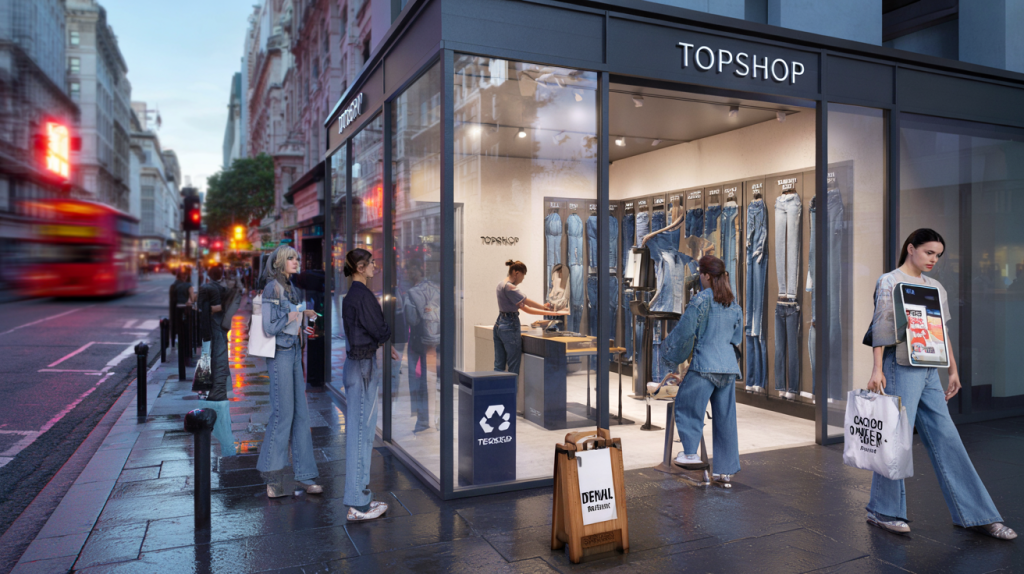
Topshop return 2025: facts, timeline and credible signals. From the ASOS deal to new retail moves, here is what could realistically come back.
Topshop sits on a cultural fault line. After the Arcadia collapse and the shuttered Oxford Circus flagship, the brand drifted online and into memory – and yet, the 2025 buzz will not quit. Shoppers want a clear answer: is a real comeback on the way, and if yes, what shape will it take – store, pop-up, or drop-led online play.
Here is the present reality. Arcadia went into administration on 30 November 2020, as widely reported by BBC News. ASOS then bought Topshop, Topman, Miss Selfridge and HIIT for £265 million in February 2021, according to ASOS’ own announcement. Nordstrom entered as a strategic partner in July 2021, saying it had acquired a minority interest in the brands and would stock them in the United States. The old Oxford Street site closed for good and Ingka Investments said in October 2021 it purchased 214 Oxford Street for £378 million. With that timeline, any 2025 return starts from a brand that already lives online and inside selected department stores – not from a standing start.
Topshop return 2025: the shopper question, unpacked
The main concern sounds simple: can Topshop feel like Topshop again. The denim that anchored a generation, the quick-hit trends, the Saturday-afternoon energy. That is the gap to solve in 2025, especially for those who miss trying on jeans in person and walking out with a perfect Jamie or Joni fit.
There is also a practical angle. If the brand does return to British streets, will prices hold near pre-2020 levels, or will inflation and supply chain shifts push them up. Since 2021, the brand has operated primarily through ASOS online and Nordstrom in the United States, which changed costs, logistics and where stock gets allocated. That is why many fans ask for pop-ups or a small-format store rather than a costly full flagship.
No official announcement confirms a UK brick-and-mortar relaunch for 2025 at the time of publishing. The momentum instead sits in a hybrid model: digital drops on ASOS, wholesale in key partners, and targeted real-world moments that reintroduce fit and feel. That approach preserves speed while testing demand street by street.
The facts on record: ASOS deal, Nordstrom tie-up, Oxford Street legacy
Arcadia’s administration: 30 November 2020. That set the stage for the sale. ASOS’ acquisition: February 2021 for £265 million, as stated by ASOS. The buyer took the brands and online operations, not the stores or leases. Staff and tech moved with the e-commerce first strategy.
United States distribution restarted through Nordstrom in July 2021. Nordstrom said it invested for a minority stake and began carrying Topshop across its channels, bringing the label back to millions of American shoppers who knew it from earlier shop-in-shops.
Oxford Circus history closed a chapter. Ingka Investments, part of the IKEA group, said in October 2021 it bought the 214 Oxford Street building for £378 million. That transaction ended any near-term prospect of a like-for-like flagship return on the same corner, pushing future physical moves toward pop-ups or fresh locations if they happen.
What a 2025 comeback could look like – and the real signals to watch
Think modular. A 2025 return that actually works would likely lean on limited-run capsules online, timed with festival season and back-to-uni. Denim would take point, because that is the emotional anchor. In-store experiences would appear as short, high-impact pop-ups in major cities, focused on fit bars, alterations and same-day pickup for top sizes.
Wholesale partners matter. The Nordstrom relationship already proves the brand can live beyond ASOS’ site. In the UK and Europe, similar partnerships – department stores or multi-brand fashion specialists – could add reach without the overhead of permanent leases. That is the sort of move retailers announce via linesheets and buying appointments months ahead of launch.
Pricing needs care. Shoppers remember where Topshop sat. A denim relaunch that keeps hero fits close to historical price ladders while reserving premium fabrics for limited capsules would feel fair. Anything else risks losing the core audience just as nostalgia peaks. The brand learnt that lesson the hard way pre-2020 when too many categories blurred the value story.
Watch the tells. New trademark filings for store experiences, retail job postings that mention styling studios, city permitting for short-term retail, and early influencer seeding of denim fits often surface weeks before public news. When those dominos line up, a real-world return usually follows quickly.
One more point. Sustainability will sit in the spotlight. If a 2025 plan adds take-back for denim, clear fabric composition labeling, and repair-at-pop-up services, it aligns with where Gen Z spends. It also answers a basic shopper need – buy less, wear longer – without killing the thrill of a new drop. Get that right and the comeback feels definitly modern, not just nostalgic.