
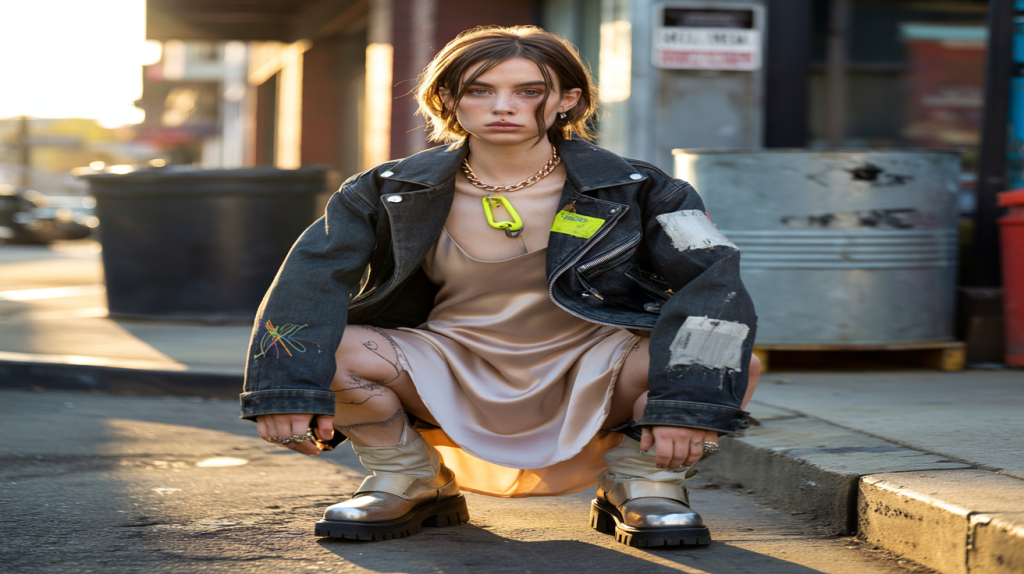
Trashcore is the messy-raw look showing up on sidewalks and For You pages: ripped cargos, scuffed sneakers, slashed tees, a jacket that looks like it lived three lives. It blends grunge, DIY, punk and normcore, then leans into wear, repair and texture. Not sloppy, but stylized. The point is contrast: a beat-up moto over a satin slip, a pristine white tank under a torn knit, jewelry that looks found, not bought yesterday.
Why it lands now: style fatigue and the cost of new clothes push people toward secondhand and customization, while climate concerns reward garments that keep circulating. Trashcore turns flaws into features and invites personal narrative. It looks cool on camera, but it also holds up IRL because it favors hardy fabrics, layers and repeat wears. That mix explains the surge in interest and the flood of outfit videos that feel unfiltered but carefully assembled.
Trashcore fashion explained : from thrift pile to statement
At its core, trashcore is controlled disarray. The silhouette stays practical – big pockets, chunky soles, roomy denim – while textures carry the drama. Think abrasions, patchwork, hardware, greasey washes, duct-tape fixes that became design on purpose. Color skews dark or sun-faded, with flashes of chrome or candy brights to jolt the eye.
The look solves a real problem: how to dress differently without buying a brand-new identity. Trashcore recycles items already in the closet, adds one thrift find, then tinkers with fit. Cropped hems, safety pins at the waist, a belt dragged low, sleeves shoved up. The styling signals intent, so the outfit reads deliberate, not discarded.
Data behind the dirty-pretty trend : resale, Gen Z and waste
The resale engine powering trashcore keeps accelerating. ThredUp’s 2024 Resale Report projects the U.S. secondhand market will reach 73 billion dollars by 2028, driven by budget pressure and value retention on durable basics (ThredUp, 2024).
On platforms where trashcore thrives, young users dominate. Depop reports that 90 percent of its active users are under 26, a cohort that shops pre-owned and treats customization as a social currency (Depop Press, 2021).
There is also a waste reality. The U.S. Environmental Protection Agency estimates that Americans generated about 17 million tons of textiles in 2018, with roughly 11.3 million tons landfilled (U.S. EPA, 2018). Extending the life of garments – distressing, repairing, swapping – directly speaks to that scale.
How to build a trashcore wardrobe that still looks intentional
Start with one anchor: denim, cargos or a moto jacket that can take a beating. Then add a clean base layer so the outfit breathes. The contrast keeps the look sharp on a work day and wild on a night bus.
Common mistakes show up fast: all-over distressing with no crisp element, or too many trend pieces in one go. Keep one zone messy at a time. If the jeans are shredded, let the top be simple. If the jacket screams, dial down the rest.
Here is a simple plan that works across budgets and sizes :
- Pick sturdy cores : straight jeans, carpenter pants, utility skirt, canvas jacket. Buy secondhand or raid a friend’s giveaway bag.
- Add a neat base : white or black tank, fitted baby tee, ribbed turtleneck. Clean lines make the grunge pop.
- Texturize smartly : one torn knit, one repaired seam, one chain or carabiner. Stop before the outfit becomes costume.
- Customize light : sandpaper the hem, swap dull buttons, stitch a visible mend. Ten minutes can flip a piece.
- Balance volume : baggy bottom with a closer top, or oversized jacket over a sleek dress. Proportions sell the vibe.
- Footwear that can work : chunky trainers, beat-up boots, dad loafers. Scuffed, not wrecked.
Care, budget and the line between messy and styled
Trashcore looks effortless, yet care is the secret. Wash denim inside out, line dry tees, use fabric glue only where a seam will not flex, and rotate pairs to prevent blowouts. Small rituals keep pieces wearable for seasons instead of weeks.
Budget follows the same logic. Spend on the workhorse – jackets, shoes – and thrift the fun parts. That maps to the resale economics seen in the ThredUp report: hard-wearing categories keep value the longest, while experimental items cycle quickly through closets.
The styled-not-messy line comes down to one clean element in every look. A crisp tee, a polished belt, fresh socks. That tiny anchor lets frayed edges and wild textures feel chosen. Add daylight photos to test the balance before going out. Looks great on a grid, reads even better curbside when fabrics move and the story of wear shows.