
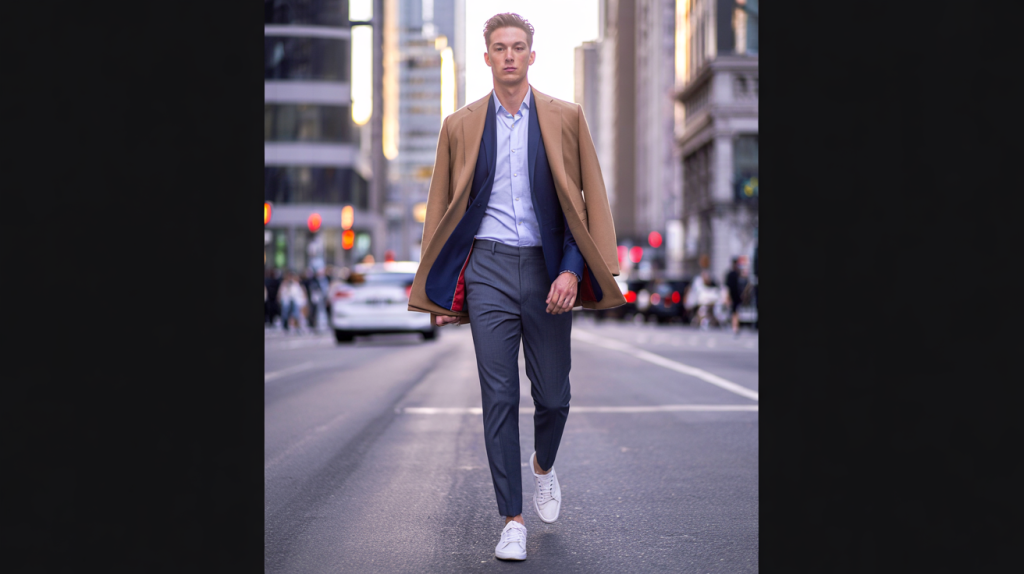
Ultra-fit menswear decoded: what it is, what to avoid, and how to wear sharp, close cuts in 2025 without discomfort or fashion faux pas.
Ultra-fit menswear promises a razor-sharp silhouette: closer suits, tapered shirts, narrow denim that sculpts. Click-worthy, yes. But the game is precision, not pressure. The right cut cleans the lines, lengthens the frame, and looks modern under a coat or bomber. The wrong cut pinches, warps posture, and dates a look within seconds.
Context matters. While looser fits surged on runways and city streets since 2021, ultra-fit never vanished. It just matured. Today it works when fabrics stretch strategically, when garments are tailered to movement, and when proportions stay balanced. The goal is trim, not tight. Think glide, not squeeze.
Ultra-fit men’s fashion: the silhouette, the rules, the pitfalls
Start with this: ultra-fit is about contouring the torso and leg line so clothes skim the body. Not glued on. A jacket should close cleanly with a quiet V. Sleeves kiss the wrist bone. Trousers taper to the shoe without pulling across the thigh.
Common problem seen everywhere: sizing down to chase a gym-ready outline. That creates chest collapse, lapels that bow, shirt buttons gaping, denim whiskers etched like fault lines. It reads stressed, not strong.
The quick test many stylists use is the “one-finger rule”. You should slide one finger between fabric et skin at the thigh, chest, collar and waist. If not, it is compression wear, not daywear.
Data check: comfort, health and sustainability behind tight fits
Real bodies drive real sizing. According to CDC NHANES data, the average waist circumference for U.S. men has hovered around 40 inches since the mid-2010s (2015–2018). That alone explains why aggressive skinny cuts often fight the wearer rather than flatter.
Health signals exist too. A 2018 study from the Harvard T.H. Chan School of Public Health reported men who primarily wore boxers had 25 percent higher sperm concentration and 17 percent higher total sperm count versus those in tighter underwear, published in Human Reproduction. Different garment, same lesson: sustained pressure and heat are not style allies.
There is also a cautionary tale. BMJ Case Reports documented in 2015 a case of compartment syndrome triggered by prolonged squatting in ultra-tight jeans. It is rare, but it happened, and it shows the risk of severe constriction.
And consider the fabric story. Synthetic stretch fibers make ultra-fit wearable, yet they shed. The International Union for Conservation of Nature estimated in 2017 that 35 percent of primary microplastics in the ocean come from synthetic textiles. Stretch is useful; responsible care and rotation matter.
Tailoring moves: how to get ultra-fit right for real bodies
Ultra-fit turns effortless when the pattern and fabric do the work. Stretch content around 2 to 3 percent elastane in denim or cotton twill lets seams flex without strain. High armholes add mobility to slim jackets. A slightly higher rise stabilizes close-cut trousers.
Shirts do the heavy lifting. A slim cut with back darts shapes the waist while keeping the chest free. If buttons pull when seated, size up in the neck and bring in the waist at the side seams. Fast fix, no drama.
Strong calves or thighs? Choose a tapered fit labeled athletic or carrot. Same sharp ankle, more room up top. The leg reads sleek, not stuffed.
- Jacket: lapels lie flat, top button closes without ripples, shoulder seam ends at the shoulder edge.
- Shirt: no chest pull, collar fits two fingers, cuff meets wrist bone.
- Trousers: one-finger ease at thigh, no X-shaped strain at the crotch, hem just touching the shoe.
- Denim: minimal whiskering under pockets, phone slides in without imprinting.
Style playbook 2025: fabrics, cuts et where to go looser
Balance is the quiet hack. Pair a close jersey or Oxford shirt with a slightly roomier jacket. Or wear a contoured blazer over straight-leg trousers. Tight on tight reads dated; mixing ease keeps it current.
Fabrics steer comfort. Tropical wool and high-twist blends spring back after a commute. Cotton poplin stays crisp under a blazer, while cotton jersey clings more. In denim, midweight with a touch of stretch drapes cleaner than paper-thin skinnies.
Footwear sets the tone. Sleek sneakers or slim loafers keep the line uninterrupted. Bulky soles next to ultra-fit trousers make the leg look narrower than it is.
If the closet holds older skinny pieces, update the silhouette with a longer top coat, a head-turning overshirt, or a relaxed knit. The contrast modernizes everything without a full wardrobe reset.
The last mile is alterations. Hem, sleeve length, a small waist nip, a seat let-out. Local tailors handle this daily, usually in under a week. The result is precision that looks custom, moves like weekend clothes, and feels right the second you step outside.
Yes, close. Not painted on. That is the ultra-fit sweet spot for 2025.