
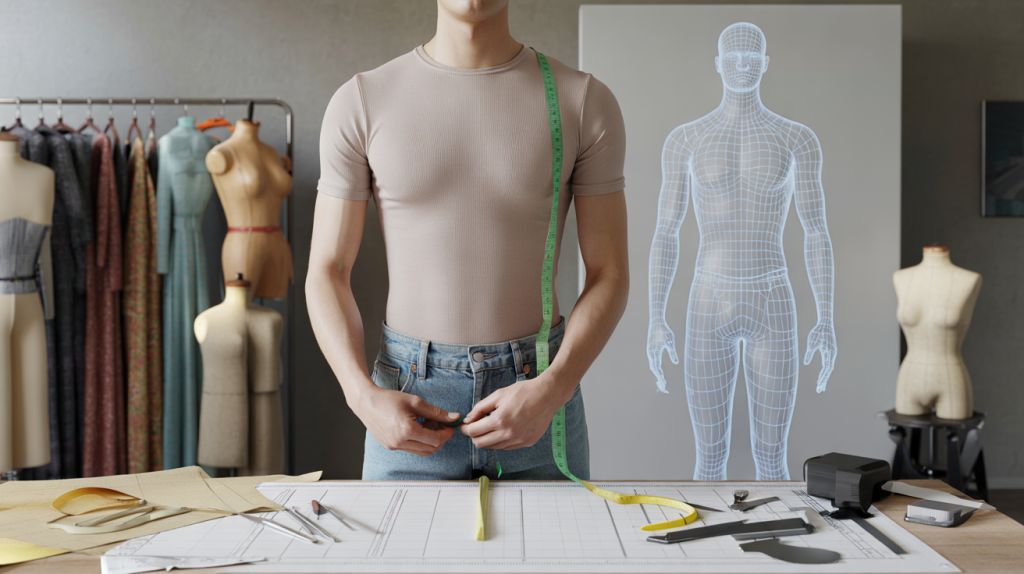
Social feeds push the “morphologie V, A, X, H, O, 8” grid as a shortcut to style. Six letters promise instant clarity, the right jeans, fewer dressing room regrets. The reality feels different. Real bodies refuse tidy boxes, and that mismatch is exactly where frustration and bad buys start.
Here is the crucial bit. The V A X H O 8 method compresses silhouettes into six types to guide proportions and outfit balance. Handy for quick tips, yet the big measurement authorities do not work this way. European sizing standard EN 13402 1 was approved in 2001 to label clothes by body measurements, not shapes. ISO 8559 2 arrived in 2017 to define how professionals measure the body precisely. And one of the largest 3D scans of civilians, the CAESAR survey, captured 4,431 adults across the United States and Europe between 1998 and 2000, showing continuous variation in shape rather than discrete categories.
What the V A X H O 8 method promises
The promise is speed. A letter tells where to add structure, where to soften lines, and how to balance shoulders, waist, and hips. It reduces choice overload when shopping, suggests necklines that flatter, and nudges toward better tailoring. For many, that feels like relief.
The method also teaches proportion awareness. A triangle or inverted triangle cue pushes attention to shoulder width, hip volume, and curve placement. That can solve a daily problem fast, particularly when dressing for work or a photo heavy event.
Where the shape grid falls short, according to data
Six boxes cannot capture posture, muscle distribution, or how weight fluctuates through the month. The CAESAR scans recorded detailed surface shapes, and the message from that dataset has been consistent since 2000. Human morphology changes along gradients. It does not sort cleanly into a handful of letters.
Standards reinforce the same idea. EN 13402 1 focuses on primary dimensions like bust, waist, and hip for women and chest, waist, and height for men. ISO 8559 2 documents how to take those measurements so results are repeatable across studios and brands. None of these professional references rely on typologies because measurements travel better from brand to brand and from pattern to garment.
There is also the fit trap. A person can read as A shaped in one jean and X shaped in another because the rise changes where fabric grabs the body. Shoulder pads, bra type, and the slope of the upper back can shift a mirror diagnosis within minutes. That is why typologies conflict online and why the same body recieves different letters on different days.
How to use V A X H O 8 safely: stylist moves that actually work
A smart approach keeps the helpful bits and drops the rest. Use letters as mood boards, not as identity cards. Then anchor decisions in numbers taken the professional way.
Here is a practical checklist that respects how bodies truly vary and why standards exist :
- Measure bust, waist, and hip following ISO 8559 2 positions, plus shoulder width and high hip if curves sit higher.
- Compare those numbers to each brand size chart, not to a letter. Prioritize the toughest fit area first.
- Check garment ease. A woven blazer often needs 6 to 10 cm ease at the bust, a knit dress far less.
- Test silhouettes in fabric, not just on paper. A high rise trouser can rebalance volume better than a new label ever will.
- Photograph front and side views in consistent light. Posture and shoulder slope often explain styling wins.
Concrete example. Someone at 170 cm with 94 cm bust, 76 cm waist, and 104 cm hip will be typed as A by one guide, X by another if waist definition shows strongly. A mid rise jean may cling on the fullest part of the hip and exaggerate triangle volume. Shift to a higher rise with a gentle leg line and the visual balance changes. The body did not change. The cut did.
A better sizing path: measurements, standards, and tools
The missing piece in most V A X H O 8 threads is method. ISO 8559 2 exists to reduce measurement noise. EN 13402 1 exists to label products consistently. Retail teams use these documents because they travel across seasons and factories. Shoppers can borrow the same discipline at home with a tape, a straight wall, and two minutes of calm standing posture.
Record core dimensions in centimeters. Note shoulder width and high hip if curves sit above the trochanter. Keep a small file with recent numbers and a photo in a neutral tee. Then filter by cut details that influence perceived shape, like rise, shoulder padding, dart placement, and fabric stretch. This is where the letters can still help as visual prompts for where to add structure or flow, while the numbers do the heavy lifting for fit.
Standards and scans point in the same direction. Bodies live on a spectrum, not in boxes. When choices are guided by precise measurements and by how a garment redistributes volume, style becomes less random and returns shrink. The letter can be a starting hint. The tape delivers the result.