
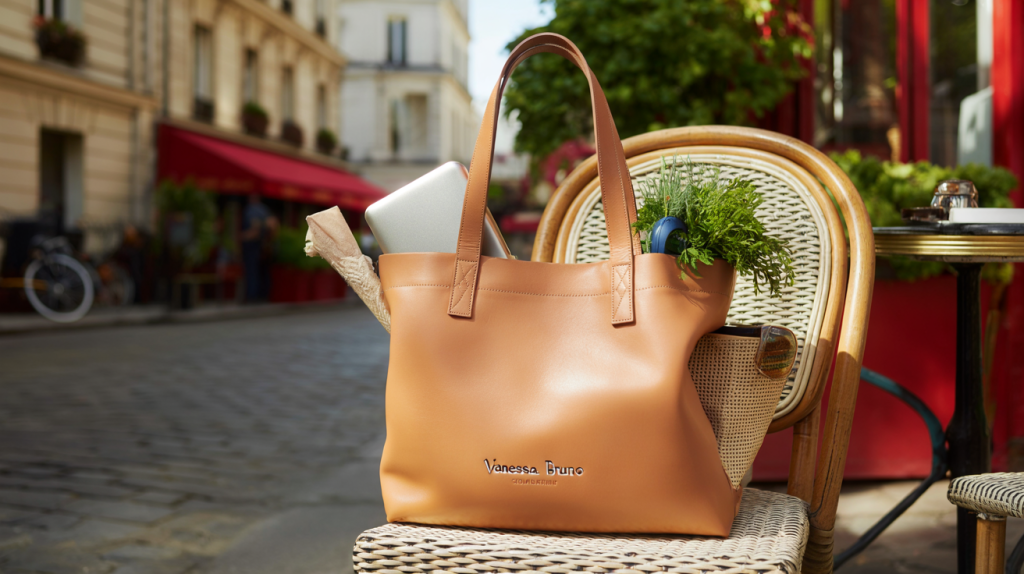
Looking for the Vanessa Bruno Néo Cabas. Here is what defines it, how it differs from the cult Cabas, and how to pick the right one without a misstep.
Paris labels come and go, yet one tote keeps popping up in city crowds and on train platforms. The Vanessa Bruno Néo Cabas rides the legacy of the brand’s famous Cabas while answering a very simple need today : a lighter, softer, go-anywhere bag that still looks polished.
Context matters. Designer Vanessa Bruno launched her house in 1996, and the original Cabas arrived in 1998 with a now iconic sequined trim, as the brand itself recalls on its official pages. That timeline explains a lot : two decades of real-life testing gave birth to a refined evolution. The Néo Cabas keeps the generous tote silhouette and strips back the sparkle for everyday ease.
Why the Vanessa Bruno Néo Cabas is trending again
Fashion swings toward practical luxury right now. Shoppers want a bag that fits a laptop at 9 a.m., groceries at 6 p.m., and a dinner reservation at 8 p.m., without screaming for attention. The Néo Cabas lands in that sweet spot. It looks relaxed, holds more than its shape suggests, and pairs with sneakers or a blazer without effort.
The name tells the story. It is a new take on a French classic, built for soft structure and modern materials. While the Cabas became a street marker in the 2000s, the Néo Cabas speaks to today’s pared-back taste and to the shift from logo-first to material-first design.
There is also a sustainability undertone shaping choices. Organic cotton still represents less than 1 percent of global cotton production according to Textile Exchange’s Organic Cotton Market Report 2021, which puts pressure on brands to be transparent when they do use better fibers or traceable leather. Responsible sourcing has become part of the purchase checklist, quietly but surely.
What defines the Néo Cabas by Vanessa Bruno : materials, sizes, heritage
The Néo Cabas sits in the same family as the Cabas, yet with key differences. Expect supple leathers or suede, minimal hardware, and a cleaner profile. Sequins made the original famous. The Néo favors texture and handfeel instead.
Size choices generally echo daily lives. A compact version for keys and a phone. A medium that takes a book and a tablet. A large that handles a light knit and documents. Handles are cut to sit comfortably on the shoulder, which is where many bags fail after a long day. The weight tends to be lighter than fully structured totes, which matters by the third meeting of the afternoon.
Heritage is not a side note. Vanessa Bruno’s Cabas entered the market in 1998, as stated by the brand, and that date still anchors the appeal. The Néo Cabas inherits that recognisable tote outline while removing decorative elements, a simple evolution that occured as wardrobes loosened post-2010.
How to choose your Néo Cabas : use cases, fit and a quick checklist
Start with use. Commuters lean toward medium or large, travelers toward large, minimalists toward compact. Then look at the drop of the handles with a coat on, because winter layers change everything. Leather ages beautifully with patina, suede brings depth for fall and soft spring light.
Weight and structure come next. If a laptop is coming along, test the base so it does not bow. If the bag is for errands, prioritize a lighter build and an interior pocket for cards. Lining or unlined is a personal call. Unlined cuts weight. Lined gives more polish and sometimes protection for tech.
For a smooth decision, this single checklist helps on the spot :
- Measure your essentials against the bag opening to avoid corner scuffs.
- Check handle comfort over a coat and on bare shoulders for summer.
- Confirm interior pocketing fits your phone and keys without digging.
- Choose leather for year round and suede for seasonal depth.
- Ask about care instructions and origin, then save them in your notes.
Care, authenticity and sustainability : what to check before buying
Care is straightforward. Brush suede with a dedicated block and spray before first use, let it dry away from heat, and repeat after rain. Wipe leather with a soft cloth, condition lightly a few times per year, and store upright with paper to keep volume. A dust bag prevents light stains in closets.
Authenticity aligns with simple cues. Stitching should be even, logo placement crisp, edges clean, and any internal label consistent with current collections. If buying secondhand, request detailed photos of the logo stamp, interior tag, corners and handles under good light. Compare them with the official product shots and descriptions on the brand’s website to avoid guesswork.
On the sustainability front, ask retailers about certified tanneries or traceability programs if available. With organic cotton still below 1 percent of global output according to Textile Exchange 2021, context helps interpret claims. Materials matter, yet longevity plays the biggest role here. A tote worn two or three seasons longer saves more than any single micro change.
One last practical note. Vanessa Bruno confirms the brand’s founding in 1996 and the Cabas debut in 1998 on its own channels, a small but key reminder that the Néo Cabas stands on durable ground. That kind of continuity supports resale value and makes color choices safer when eyeing limited seasonal shades.
Sources : Vanessa Bruno official brand pages for the 1996 founding date and the 1998 Cabas launch; Textile Exchange, Organic Cotton Market Report 2021 for the global organic cotton share.